The @PrivacyPros have published a rather surprising take on the Vectaury decision: "The Vectaury decision is not an obituary for digital advertising" iapp.org/news/a/the-vec…
I'll skip over debatable points about accountability under the TCF (saying Vectaury violated terms of the TCF is meaningless without also explaining why the TCF failed to be enforced) and focus on just one item that I find surprising…
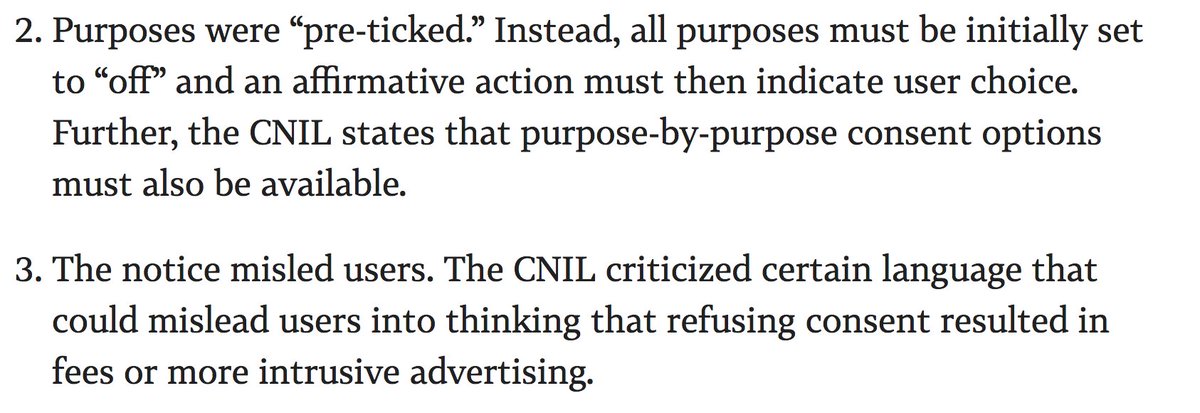
They list what TCF controllers need to do in order to comply with the @CNIL recommendation, including:
• You can't pre-tick purposes.
• You can't mislead users.
I agree. What I find surprising is that they draw no consequences from those requirements.
In the Vectaury case (and vast swathes of adtech) this would mean an unticked checkbox stating something along the lines of "Opt in to sharing your location every few minutes so that we may profiling your real-world shopping preferences and sell that to partners".
So — sure — everything is just fine for the 0.0003% of users who'll opt in to that, probably while drunk.
The @PrivacyPros argument is basically that you can get to the Moon in five minutes because the laws of physics don't say it's impossible.
It's true that it's not an obit for digital advertising because there are ways to do ads without invasive practices. But for the status quo the TCF was designed to enable, the choice is:
• UX users will consent to that's illegal; or
• UX that's legal but user won't consent to.
If that counts as the TCF still being useful, it's a pretty low bar for victory!
Does anyone here have an example in which a CMP would still work under those rules? I'm sincerely curious.