Thread · 16 tweets · 12 Nov 2021

Question: is there any evidence, empirical or at least from principled arguments, that sharing data broadly across contexts would ever improve competition? I've now read a few thousand pages on this, and I've only found indications of the contrary. 🧵
↺ 10
I ask because of the prevalence of the Big Knob Theory (BKT). BKT posits that there exists a Big Knob that can be turned towards "privacy" (no data shared across contexts) or towards "competition" — but it's very much a zero-sum game. It's popular — but where's the evidence?
I've seen arguments that if one party gets all the data (because they can work around protections or they can mix from multiple contexts they own) and the others get none, then you'll get bad competition. I agree, but then that party is clearly violating privacy so it's not BKT.
I've seen a bunch of evaluations of the value of "cookies" (they usually mean third-party). These usually don't separate out what can be implemented in other privacy-preserving ways from the privacy violations, and they don't address competition.
There are discussions of the ability to do more with data pooling, which is true but again does not speak to improved competition. I have read repeated (and founded) concerns that the biggest pool always eventually wins.
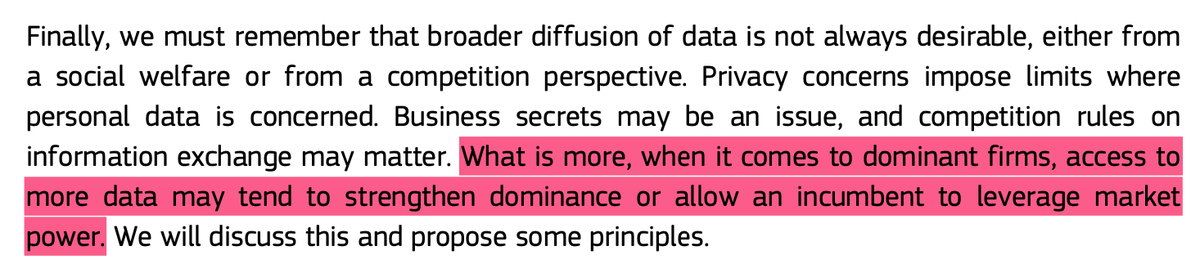
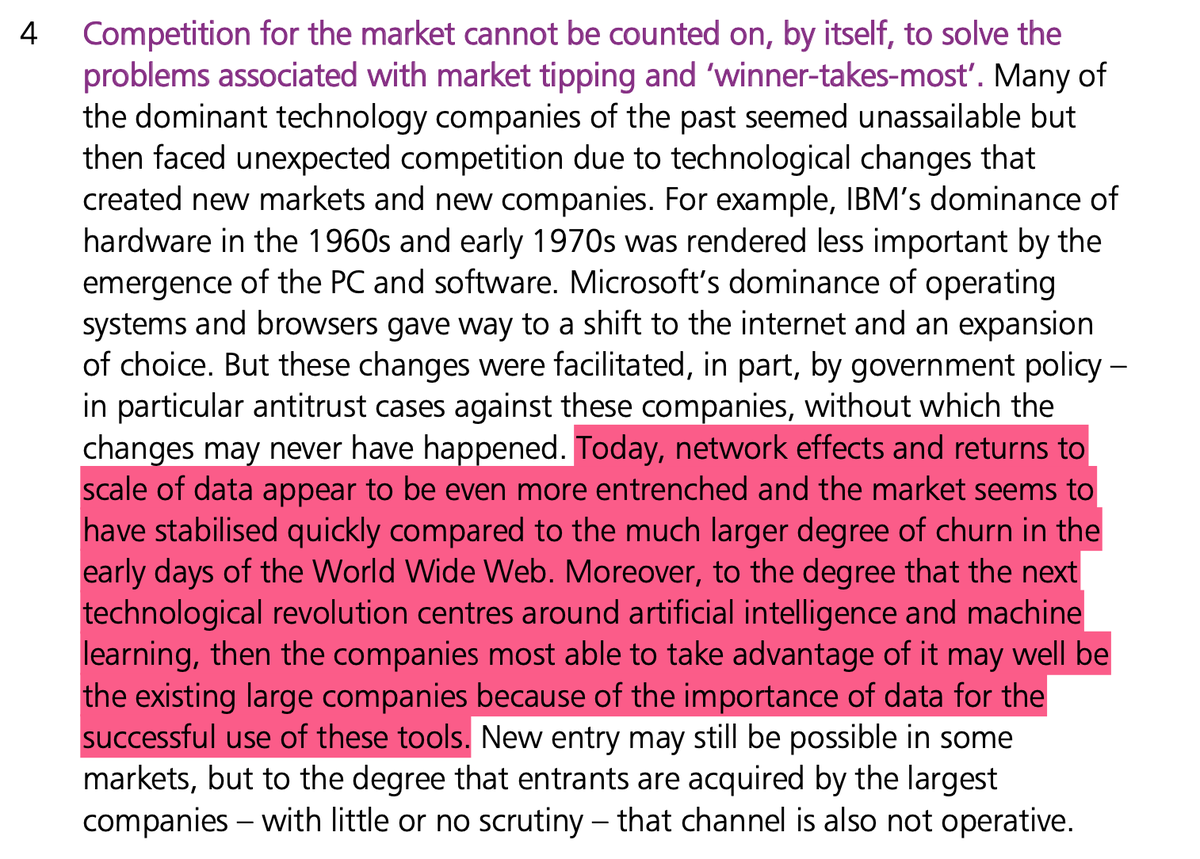
In policy and research, what I do find is indication of the opposite of BKT: broad diffusion of data beyond silos strengthens dominance. Here's the EU's 2019 Competition Policy for the Digital Era:
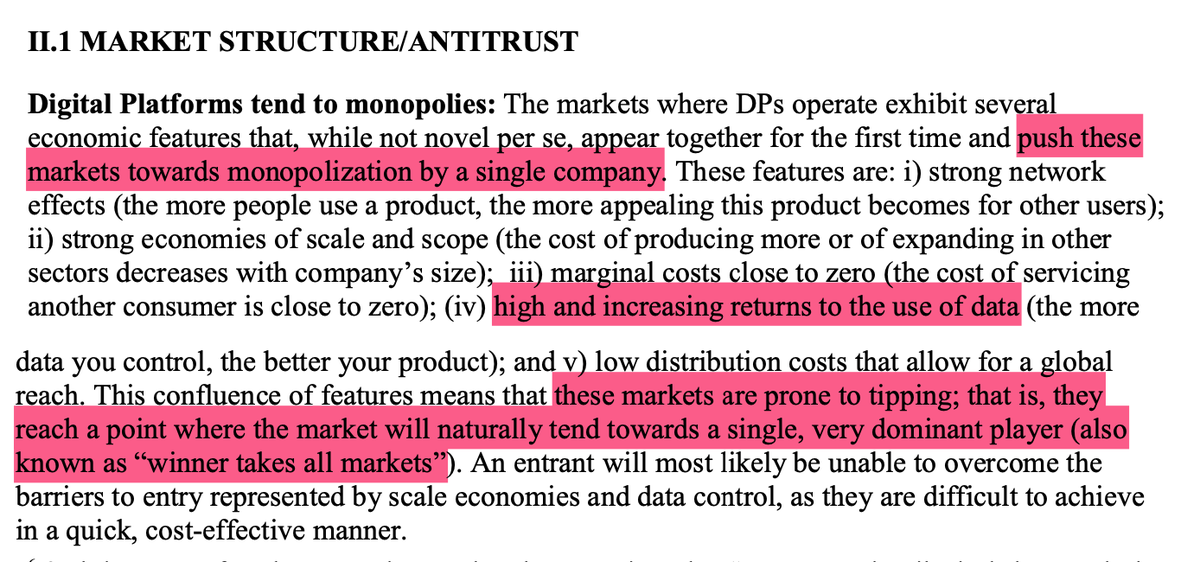
And here is a summary of the large collaboration of the Stigler Center's Digital Platforms report. They do consider sharing, but only if done in privacy-preserving ways.
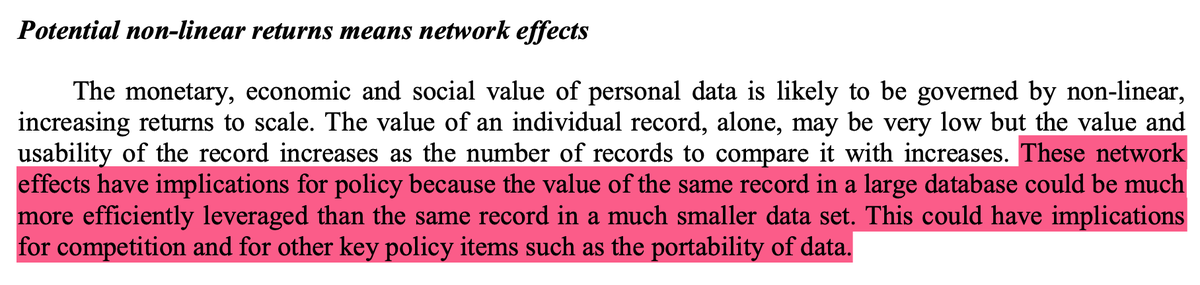
Similar vibe from the Furman Review (with which the CMA seems to largely align). They look at data openness, but only anonymised or non-personal.
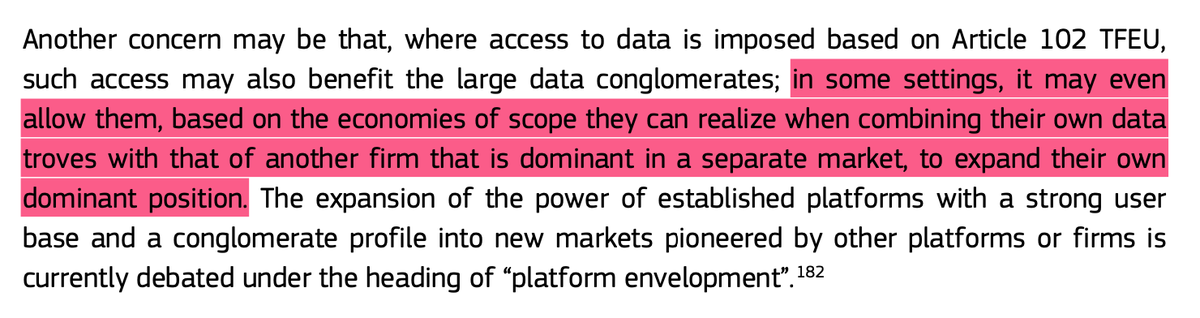
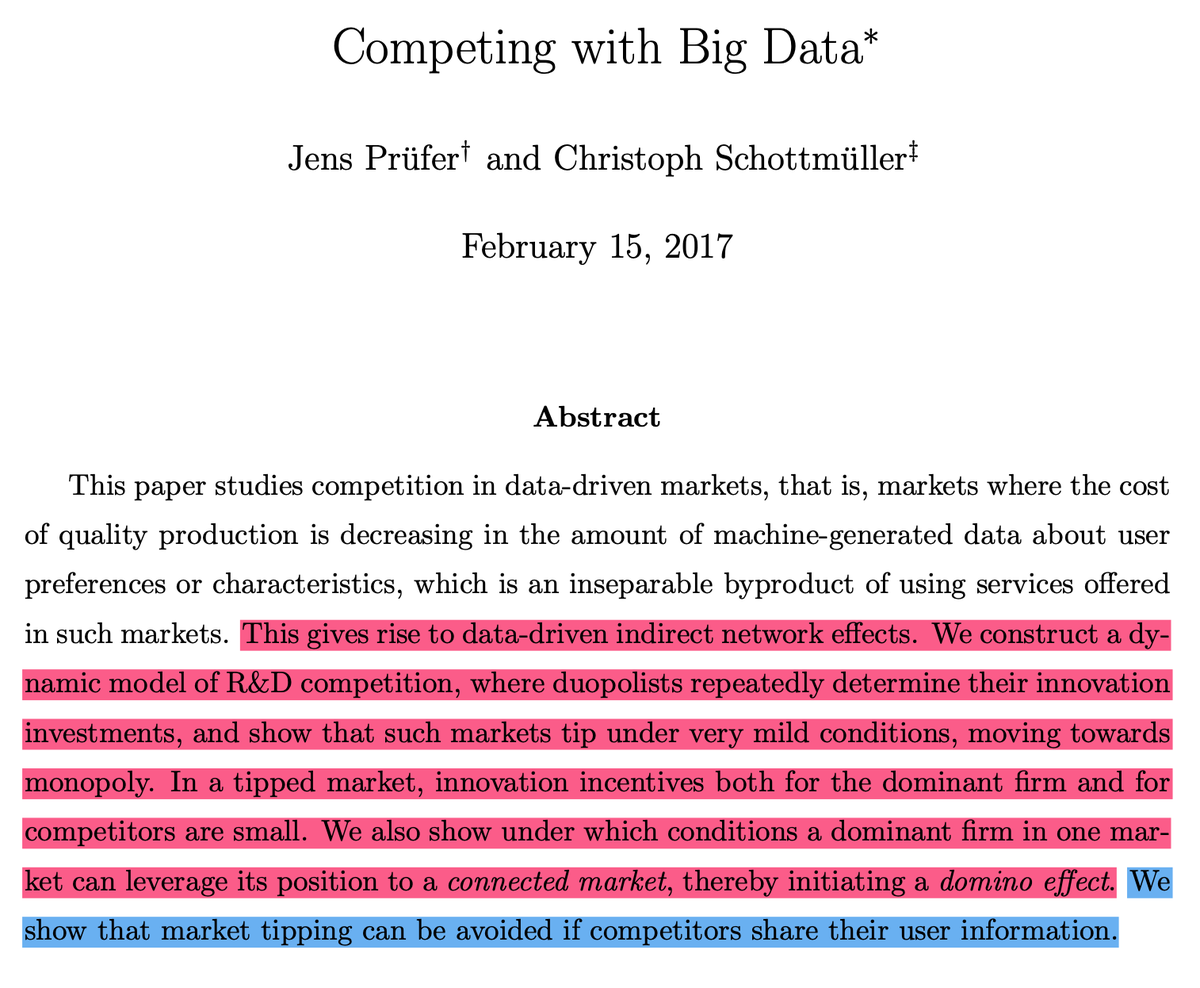
The strongest case I've seen that data sharing is from "Competing with Big Data" (this is also referred to in the previously-mentioned EU report). But… there is a big but…
As I understand the model, under typical situations of broad access to cross-contextual data, data-driven markets will almost always tip. Worse: because it's cross-contextual, it can be leveraged into other markets. This might sound familiar.
The model shows that data sharing can be pro-competitive but you basically have to share all the data. Intuitively, if you nullify the advantages from data collection you eliminate competition issues in data. I mean, sure.
Apart from the data protection headaches — which are insuperable — this seems particularly challenging to implement. The infrastructure for this kind of data sharing at this type of scale is mind-bogging.
It would seem that there should be value from trading in data *derivatives*: enable publishers to make use of their local knowledge and craft to create targetable audiences without invasion of privacy. I wrote a bit about that for WARC. warc.com/newsandopinion…
Other than that, what I've found so far points strongly to the idea that competition in data-driven markets will be improved by strongly siloing contexts from one another (where by "context" we have to mean both distinct sites and separate services of the same company).
So, Dear Reader, have I missed a significant chunk of the literature that supports the BKT, or is it that it's largely something that people believe but with no reason to do so?