November 2021
245 tweets
I'm going right now, you should too!

Thank you — I saw it was longer than the alt and didn't think to thread it.
I wish Twitter allowed embedding text snippets…
I think they're trying to avoid people using it to tweet longer tweets, but that seems silly tbh.
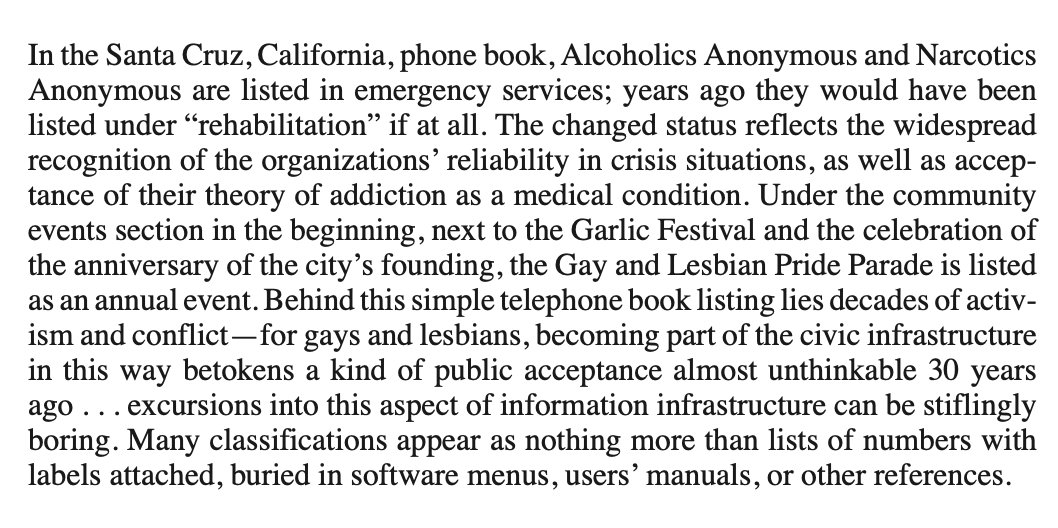
The polarising effects of exposure to others are established, but the conclusion drawn from it here is not: social media can be designed differently and managed better.
None of this is "baked into social media itself."
Quoting a tweet by @michelleinbklyn ↗
♥ 12↺ 4
Ha! That is exactly the quote I needed for what I'm writing 😁
♥ 1
That's not the problem, the problem is that not all interactions are the same and some structures are bad.
Don't stay stuck in the search/social algorithmic media intellectual goop — go rewild your attention!
Quoting a tweet by @kottke ↗
♥ 2
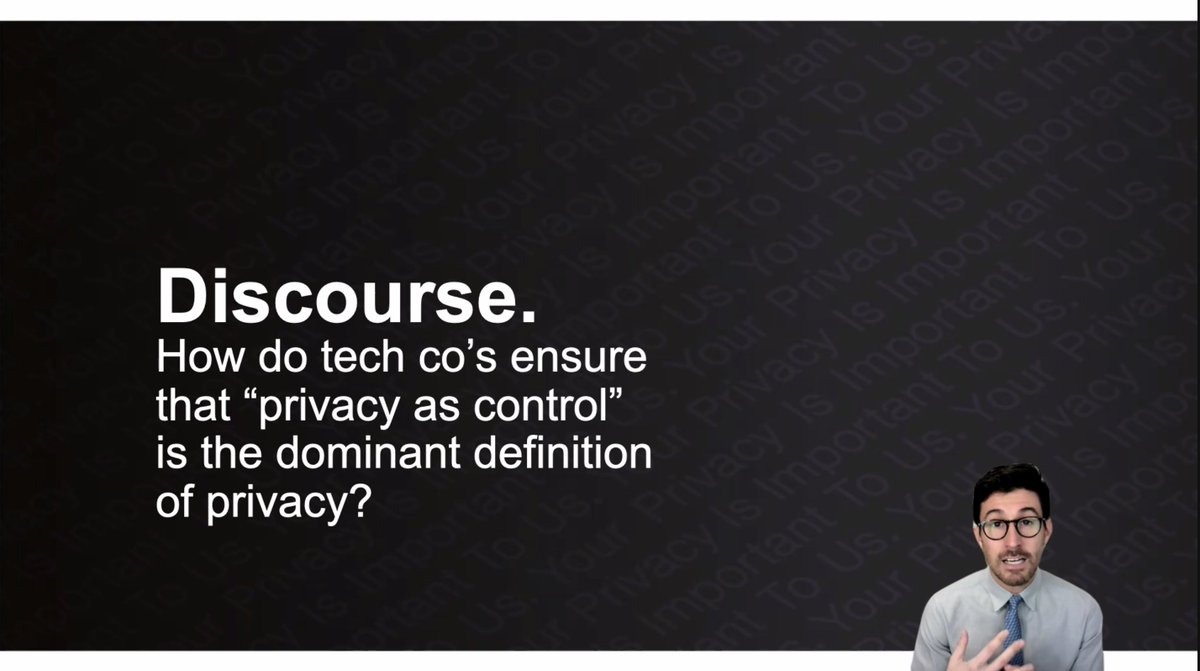
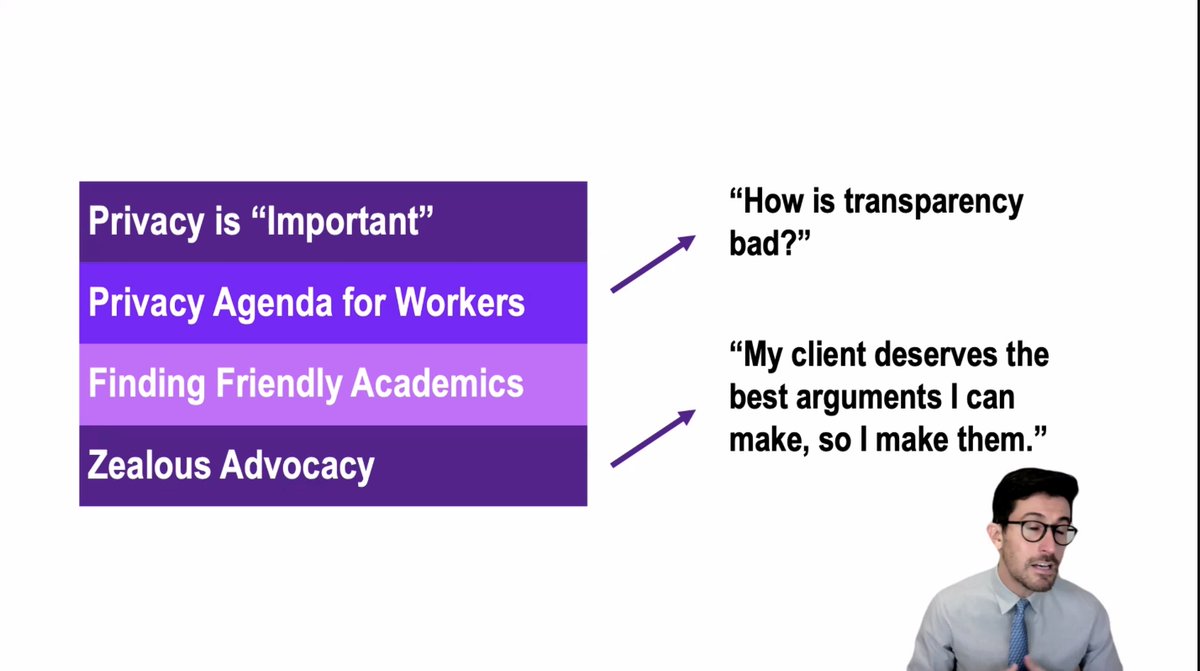
So much hard-hitting truth in this brilliant talk from @ariezrawaldman about how companies define privacy in ways that lead privacy-friendly employees to eventually support extractive practices.
♥ 26↺ 8
• "So long as people have transparency, I'm comfortable."
• "Our users have a lot of choice!"
• "You should see how many controls we have over this data, it's impressive!"
• "Our security team is the best in the world!"
♥ 10↺ 1
Anyway — I bought his book within the first five minutes. Be careful with @PrincetonCITP events, they can be expensive! bookshop.org/books/industry…
♥ 11↺ 1
We keep two printers around, it's the only way I know to make sure that there'll be one working when it's needed.
♥ 2
A very true thread. Most of the JS big libs and the advice around them reminds me of J2EE with nicer graphics.
I would add that it's not just libs, but also standards: regular size companies using typical business tactics are woefully underrepresented there.
Quoting a tweet by @jeanqasaur ↗
♥ 13↺ 6
I could have said J2ME but I want to be nicer online 😁
♥ 2
It does, especially if you're not supported, funded, etc.
♥ 2
In the talk (and I presume in the book too) Ari made the case that we can't rely on people beating the system at every turn, even if supported by stronger privacy regimes when these still expect traditional approaches to compliance. I think he's right.
♥ 2↺ 1
I am lucky to benefit from real support and resources where I am, but it's still uphill every way. Everything from software defaults to how the internet works is part of the problem. We need to find radical change.
♥ 3↺ 1
No?
Right, that's one reason why I feel that DPO requirements are often ineffective. The way to flip the incentive is to make it part of the culture so that you are seen unfavourably when not supporting privacy even though the company is paying you, but that is hard.
♥ 3↺ 1
There's definitely a mix of jQuery, Web Components, and a controlled data store that Just Works™ for this.
I don't think it's even that deliberate, the incentives don't stack well. But yeah, being in a discussion about fixing the constant issues of the Web with a group of people who couldn't run a small digital marketing campaign to save their lives can be a problem!
Frankly, what surprised me the most when I switched to this from other governance areas is just how hostile to privacy so many "privacy pros" are. I got a sense that I was weird trying to make it work. DPO seems supposed to be "Don't Privacy Officer".
♥ 3↺ 1
The topic: 😍😍😍😍😍
The price: 😱😭😱😭😱
bookshop.org/books/the-camb…
♥ 6
I'm not sure that I can borrow from the uni libs. I might be justified in expensing it, though, for a project. Failing that, it might be a Christmas present!
At that price level, it's like they're trying to encourage SciHub/Libgen.
♥ 2
I think that we're all, like…
♥ 1
Wait — you're saying that all those poor shower designs in the US are actually made that way on purpose?
♥ 1
Right — but supporting complex behaviour from a non-complex system *is* costly.
Why not go bigger and take it in DogeCoin?
♥ 6↺ 1
I'm usually too-thirsty for milk.
You say that like the answer to bad cheese isn't more cheese.
♥ 2
None of that will address algorithmilk bias, though.
Well, you could start by asking which horn of this dilemma content mooderation sits on.
♥ 1
Thank you! Sort of, it's not figurative overall.
I'd be happy to ask if there's interest at @nytimes if you're up for it!
♥ 5
I usually have no problem sleeping, but I had a particularly stressful summer that kept me up. There's an app (on Android, I suspect same on iOS) called Prana Breath that has 4-7-8 and other patterns. I confirm that it worked great for me.
♥ 2
I'm thinking of a book talk though, so more speaking at The Times than with. I think our data stewards group would be interested. Happy to hash out details, my DMs are open.
♥ 3
Isn't that flat out unhealthy? I mean, it's basically fat and sugar, its purpose is to make calves grow.
♥ 3
I just looked it up: a calf will drink about double that, but it's its only source of nutrition and it's growing like fuck. There's no way it's good for humans, especially adults, to get near that.
♥ 3
"We're doing it for the SMBs" is the new "think of the children."
Quoting a tweet by @IABEurope ↗
♥ 3↺ 2
Not sure that's enough popcorn!
♥ 2
Ça me tue toujours ce commentaire. De la chance d'avoir des enfants, en bonne santé, etc. certes, mais bon. Je me retiens régulièrement de répondre "J'ai en truc! En fait il ne suffit pas de les nourrir, il faut aussi les élever!"
A clear and dispassionate overview of the damage wreaked by AMP and the reason why it's become very difficult to treat Google-led initiatives with anything other than intense suspicion. wptavern.com/amp-has-irrepa…
♥ 283↺ 104
I'm really curious to see what happens next!
♥ 1
I wish that were less believable!
♥ 2
And they are still forcing publishers to use it. It has become less prominent in Search, but it's still required in other products.
Also, they're doubling-down on the strategy with Showcase.
And if you cook a can of it in a pressure cooker you get dulce de leche. I'm leaning "great."
♥ 1
Same. I used to assume that there were good intentions. I still think it's true in some cases, but it would be irrational, based on experience, to look at a Google proposal as anything other than guilty until proven innocent. It didn't have to turn out this way.
♥ 4↺ 2
In that vein, given existing indications that the broad sharing of data leads to anticompetitive outcomes, should agreements to support greater sharing be investigated for collusion?
♥ 3
We have to, to some degree, though. The current system isn't working well for us. FLoC is full of issues, FLEDGE has some good ideas, though it has architectural flaws. PARAKEET is promising 😁
Knowing and finding good writeups are different things. We also have increasing evidence, which matters.
♥ 1
That is true for AMP but not initially for every project. There was a time when trust was there.
♥ 1
Except fragile and full of hacks, it breaks all the time. But you have no choice to use it.
♥ 2
Into solving this mess? We're not there. Right now there's a lot of push-back but most of it is stop energy, not alternatives. Heading that way, there won't be a tipping point, just an entrenchment of slightly less power. We need more alignment on other organisations for the Web.
♥ 1
That's possible, it has certainly crossed my mind that there may be no other option, especially given their forays into military and "antiterrorist" work. I still see a path to good from here that's more gradual, but it requires getting a lot right!
He's the guy who does Trotscritical Race Theory.
♥ 1
Legibility and visibility are two different concepts. The dataification from beacons won't remain limited to vehicle detection.
♥ 3
"Dad, you look like Einstein, but only the hair, and then also a lot less good."
Ow.
♥ 18↺ 1
Fair point!
♥ 2
You can keep going! I took a similar trip, starting from Grenoble but continuing beyond DK to Göteborg, Oslo, Bodø, and eventually Å. I mean, what's a few more weeks on a PhD?
♥ 2
Don't go about giving them new ideas!
It's about time this entered broader consciousness. And it's particularly true of infrastructure.
Quoting a tweet by @rcalo ↗
♥ 4
That's sort of what used to be the case with Firefox, but I can't seem to dig up any info about that!
♥ 2
The neatest solution I've seen so far in this space is @UnlockProtocol. I'd love to see people take a closer look and build iterations on it if and when issues are found.
♥ 3
Third-party, yes.
♥ 1
Proof of work is such an American capitalist burnout concept, that's how you end up blocked and chained. What I want to see is proof of long weekend, proof of chilling with your family, proof of reading a good book…
♥ 11↺ 5
Thank you for asking the questions that matter. I've been wondering why people ride bikes for pleasure my entire life.
Look who's grumpy from failing at their proof of having had a glass wine.
♥ 2↺ 1
But what if he's vegetarian?
♥ 1
Exactly the interoperability cut that I've been (cough) recommending! We should make sure that the standards are ready, cc @mnot.
Quoting a tweet by @CT_Bergstrom ↗
♥ 11↺ 3
Next time, come to the social media as a crisis discipline workshop so that you can steal my takes to my face, Carl!
♥ 1
I wish it were only five 😁
Ah! Thanks, that makes sense, the docs made it sound really weird.
The problem with trust is that, in this case, it's circular. For sites to be trusted, they need to be trustworthy. But opening broad holes for data sharing also enables untrustworthy behaviour...
♥ 2
...and so none of us can have nice things. I'm not sure that I've seen apps do this any better, though?
Reputation and regulation aren't catching either in apps, though. Stuff like geolocation sets are being stopped the same way as in browsers: by adding restrictions. No one's figured out trust of arbitrary parties at scale without limiting capabilities (that I know of).
♥ 1
Has anyone looked into whether Lloyd vs Google might legitimate similar schemes to circumvent user protections, like SWAN, in England & Wales? Or is it moot because it's the DPA98?
♥ 3
They explained how it works, the docs are actually misleading!
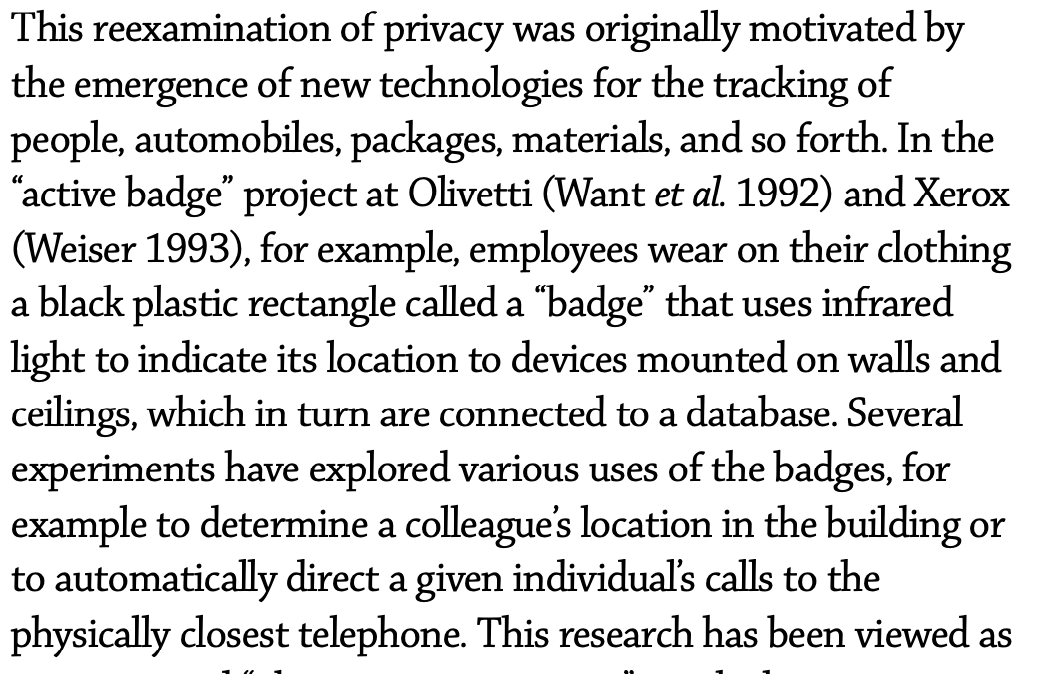
Agre's "Surveillance and Capture" is worth re-evaluating in today's context. Much of what we're dealing with looks more like capture than surveillance, and thinking about it as such is useful. He also helps define legibility better. blogs.commons.georgetown.edu/cctp-506-sprin…
♥ 5↺ 1
Yeah, why would that make you look like a shill? Interoperability, done right, is an important part of the answer. Haugen is a great whistleblower but it's unclear to me why she's being asked about solutions.
♥ 3
That's the best answer I was hoping to get :)
♥ 1
I'm a man of the people, Ed.
What's the other kind of scholarship?
Luis: for PRA, you want something strong and hearty, I could see a Malbec.
Daniel: injury in fact?
♥ 1
I agree that it's not enough, but it can be one contributing step. I *think* that one of the state laws was considering at least some breach or violation types as automatically qualifying as injury-in-fact precisely to eliminate that debate. Fuzzy memory, though.
♥ 1
I mean, have you seen tech salaries?
♥ 3
I haven't read "Deschooling" but "Tools for Conviviality" was great!
Definitely in the US!
Credit where due: this came to me from @dauwhe.
LOL Stuart, everyone knows it's immdeeb!
♥ 1
Naive that I am, I thought that the perks of joining the Illuminati would include controlling email providers so you wouldn't run into such issues.
♥ 1
WaPo gets one of the best people possible to work on privacy there! Absolutely love to see this.
Quoting a tweet by @Chronotope ↗
♥ 16↺ 1
Les voitures c'est pas vraiment mon truc, mais celle-là j'avoue que je lui trouve de la gueule 😬😁
♥ 3
Oh, so *that's* what Kant meant by the Critique of Pure Reason.
♥ 3
♥ 1
Question: is there any evidence, empirical or at least from principled arguments, that sharing data broadly across contexts would ever improve competition?
I've now read a few thousand pages on this, and I've only found indications of the contrary. 🧵
♥ 44↺ 10
I ask because of the prevalence of the Big Knob Theory (BKT). BKT posits that there exists a Big Knob that can be turned towards "privacy" (no data shared across contexts) or towards "competition" — but it's very much a zero-sum game.
It's popular — but where's the evidence?
♥ 8
I've seen arguments that if one party gets all the data (because they can work around protections or they can mix from multiple contexts they own) and the others get none, then you'll get bad competition.
I agree, but then that party is clearly violating privacy so it's not BKT.
♥ 5
I realise that, but they don't seem to be aware that it's a fiction. Or even to have bothered producing a fake study in support. It's just accepted on faith.
♥ 2
I think that most of the findings from non-data markets are hard to port over, though, they're just so different.
♥ 1
I think you touch on the right point but indirectly. You can generate more value with more data, so sharing more creates greater value. That's true internally as you say and also externally. But the competition question isn't total value maximisation, it's capture!
There might indeed be a case for saying that ad targeting (and comparable products, like insights) is a natural monopoly and should just use Ramsey pricing. Maybe! But then we should build that, not argue against privacy.
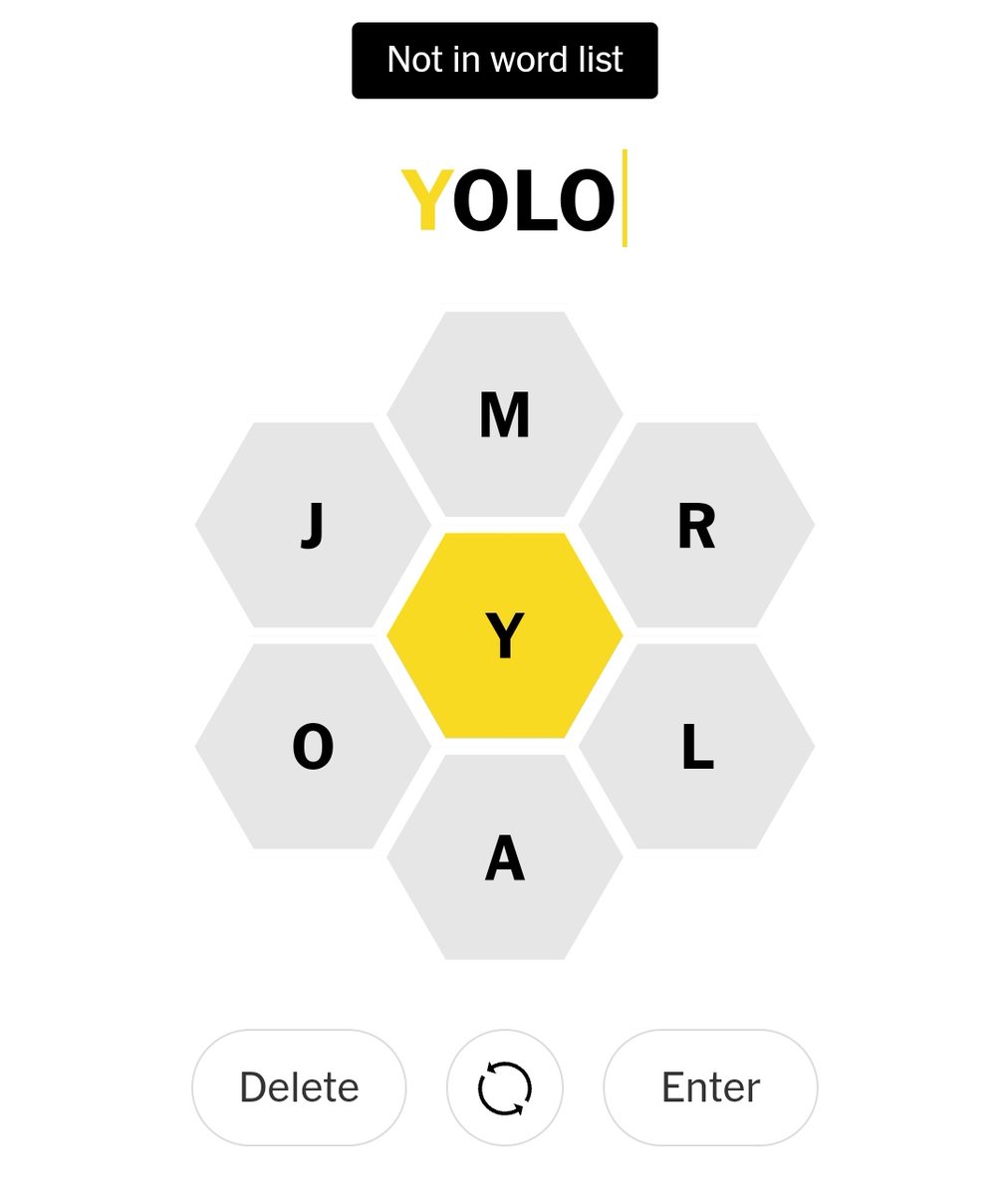
Has to have a Y!
♥ 1
I don't think they take that in New York.
♥ 1
I don't know, my trip finished 😁 I'm not much of a games person, it's only when I'm tired and I don't persist much.
♥ 1
Sure, but if you enable cross-context sharing you will get the place that tracks users in the most places being that place where there are the most customers, and it's going to be winner-takes-all anyway, no?
♥ 4
My hope is that we can fix that, but we have to move beyond this narrative.
But no yolo!!!
♥ 1
Thank you!
Thanks!
Thank you so much! I will definitely read that.
Well, if you know how to prevent them, you also know how to build them 😁
I don't know that I'm well read, the pages add up *fast* in this space, but I definitely agree that the data dividend is nonsense. And these issues are opaque enough that it's easy to sneak in some populism.
Indeed, though I don't know what his actual take is. When I met him, he seemed sincere but at the same time he didn't hesitate to push a position on stage that had been discredited in direct discussion the previous day.
OMG yes! The Spotify client also has the dumbest UI.
♥ 1
It works for me, but the site is extremely slow for some reason. Maybe it timed out on you? It's aimed at marketers, so it might not be your usual fare!
The problem with "selective" is that if there are power asymmetries in the market, you might not be the one making the selection! That's what happened with the GDPR. In theory, you can choose not to work with a third-party data controller, in practice the terms were dictated.
♥ 3
Common argument, but no. That just shows what wins with buyers but not that it increases competition in the market. It also mixes up the values of all the things that cookies do irrespective of whether there exist private alternatives.
♥ 1
Yes, but the flavour is fruitier, less earthy.
♥ 1
It's hard to compete against default installation on Android and the marketing power from badgering people into installing your competitor.
♥ 1
I'd be curious to hear your take, is the talk (or other) available? I tend to think that we don't have a pacing problem. Figuring out the right set of regulations for the digital world is hard, but we only need to do it once.
♥ 2
Yeah, it wouldn't be great.
♥ 1
The way I have seen it presented is that the underlying systems *must* support the sharing of data, otherwise there will be adverse competition effects. It's a strongly held belief but... I can find no evidence!
Wheeee, congratulations!
♥ 2
Thank you!
Many experts at the time thought that it was underwhelming. You could have broken links easily, which a proper hypertext system would prevent. It also had an unimpressive markut language and initially no way to convey content types.
♥ 4
We actually managed to fix the error handling and future proofing in 5, so not that bad, it only took twenty years 😁 I'd put unresolved, entrenched problems on my list, like how search or ads work!
That sounds a lot like my job so I'm all the more interested :-D
Thanks, that's very much up my alley (it sounds related to berjon.com/stewardship/), I look forward to reading it!
Controlling access is key to a number of institutional forms. I see no reason to limit that part of the toolbox.
They're the best.
There can be, but historically there hasn't. I'm pretty sure that ruling this out excludes useful institutions.
♥ 1
Sure, I'm not saying you must always require approval, just that sometimes you do. For instance, you might want to check that a new member has high quality standards before accepting them on a shared wire service.
♥ 1
In this vein, I'm curious as to whether you've found Agre's capture vs surveillance distinction useful? I think it helps escape metaphors that might not be pointing to the right solutions.
Agre's "Surveillance and Capture" is worth re-evaluating in today's context. Much of what we're dealing with looks more like capture than surveillance, and thinking about it as such is useful. He also helps define legibility better. blogs.commons.georgetown.edu/cctp-506-sprin…♥ 5↺ 1
♥ 1
Wow. I knew they were biggish, but not this big. They say they want to be competitive in ads, but I don't see them much in the groups? Might be worth a chat.
♥ 3
Whenever I think of my browser dutifully sending a GPC signal of my privacy preferences with every request it makes, I imagine it quietly singing to itself:
🎼 That's the way — uh-huh uh-huh — I liiiiiike it — uh-huh uh-huh! 🎶
♥ 5↺ 1
Not a great fix, but maybe just remove the shortcut?
You… didn't include <sarcam> 😭
People are complaining about the VP's ability to speak French?? That's just... Why?
♥ 1
I tried reading Giddens's "Constitution of Society" because I'm curious about structuration and structure/agency relations, but it's not working for me (too much about language, references whatever debates sociologists had in the 80s waaaay too much).
Any better options?
♥ 1
I picked this one up because I had actually liked The Consequences of Modernity. Not always the lightest writing but at least I could tell where he was going. Thanks! I'll give that a shot.
Thanks, it does indeed seem cool.
But that only works because it's being pooled in public.
I don't think that's accurate, FLoC doesn't actually share the data. It's a failed model, but for different reasons. It relies on wrong assumptions about privacy-preserving tech, governance, innovation.
I must have missed that debate? I mean, there's an explicit link to Ads and they keep pushing it.
♥ 1
The Prodigal Techbro vibes are strong.
♥ 5
Looking forward to the sequel to The Social Network feat Haugen having technocentrist epiphanies.
♥ 3
Aren't we all Milo Fans, though?
♥ 1
@jinyanzang and @iamdhruv4 are most excellent hosts, I highly recommend this!
Quoting a tweet by @TechBecomesLaw ↗
♥ 1↺ 2
It's actually a good book :)
♥ 2
I'd like to think René Carmille's response to this idea would have been very rude, even in French. en.wikipedia.org/wiki/Ren%C3%A9…
♥ 1
"Think of browsers as the next generation of operating systems, the infrastructure and connective tissue."
Great points from @protocol — but much in the browser world, from financing model to defaults in install & search, is wrong. Can we fix it now?
protocol.com/newsletters/so…
♥ 9↺ 3
Already have!
♥ 2
I don't care, I'm not over the fact that <sarcasm> wasn't even included!
♥ 3
You make a very fine point, Tess.
♥ 2
For a second, I thought we were doing "Spread Firefox" again. I totally would! twitter.com/anildash/statu…
♥ 9↺ 2
Very little participation, but a modicum of shared governance in standards. I think that has to be part of the fix, though.
♥ 1
It's not that I don't enjoy my job, but so far no one has sent me to SEVEN HUNDRED surf spots on the Atlantic to assess various approaches to common-pool resource governance without state intervention amongst surfers.
And that's unfortunate.
link.springer.com/article/10.100…
♥ 1
I've been trying @DuckDuckGo new Android tracking protection system that keeps apps from broadcasting data around, and so far I really like it! wired.com/story/duckduck…
♥ 20↺ 2
I get that it's a hard industry out there and apps have to do things they'd rather not, but I don't think leniency should extend to apps that support trust, like security apps or browsers.
So WTF is a marketing analytics SDK doing phoning home in Microsoft Authenticator?
♥ 6↺ 2
Well, yes and no, some stuff really has to work in the background, like listening to music while you're doing something else!
I use it rarely, but I'm thinking I might pay just so they stop badgering me to pay.
♥ 1
I know... The FAQ claims that it's deidentified, but... why does Microsoft need someone else to collect deidentified usage data?
♥ 2
Amazon syncs with a ton of others, I presume for DMP/cookie sync purposes. Their site is a Christmas tree of third parties, or at least was last I checked.
♥ 2
No, it's like a VPN except that it only filters the traffic.
Has anyone dug into what Amazon does? Sometimes I see twenty third parties showing up on a page, and sometimes none.
♥ 1
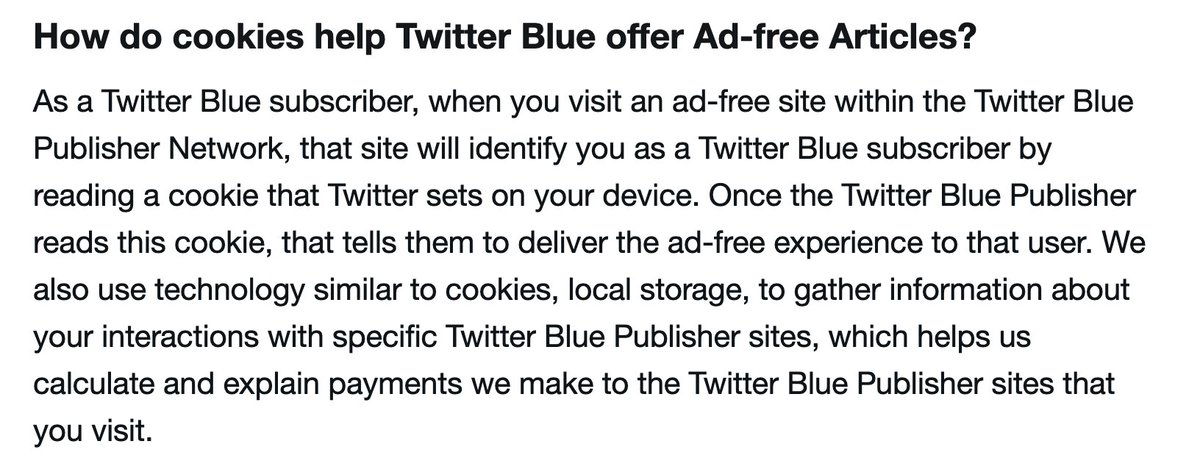
It's interesting to see Twitter keep positioning itself as a healthier, friendlier, ethical approach to tech rather than try to NOBO everyone else out of existence. I hope they can keep pulling it off, I'm curious to see where it leads.
Here with AMP:
theverge.com/2021/11/19/227…
♥ 20↺ 4
"Even if I’m reading nonfiction books – which is 90% of my reading – I still view the content as an adventure movie."
Why curiosity > smartness.
durmonski.com/life-advice/cu…
♥ 4
I have been suspecting the same thing. You can't innovate in AMP because Google decides everything, so ad-free can't be done there. That said, they could very easily have differentiated.
In fairness, this is basically Scroll under the hood so they have to track visits in order to apportion revenue (outlets get paid by share of traffic). But yeah, my longer-term preference for this would be to have privacy-preserving ways of doing the same.
♥ 1
Glitchy is good, I thought it wouldn't load 😂
Did it hit flat on its bottom? You can open wine bottles that way.
♥ 1
Audible is Amazon, no? They have all kinds of partnerships. Also, since when do adtech companies get data because it's useful?
♥ 4
Football big fire, wheeee 🐯
♥ 1
And no American wine! I wonder how we could forget.
♥ 1
Next time!
I feel less lonely!
♥ 1
Would you argue that it's an improvement that one should agree to?
This would be a spectacular improvement. Combining data across unrelated services of a first party is not in any way better than combining data across third parties — and relying on consent solves nothing.
I hope this happens!
Quoting a tweet by @BeterOpDeFiets ↗
♥ 21↺ 3
This came up at the Social Media as Crisis Discipline workshop. On first principles, you'd think that splitting the big social mosh pit into groups should help prevent misinfo, toxicity, polarisation — but when Facebook pushed for groups it was a train wreck.
I think that is likely because doing that with all the surrounding trappings of social media doesn't solve the problem: it just allows it to fester in hiding. I suspect that E2EE would suffer from similar problems.
♥ 1
That's the DMA's scope. But I would be happy with this being a general rule.
Yup, totally agreed, though I have a long list of things to do before I get around to defending the platforms 😁
♥ 1
Seconding that.
♥ 3
Makes me want to make more pretty flags!
♥ 1
DAOting Ethomases.
♥ 1
What the fuck, mashed potatoes might be one of the best possible dishes. Also, what the fuck is "meal filler," is it drab food for people who have enough to eat anyway? Why would anyone do that?
♥ 2
The details will matter a lot. If the data isn't used for targeting on O&O, it can still be used to increase inventory by improving eg. Search.
♥ 5
It should be possible to train a model to suggest measured, factual variants for tweets. Could be a fun project.
Yes. Please.
♥ 1
I'm the same. Rustling always feels ominous.
♥ 1
You need to poll 8 year olds. A bunch of other parents are going to be terribly biased.
♥ 2
You can't reclaim from the young, Julien, they'll win in the end.
♥ 1
Yeah, we need to correct that misunderstanding. It's very much on purpose that it doesn't do that.
♥ 4
Oh yeah, that's totally the plan. See berjon.com/gpc-under-the-…. *But* not interfering with local storage consent is deliberate. That's largely an ineffective and outdated mechanism IMHO, and one that can't be addressed well in a general fashion.
♥ 4
I do. I think it's an interesting idea, but I think it still suffers from being fingerprinting vector that unlawful actors can abuse. Also, the problem with automated consent is picking defaults. I prefer solutions from collective governance, less weight on subjects.
♥ 3
Decentralisation does not prevent the concentration of power; it can very easily make collective action harder until might makes right.
Build for polycentricity or GTFO!
Quoting a tweet by @Vinncent ↗
♥ 14↺ 2
Yes!
♥ 1
It also rocks that they made an article with like twenty pictures but didn't turn it into a slide show. THANK YOU SIBERIAN FRIENDS.
♥ 2
It's the other way around: the apes are nice — the films are crap.
♥ 1
Damn, I should NFT my old POV-Ray files!
♥ 2
Brutalism with a human face.
♥ 1
I did not, I also didn't read about the Siberian practice of bikini skiing because I know I'll just want to do that too. I must resist feeling too Siberian in my heart.
♥ 1
I mean, it's hard to resist: "On Sakhalin skiers came downhill banya-style, wearing towels or white sheets as if just out of the sauna." siberiantimes.com/home/voice-of-…
♥ 1
Il n'y a pas de raison de ne pas les avoir dans SciHub; je crois même qu'elles ont un DOI.
♥ 4