This is a good article but the problem isn't the apps, it's the conflict of interest. Operating systems and browsers are "user agents", they are supposed to act in the user's interest. But Apple and Google both monetise users, which puts them in a bad position.
With iOS, Apple needs to monetise users through the App Store. In turn, this means iOS will enable tracking.
Google is even worse: it makes money from both ads and its store, and therefore both Android and Chrome are designed to prevent user privacy.
Not currently but I have painful memories of watching someone trek their cursor to the drop down menu for every save, copy, paste... I don't like to backseat drive at people but this took a toll.
The word for Google enabling child exploitation at insane scale without meaning to isn't "accidentally", it's "negligently".
If you can't operate safely at scale then you don't get to operate at scale. Own it or GTFO.
It's not fair that you'd all be jumping on #nysprivacy right when I'm in California!
Trying to catch up to the bill, at a quick read it looks like a mashup of GDPR, CCPA, and fiduciary obligations? Interesting.
Replying to @johnwilander and @jyasskin, @ehsanakhgari
Another value of cracking down on tracking is that when it remains possible it is increasingly through means that can be clearly described as illegal since user choice is typically removed.
Replying to @johnwilander and @jyasskin, @ehsanakhgari
Also, it's hard to imagine an environment more hostile to publishers than the status quo. We monetise audiences, having third parties also see our audience and monetise it independently is not in the least helping publishing.
Replying to @robertnyman and @tobie, @othermaciej, @slightlylate, @gsnedders
Quite frequently I am told that people want to focus on the app to "deliver a better experience" but when pressed for features or aspects that they think make apps better there I rarely get a useful answer.
Replying to @robertnyman and @tobie, @othermaciej, @slightlylate, @gsnedders
Honestly I'm not even sure the UI part matters that much, most apps are simple enough that it doesn't matter much. A few small details eg. sharing intent perhaps.
It's hard to convey how disappointing it is to see @TheAtlantic publishing this piece. Its relationship to facts is so disingenuous it reads like a cheap lobbying playbook cut and pasted into a respectable outlet.
I have no doubt that the Romanian government is going after journalists. Corrupt officials will use shady distortions of the law to further their ends.
They also used tax/accounting law to intimidate the same journalists. So why isn't @BernhardWarner treating us to a choice fanciful rant about the perils of taxation?
A great notion to use to understand today's political struggles, notably the need for data regulation to offer countervailing power in the data economy. (via @jyasskin)
vox.com/platform/amp/p…
Yes, yes indeed. But in this case I’m interested in the feature as a way to implement some protections in browsers that place a lesser emphasis on privacy.
It still enables tracking, no? I'm looking for a way to get relatively close to forcing a third party to comply with the CCPA, from the top level. This wouldn't be perfect but it would be an extra line of protection.
Yeah, I thought of that but I suspect it would break too much ad stuff. It could be worth a shot though.
I realise private is less than perfect, but I'm looking for mitigation and it's a start.
No offence Paul, but it's hard not to be cynical seeing you fix the privacy issues that affect subscription models but not those that enable your ad business which, incidentally, is a primary driver in harming the press.
Replying to @samccone and @AndrewBeckNYC, @paul_irish, @googlechrome
Wait, are those paint marks indicating that you're going to war against publishers or for privacy?
I can only imagine it must be the latter, right?
So when are you shipping ITP?
I am merely noting that the Chrome team appears to have priorities when it comes to privacy, and those priorities happen to be very well aligned with the needs of the ad business far, far more so than with those of users (or publishers).
Private mode is one of the primary means that people use to circumvent partial paywalls. Pervasive tracking is how Google maintains its market dominance over advertising, which Google uses to impose unfair terms of publishers.
The Chrome team is in a position to fix either or both. I am merely observing that judging from which one they decided to fix makes it difficult, even with kindness and the friendliest intentions, not to question their values.
At the very least it might be more decent to spare us the afterthought about ponying up a few dollars for the people most affected by this kind of self-serving choice?
Yes, I’ve been wondering if we’re not having too much ride on the clunky old `iframe`. An <ad> element could in fact make sense for this (as would a <tracker> element).
Replying to @fatemehx2 and @heidishey, @infosec_jb, @jeff_pollard2
What a bunch of cynics you are! You don’t get it, this HYPER-personalizes. It’s not just for you, not just personal — it’s HYPER-personal. It’s a stress ball, sure, but memorialising a secret so dark you hadn’t even shared it with the most kindred soul.
That’s why you need AI.
I think that depends on the scope you envision for this work overall. If it’s only the attribution then I reckon adding to <a> works but if there’s appetite for more it might be a good idea to take a breath and see what else could happen?
Next time someone tells them that privacy policies are a way to enable “transparency and choice” I’m having them write up a summary of the “Critique of Pure Reason”.
This is great work:
nytimes.com/interactive/20…
I wonder if this is not the opposite though? Allowing what gets served in iframes to decide to be isolated, right? Here I’m looking at the container making the iframe isolated.
The comparison with Harry Potter is actually 💯 because “We Solemnly Swear That We Are Up To No Good” is a pretty damn accurate summary of every privacy policy out there.
On its own, yes, but my idea is that we make it backed by policy. The whole TCF stuff is going to come crumbling down and there's a window to find a negotiated solution between all parties.
If you want to be a 3P controller, you'd need a special flag. Browsers would have to obtain consent at the level required by law.
Publishers would be allowed to discriminate against users who block the former but not the latter.
Notably, by default it would make requests indicating that third parties are service providers. This (with a few other tricks) would be agreed OK under legitimate interest. No secondary reuse by platforms, adtech.
It's a delicate piece of agreement between pubs, users, browsers, regulators, and adtech. But I think there's room for a covenant that is the mutually-optimal option. It's not stable though, so it's unlikely to just emerge.
Replying to @KenjiBaheux and @martinmuzatko, @paul_irish
I said the priorities aren't, not the specific feature.
Having said that, the interest of the users is first and foremost with privacy by default, not with some special mode.
Replying to @KenjiBaheux and @martinmuzatko, @paul_irish
Sure — I am just pointing out that the order in which things get fixed, aka priorities, is revealing and that it can get increasingly difficult, even from a position of kindness, not to become cynical when they are self-serving.
Question for Bluetooth hackers: how hard is it to capture a beacon’s signal and then replay it later? Is there any crypto involved to authenticate it? Can it be done with the Web Bluetooth API?
nytimes.com/interactive/20…
Frankly, by today’s standards a local cache of article titles probably wouldn’t be _that_ much. Less perfect than matching the content, but should catch lots, could be refreshed regularly.
Replying to @KenjiBaheux and @martinmuzatko, @paul_irish
The lack of privacy hurts pubs since it allows third parties to resell our audiences. And fixing incognito hurts pubs, since it’s the primary mean of paywall circumvention.
I’m 100% for the jump of queue; just saying it shouldn’t always go to the same rich people.
Replying to @KenjiBaheux and @martinmuzatko, @paul_irish
Clickbaitiness isn’t just because of tracking — you would still get it so long as social networks drive virality through pure engagement metrics.
But it’s certainly true that there’s much lower value in developing a returning audience if someone else just pirates it.
Replying to @KenjiBaheux and @martinmuzatko, @paul_irish
The problem is that these aren’t footguns: they’re the most rational response to the data economy as it is structured today.
Historically, building a quality audience was the biggest asset a media could develop. That’s how they made money.
Replying to @KenjiBaheux and @martinmuzatko, @paul_irish
And to build a quality audience, you can’t cheat your readership — otherwise you lose them.
But if access to that audience is no longer exclusive, it becomes massively devalued. Google and Facebook will resell it and undercut you anyway.
Replying to @KenjiBaheux and @martinmuzatko, @paul_irish
There are two primary methods in which this is implemented: browsers and mobile OSs.
I’m not being a pain in the arse of Chrome folks because it’s fun. I have a long list of other people I’d much rather be a nuisance to. But this is a problem.
Of course that could also be solved by those companies acting as service providers instead of data overlords, but when I pitched those folks that idea the response what pretty much:
Replying to @KenjiBaheux and @martinmuzatko, @paul_irish
I'm still unclear what you're getting at. Google controls two of the three largest data leaks. Are you saying that everyone would somehow magically move to iOS? I don't understand how.
Replying to @KenjiBaheux and @dfabu, @jyasskin, @paul_irish
There are several different ways in which BlueKai can be used, they don't all involve selling data. I can't discuss deal details or internal policies but Oracle is a lot less hostile to publishers than Google, and their tracker respects DNT which is notable.
"The large tech companies point to our willing use of their services as proof that people don’t really care about their privacy. But this is like arguing that inmates are happy to be in jail because they use the prison library." (via @othermaciej)
idlewords.com/2019/06/the_ne…
Replying to @johnwilander and @sleevi_, @marionpdaly
When ITP came out I reached out to Chrome folks to ask when we could expect the same there. I was told I was stupid for even looking at ITP, and that of course Chrome would do something *much* better for privacy. (Still waiting!) I don't think John is exaggerating.
Replying to @KenjiBaheux and @martinmuzatko, @paul_irish
I can’t share detailed stats, but at a coarse level: over half of Chrome users were detected as Incognito. How many of those do that systematically versus deliberately to circumvent a paywall I of course can’t know, but I’m sure you can compare to telemetry.
Replying to @jyasskin and @KenjiBaheux, @paul_irish
So — acquiring an audience from a premium site and targeting it elsewhere at 1/10th of the CPM is indeed a big problem.
But you don’t need to go to clickbait.com — you can target users interested in news on FB (and elsewhere).
Replying to @jyasskin and @KenjiBaheux, @paul_irish
The data can also be used elsewhere, eg. to know about propensity to subscribe and pitch subs to other services, to suggest app downloads, etc.
Evidently, it hurst in reader trust — and we kinda don’t exist without that.
Replying to @jyasskin and @KenjiBaheux, @paul_irish
At the market level, it also harms innovation. Everything has to be done through user data, which devalues contextual alternatives (which we have).
G&FB have a vested interest in ads being tracking-based: that’s their number 1 competence and differentiator.
Replying to @jyasskin and @KenjiBaheux, @paul_irish
Since they control the entire market, it’s very hard to get alternatives to emerge as they have to work on those platforms anyway. Publishers are disincentivised to innovate, which further hurts an industry already in trouble.
Replying to @KenjiBaheux and @jyasskin, @dfabu, @paul_irish
Oh, you’re entirely right — BK assumes tracking (or some form of data purchase) somewhere. I was simply underscoring the fact that data is not necessarily being sold when they are on a page and that they are friendlier to users and pubs — admittedly against a very low bar!
Replying to @KenjiBaheux and @jyasskin, @dfabu, @paul_irish
Without going into details: we have improved things a lot, will continue to do so, but we can’t single-handedly opt out of an industry that is set up at every stage to operate on surveillance.
Maybe. I think things like Prettier go way too far. It's like expecting every text to follow Académie Française standards just because every project has a grumpy old guy.
Yes, that’s the metaphor I’ve been using. It’s what developers should do if they think of themselves as standardised parts.
Language/API consistency should IMHO be cultural rather than formal. But that requires people who understand culture. Perl was pretty damn good there.
Yup — and the authoring experience on Medium isn’t great. It has some nifty basics but once you want to do something slightly out of the ordinary it falls on its face.
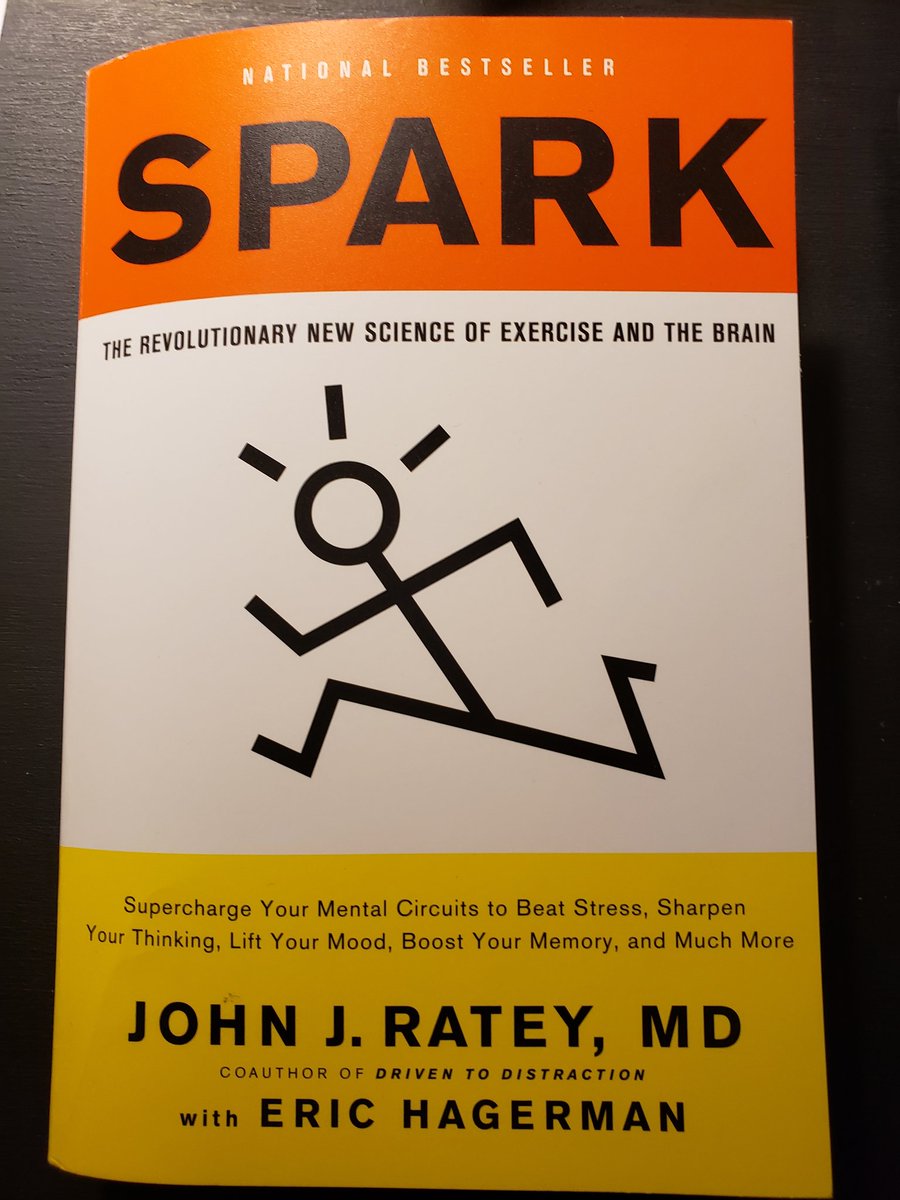
"Spark", by John Ratey. It looks like some kind of self-help book but it's actually a very interesting popsci introduction to the effects of exercise on brain health.
Online advertising does not need to collect anywhere near as much personal data to work, but if you're a company with massive abilities to surveil across the net it's in your direct interest to pretend it's necessary since that plays straight into your competitive advantage.
This is a good example of what goes wrong because science is written in graphics formats like Word or LaTeX. Computers are dumb, they will make dumb decisions if you hide information from them. t.co/jGZzYZZ2FP
Replying to @matthewstoller and @LAM_Barrett, @daniellecitron, @benjaminwittes
So, a clear political bias would be different pricing in advertising for different constituencies. This could be in CPM of course, but also in higher CPOs. Both of these are dynamic. How do you audit that? How do you separate disparities of treatment vs impact?
How do you identify what is political? When Facebook tried to do that it was an unmitigated disaster.
What happens when YouTube claims they aren't biased because they use machine learning?
It conveys very little in the way of shared semantics for the text, which means the computer can’t tell the difference between a paragraph of body text, affiliations, and references. It’s only encoding that visually, which is unhelpful.
Replying to @LAM_Barrett and @matthewstoller, @daniellecitron, @benjaminwittes
I don’t either! I can see good intentions here, but without a legal framework to bring some auditability to the bowels of the beast, I’m not sure how it can work.
Sure — but it’s reasonably straightforward to make HTML semantic.
(I can say this with a straight face because I’ve worked on implementations for Word and LaTeX processing, and things are relative.)
My understanding is that the ICO is operating under a regulator's charter that prevents them from taking action that risks excessive unpredictable disruption to an industry. I'm not saying that's the right choice but I think they do have to move in increments.
There is a lack of people who understand tech, can see through the bullshit, and can work with people in other fields to help tease out bigger picture or more precise and actionable views. The problems can be quite interesting, too.
“Google Chrome has become surveillance software (…) it’s much easier to switch to a browser not owned by an advertising company.” washingtonpost.com/technology/201…
I'm not sure how that changes the author's assessment, though. Android is a privacy train wreck but it's hard to suggest people switch when iOS is expensive and only marginally better.
Are you a wonderful program/project manager interested in coordinating a fascinating array of stakeholders? Are you interested in privacy and tough problems?
Come work with me at @nytimes!
nytimes.wd5.myworkdayjobs.com/en-US/NYT/job/…
"Exhalation", by Ted Chiang. Exactly the kind of focused, thorough speculation you expect from him. My only disappointment was the inclusion of "The Lifecycle of Software Objects" which already exists in book form and isn't great.
I just reread "The Hacker Ethic", twenty years later. I expected naïveté but for fuck's sake what a pile of garbage and clichés.
If we want a _Reboot of the Hacker_ this will play no part of it.
Yes, much of this we deal with through nascent data rights (often just called privacy, but they also have huge impacts in inter-company relations). The conceptual tools we have to work with control over non-excludable goods are limited and in need of invention.