May 2019
297 tweets
Quel est cet endroit merveilleux?
♥ 1
I hope he didn't have you sign... an aphidavit.
I'll see myself out.
♥ 4
That means he must have the Time Stone. GRAB HIM HELENA, QUICK!
♥ 1
Yes, hell yes.
♥ 1
I've been wondering for a while if that was indeed intentional.
♥ 1
Parents complain about diorama projects too complex for kindergarteners to really contribute to.
But think of the educational value from all those new swear words they'll pick up!
♥ 4
As @karlgroves has often taught us: swearing early and often is correlated with fucking intelligence.
♥ 3↺ 2
This sentence is priceless: "fortified its business model against entirely predictable measurement problems in the same way that every other mobile content publisher had: by moving user engagement into an app." 🤣
♥ 4
There is nothing opaque about apps, no one has ever faked anything there. Ever.
♥ 2
Anything not smart.
♥ 5
That's my secret Cap, I'm always a bit of an idiot but I think it's a better approach to be a very good person.
♥ 1
Are any of you fine people attending "Digital Platforms, Markets, and Democracy: A Path Forward" next week? The line-up is amazing, it looks like a really lit conference. I'm ridiculously excited!
research.chicagobooth.edu/stigler/events…
This sounds funny today, but security used to be the way that privacy is today. We used to have "ActiveX" (don't ask) which did terrible things behind a consent dialog, just like the @IABEurope framework. Windows would give your data to anyone, just like Chrome.
Things change!
Quoting a tweet by @johnwilander ↗
♥ 4
It's bundle of unrelated issues tossed up together in a single article like salad with "Europeans don't understand, only America gets freeeeedom" as the dressing.
Quoting a tweet by @mnot ↗
♥ 3
I would like to untangle network interactions used by service providers from those aimed at data controllers. It's possibly the single most important piece of privacy information not exposed by the platform.
♥ 2
I have disorganised thoughts so a whiteboard would be better than Twitter. I was headed in the direction of client hints, but not committed, and cookies might be an option. The categorisation would enable browser-level policies but also legal enforcement.
♥ 1
The distinction is important in both GDPR and CCPA, and generally valuable for privacy. I think it also would play an important (and IMHO necessarily enforced) role in Web Packaging.
I will try to put something together that's more coherent.
Let me write something up, it’ll be easier to chat. ReSpec is still a thing, right?
♥ 2
You know me, I’m old school, I stick to the platform ;)
♥ 1
Whoa, great line-up, wish I could be there!
♥ 4
If you really want to have the SSR debate here I’m calling @slightlylate.
I don’t think I had heard that meme in the last twenty years or so :)
I don't think that the shaming is about bankruptcy, it's about claiming to be a great businessperson but doing nothing but losing daddy's money.
Journalists are, unfortunately, altogether too often familiar with personal bankruptcy.
♥ 1
I'd watch that show.
♥ 1
Mine eats garbage bags when she's hungry. I guess it's nutritious.
Excellent article on the value of generalists compared to experts: "The Peculiar Blindness of Experts"
One of the hard things for deliberate generalists is how to pitch yourself eg. in job interviews. It's difficult to find a narrative that makes sense.
theatlantic.com/magazine/archi…
♥ 9
@Factr is sort of an RSS reader blended with a social network, with filters, sanity, and a strong sense of ethics on top. It's the kind of thing to back on Kickstarter, and so I did: kickstarter.com/projects/factr…
♥ 1↺ 1
Jon is faced with the hard choice but falters; Arya has to step up again to get shit done.
♥ 1
With @k_johnsn we incorporate elements of ethics in the data governance training we do.
New Twitter rule: you can only write a thread if it ends with "I have a plan to..." with a link to a serious policy proposal and sign-off from @ewarren.
Quoting a tweet by @ewarren ↗
♥ 11
Me: I need to read ALL the books on the things, otherwise I know NOTHING.
♥ 1
My 9yo read that the hypothalamus controls sleep; now she wants to know if insomnia is due to a defective hypothalamus.
My instinct is "no" but I don't know. Anything you'd recommend on brain and sleep?
Haha, classic!
Thanks 😊
thanks!
Thanks!
I find it quite hard to prevent 1, 2, and 4 from making 3 really fuzzy.
♥ 1
A cookie ID isn't more anonymous than a phone number, in fact in advertising it's used specifically to reach you.
Yes, we should call it Behavioural Telemarketing. That's not even a distortion.
And yes Google & Facebook are just modern telemarketing companies.
What a future...
♥ 64↺ 28
I'm addressing all adtech people as "telemarketer" from now on.
♥ 15↺ 4
Deletion works assuming: no fingerprinting, no device ID, no cookie syncing. It's actually easier to change your phone number!
♥ 3↺ 1
Indeed!
♥ 1
I like it, a lot!
♥ 1
Except it doesn’t.
1) The free sites that aren’t giant platforms are on borrowed time.
2) That system is built on monopsonic underpricing of personal data.
3) Telemarketing subsidised cheaper phone lines.
♥ 4
I will believe fingerprinting dead when I see it dead. And so long as cookie-syncing persists your only way out is to delete all cookies, at which point you need to log back into everything, and pray that none of that will resync you. (It probably will.)
♥ 1
The Chrome announcement is a joke, and they’re going to mark their cookies as first-party.
Because they’re including tracking cookies in the first-party group.
♥ 1
It’s literally what happens every time you get targeted from your cookie ID.
♥ 1
When Google and Facebook control 85% of referrals, they can place 1P cookies that are different on every site and still recover identity trivially.
It’s what GA and FB already do.
♥ 1
How is this fear-mongering? I’m only pointing out these are personal identifiers that serve comparable telemarketing functions.
I’m saying email can be used to reach people just like phone numbers and you’re replying “but you can’t hear the voice!”
♥ 2
Ok, clearly you haven’t done your homework on this topic. That’s okay — have a nice day!
You’re the one talking about bogeymen…
Here’s a real cookie ID from this device: 8744910633822. How does that tell my interests?
♥ 1
Again, you’re the one seeing bogeymen here. I’m just making a technical assessment.
I gave you a cookie ID because I separated it from who set it — that’s like a phone number without a prefix. I would not give you the full info.
♥ 1
I’m sorry you think this is ad hominem — I’m not claiming to be smarter than anyone, I’m only politely declining to continue a discussion with someone who hasn’t put in the effort to understand the topic. I am not obligated to educate you.
The resource consumption structure is different. Adtech almost certainly contributes substantially more to global warming and we’re not getting a second planet.
Lumen and luwomen of the web ignite!
♥ 1↺ 1
June 2. I'd watch.
Quoting a tweet by @TheWeekly ↗
What's the other pronunciation?
Is that a surprise?
It's possible to make it increasingly harder (as well as to enforce regulation against it) but it indeed is hard to stamp out entirely. IP address plus a few bits go a long way.
♥ 2
This feels like a pivotal moment at which bad product decisions to support continued growth make it too transparent that Google is just a large telemarketing company, leading to slow but accruing disaffection.
Quoting a tweet by @johnwilander ↗
♥ 5↺ 5
I think we're saying pretty much the same thing 😁
♥ 1
If this was shared over RTB was it really shared to only one partner? That makes no sense.
Quoting a tweet by @WolfieChristl ↗
♥ 2
Does the conclusion to this article make any actual sense to anyone?
Quoting a tweet by @PrivacyProject ↗
I'm not sure what study you are looking for? You mean in terms of power consumption?
Indeed, but that's not what the author concludes.
I second @Chronotope: this is outstanding explanatory journalism and you should read it. I wish I could present such a dry topic so engagingly.
Quoting a tweet by @kait_tiffany ↗
♥ 3
Oh, that overall I do not know except that I recall seeing some employment numbers and they were high.
My eyes are crying but I'm not entirely sure from what feeling at this point.
♥ 3↺ 1
I can't even
♥ 1
@ProfFionasm makes the case that data has a market value, and therefore a “free” service could still present consumer harm from excessively high prices if they are paying too high a price in data. #StiglerCompetition
↺ 1
“Our choice is whether these large businesses are fit into our democracies, or if our democracies must be made to fit into their business models.”
— @matthewstoller #StiglerCompetition
↺ 2
@ArielEzrachi compares the fear of antitrust intervention with antivax sentiment. There is a failure to look at the greater good.
#StiglerCompetition
♥ 1
“Is there harm? Local newspapers are disappearing because Google and Facebook took all the ad money — that seems like a harm, no?” — @matthewstoller #StiglerCompetition
↺ 2
“Is it really worth trading our democracy for slightly more relevant ads?” — @matthewstoller #StiglerCompetition
♥ 3↺ 2
@randypicker states that the ad market is a pie of limited size and when a new media channel happens, that pie gets split up. He’s missing the point that Google is taking the money not just in a new channel but right on the existing media channels for news. #StiglerCompetition
@ArielEzrachi explains that competition in the adtech market does not work for publishers because it is competition designed for others. #StiglerCompetition
@matthewstoller explains that the podcast market is working such that ad money flows to people who have an audience, because the market is not integrated. #StiglerCompetition
↺ 1
Jason Furman: “Uncertainty is used as an excuse to not do something in technology regulation; it’s actually when you don’t do anything that you get irreversible change.” #StiglerCompetition
↺ 1
It’s interesting to see @jasonfurman suggesting data trusts as one of the ways to help get better competition in tech, it increasingly feels like an idea about to tip into the mainstream. #StiglerCompetition
♥ 5↺ 2
You can only state that by ignoring the fact that those companies take money and audiences directly from newspapers. That is not an effect from people or advertisers going elsewhere.
When a news outlet runs ads, not only will the platforms take a cut directly (which isn't so much competing as gatekeeping) but the data they acquire in ad serving they will use to target users elsewhere, on other properties or channels.
If I understand the point you made (which maybe I don't) this feels quite different from TV ads displacing radio ads.
I agree on search, new channels do split the pie, I just don't think that stopping at that is a sufficient characterisation. Limits to the use of content is one, but limits to the use (and secondary reuse) of personal data is a big other.
Advertising works by selling access to an audience. If in the act of facilitating the sale you also acquire rights to that audience such that you may render it accessible without the party that built it, you will starve that party.
The fact that newspapers are clearly acting against their own interests in letting platforms do that might be an indication that they are forced into this deal, and dying from coercion more than from competition.
Google has the audience on search, but in news the audience is outlet-developed. And local news is not fungible, yet it is suffering perhaps the most.
If they had less market power in advertising newspapers could operate without them. Today that is close to impossible. For a consumer to leave Facebook might inconvenience, for a publisher to leave Facebook is an existential threat.
Newspapers are in a position in which they either cannot develop an audience at reasonable price, or they can but they have to cede the rights to them. It's essentially a sharecropping system.
You're looking at the wrong side of the market. It's not where people prefer to read, it's where advertisers can target them. You can keep as many people reading your paper, if that audience can be sold elsewhere using your data you'll go out of business.
And I think that's the part you're missing. Because platforms observe the audience on our site it matters not one bit where they came from in terms of audience reuse.
This might be easier in person if you're still around!
I have looked at the EU copyright approach, and I’m still ambivalent. I don’t think that property rights will solve the core of the problem. However better data regulation outside of antitrust, a US GDPR-like, would help tremendously with audience reuse.
It’s been a pleasure chatting; I would be happy to explain our quandaries at greater length, with a whiteboard, if you find yourself in NYC.
♥ 1
Good point about how platforms claim to be publishers to benefit from First Amendment rights and to not be publishers to benefit from CDA230. #StiglerCompetition
♥ 2↺ 1
The only reason it’s cheaper to target them elsewhere is because the audience was obtained directly on the papers’ sites. Otherwise they couldn’t be targeted in the same way.
Hey friends in publishing! I know you have opinions about content aggregation by the platforms and how the Web works. There’s an upcoming workshop about that, even if you can’t attend you should submit your positions!
iab.org/activities/wor…
♥ 3
Reach out when you’re there, it would be a pleasure!
♥ 1
I miss telex.
♥ 1
Chris Hughes: "I believe Mark is actually a good guy, he wants power and a great company, he does have too much power, but he's trying to do the right thing by burning all these children with his one remaining dragon." #StiglerCompetition
♥ 7↺ 1
(In full fairness Chris did not say this and does have very good things to say, I'm just a bad person who couldn't resist the distortion.)
♥ 4
Those paper rolls! They were awesome.
DAMN RIGHT!
@matthewstoller asks how Google thinks about issues like Search autocompleting "are Jews" with "evil?", @halvarian goes to the classic algorithmic/censorship defence.
If you can't operate safely at a given scale, though, you shouldn't be at that scale at all. #StiglerCompetition
↺ 1
Yes, it is. Different techniques but same idea.
♥ 1
Thanks, that nuance was not on the slides indeed. That said, I was more commenting on the fact that trusts seem to have gone from relative obscurity to being common in policy toolboxes.
♥ 2
Jason... both "mar" and "fin" are in fact independent words. Everyone knows martech ruins everything and fintech is about the end of the world.
xoxo, Robin
♥ 3
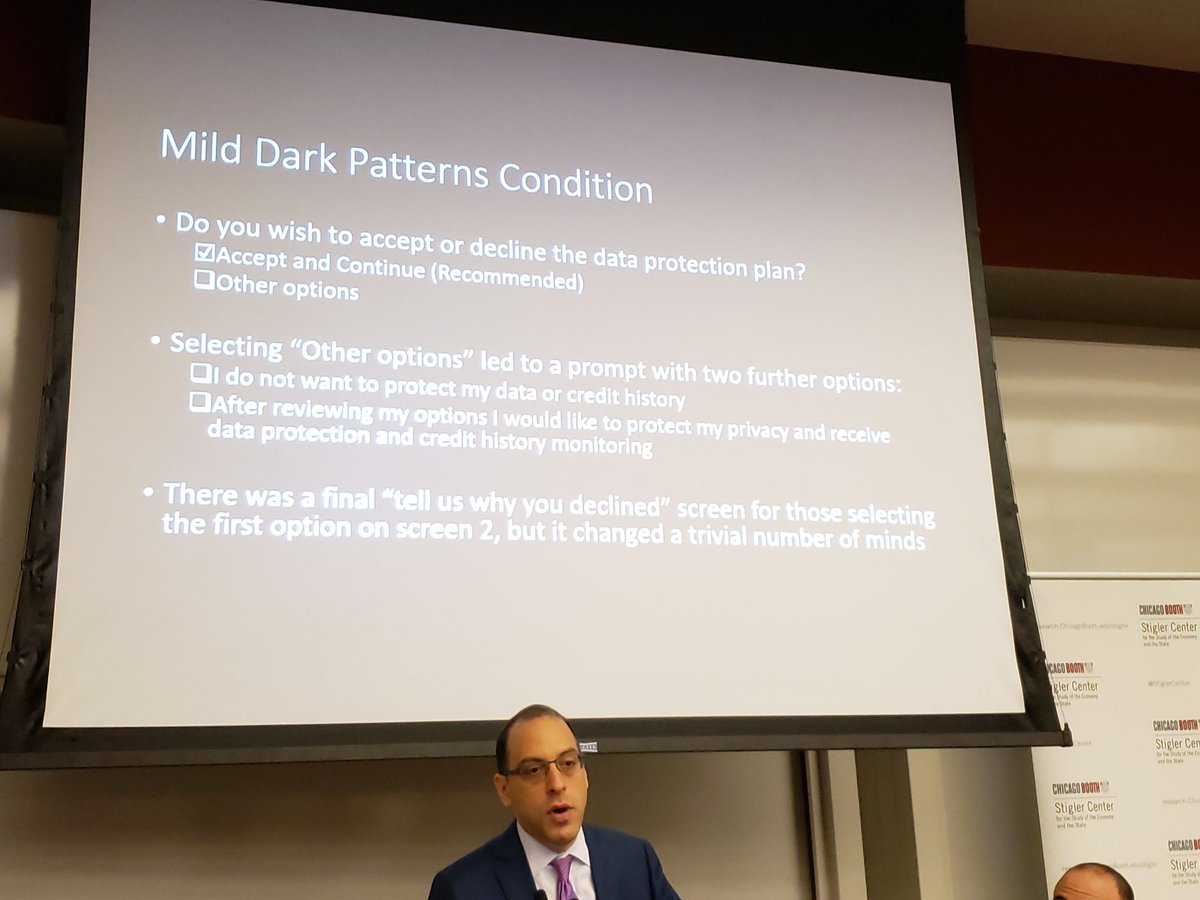
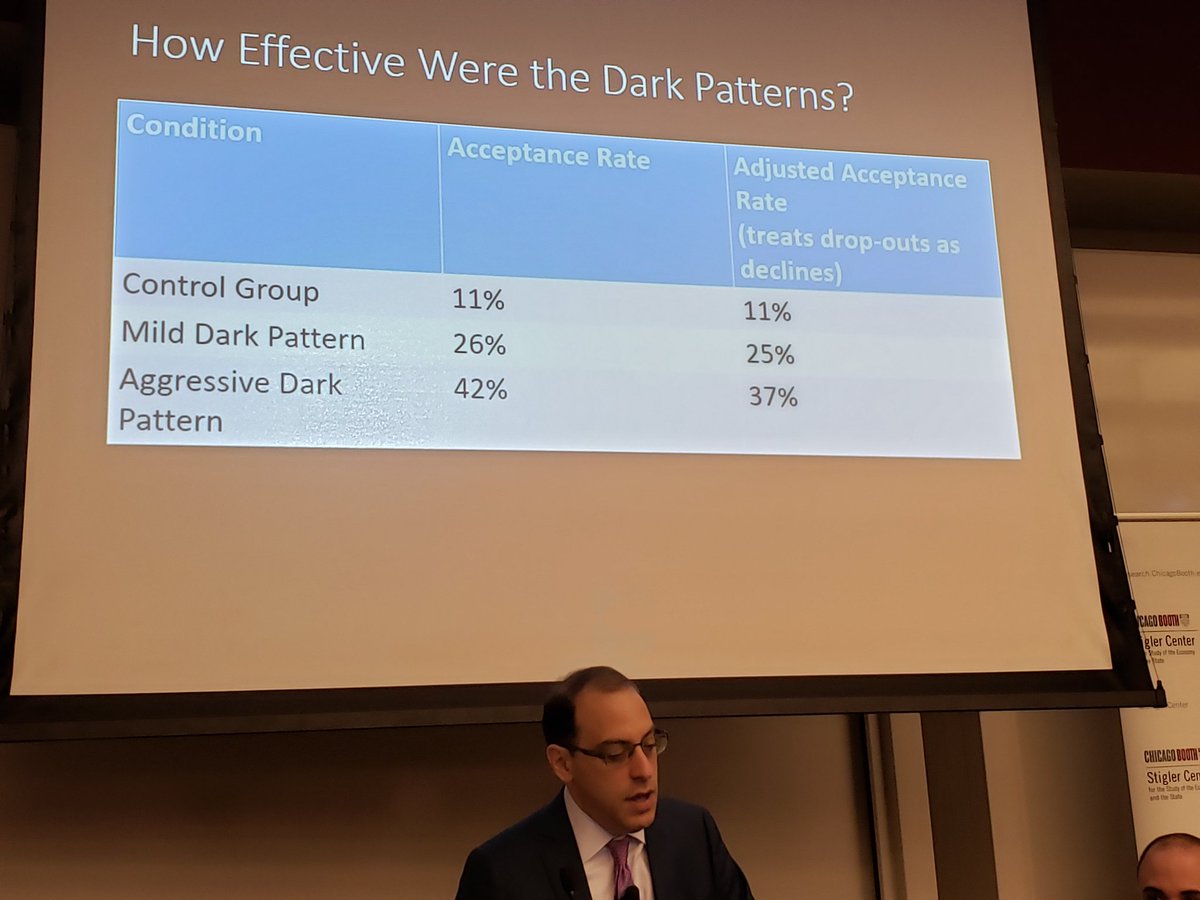
I love that this level of dark pattern counts as "mild"! Great presentation from @liorjs at #StiglerCompetition
♥ 1↺ 1
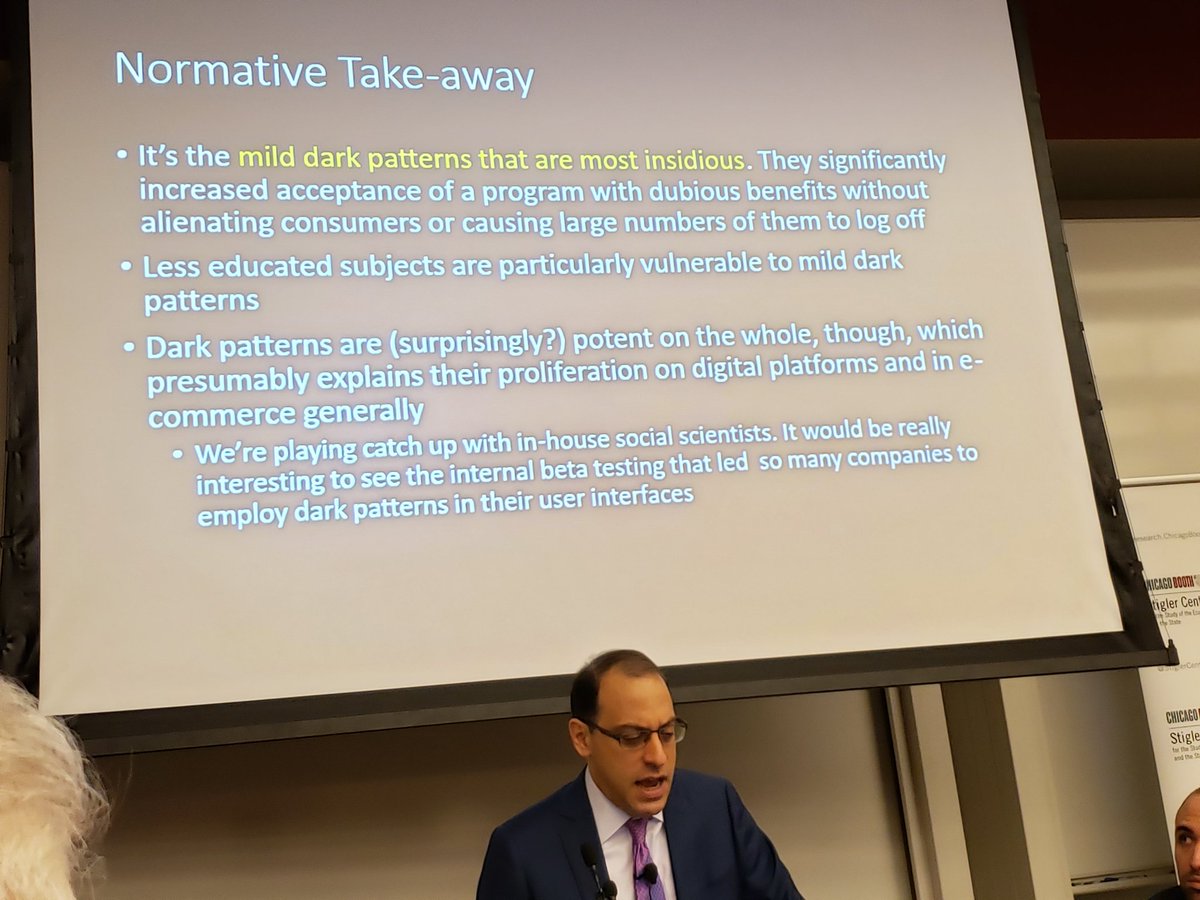
Mild dark patterns are actually *more* insidious; less-educated users are affected more. #StiglerCompetition
↺ 2
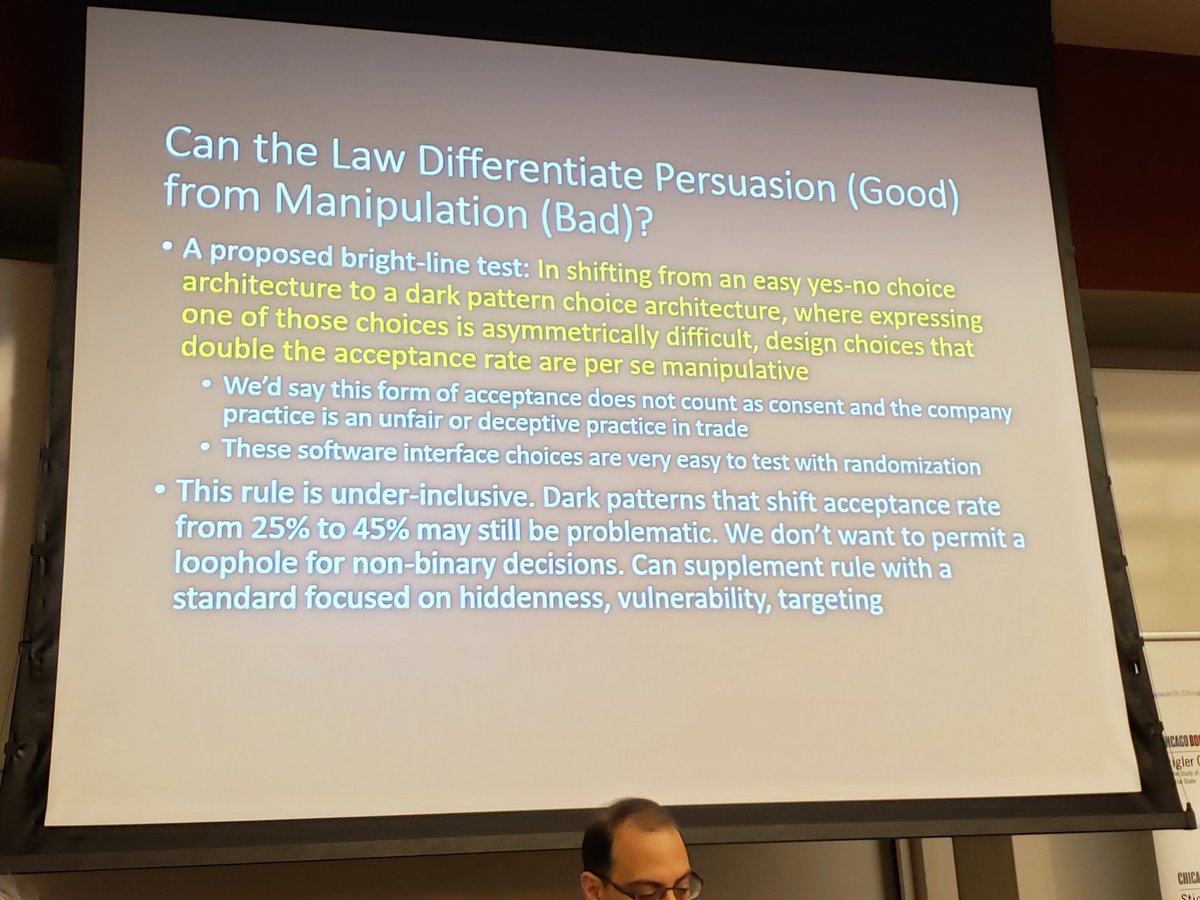
I've been trying to come up with a way to distinguish influence from control, and it's great to see work getting at the same question. I'm not sure that this statistical definition works though, it seems to require too much caveating and a baseline seems hard. #StiglerCompetition
♥ 8↺ 2
I don’t think that’s enough to capture issues with eg. having enough data about you that I can dictate your behaviour, possibly without you even noticing.
♥ 1
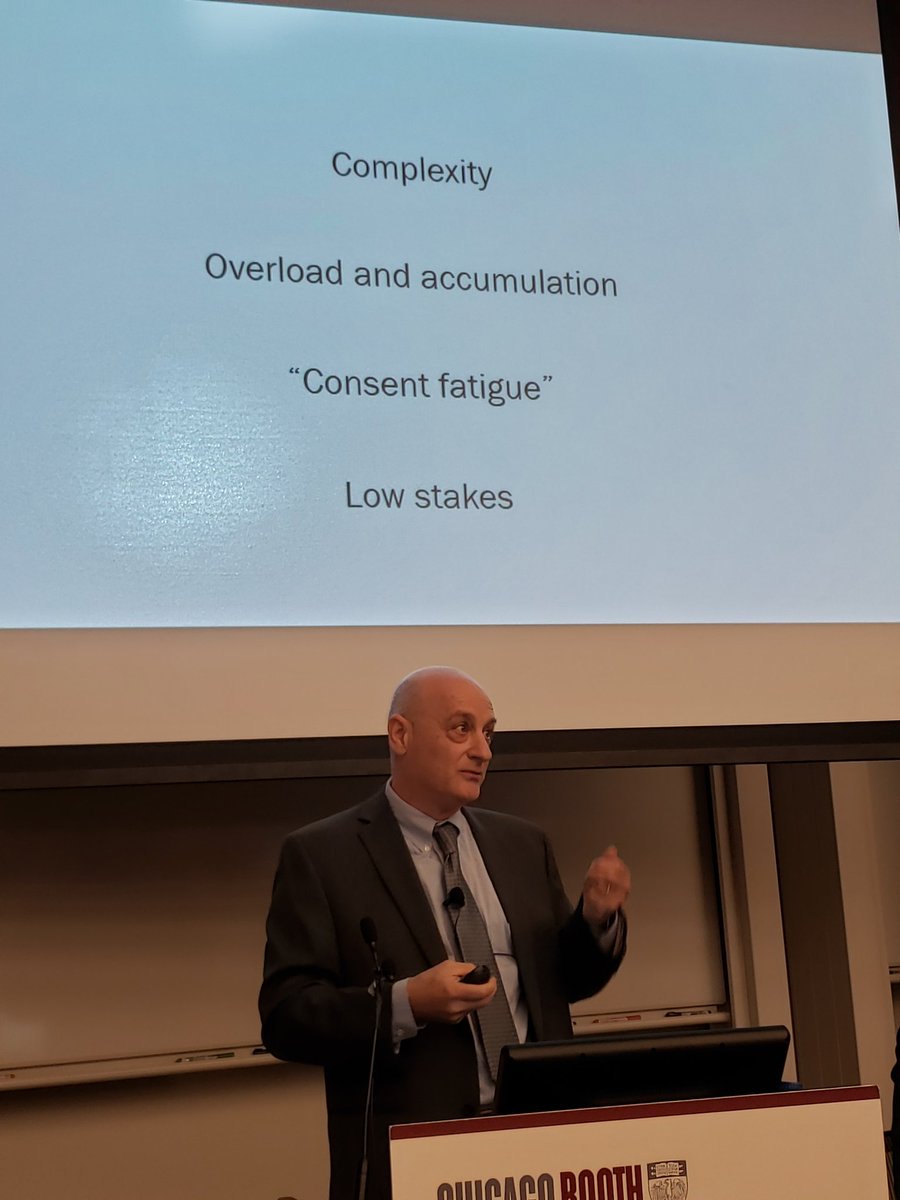
@omribenshahar makes an excellent case about how mandatory disclosure, requiring people to be informed, is a terrible approach to helping them. Notice and consent is a bad framework. #StiglerCompetition
Design > Disclosure
@omribenshahar makes an excellent case about how mandatory disclosure, requiring people to be informed, is a terrible approach to helping them. Notice and consent is a bad framework. #StiglerCompetition
♥ 1
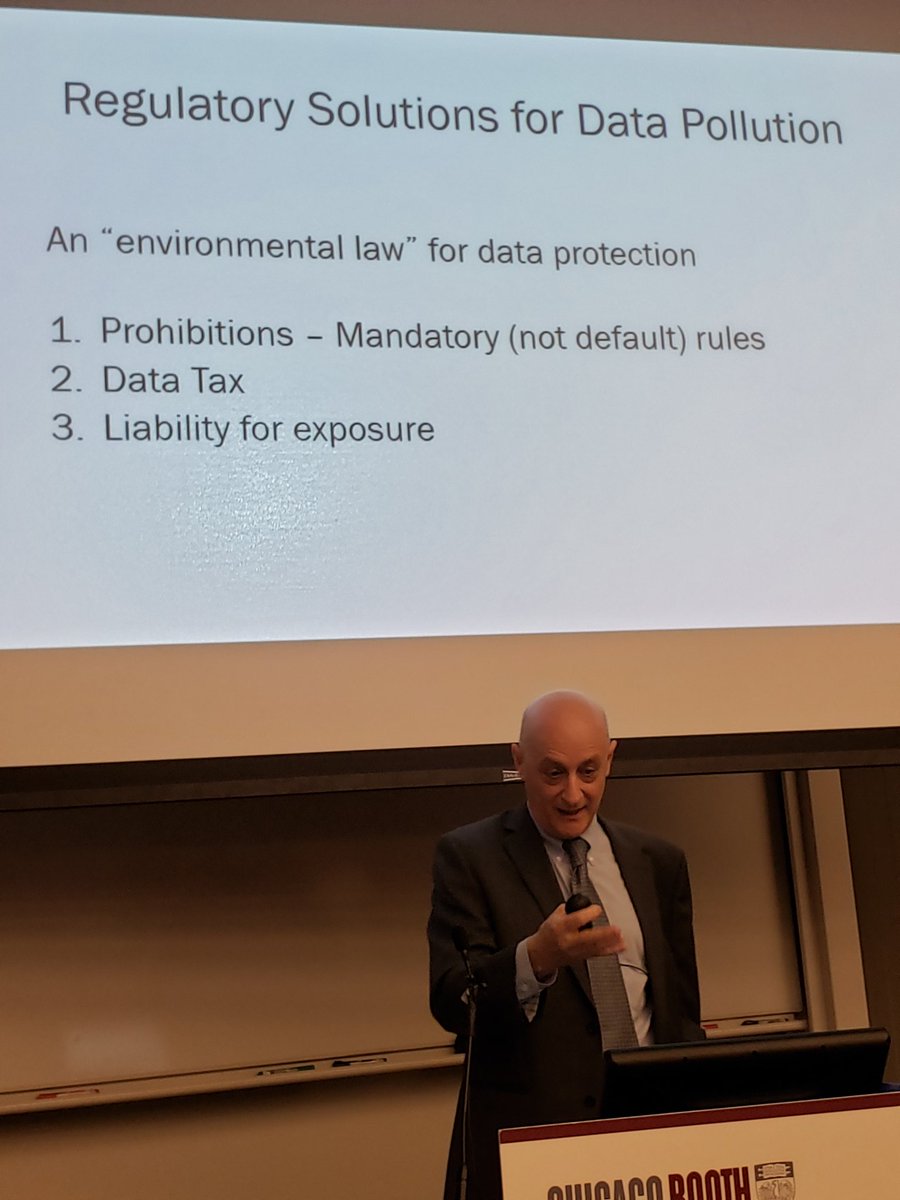
@omribenshahar is thinking of regulating data using a form of environmental law. I don't know if it's workable but I like the creativity! #StiglerCompetition
♥ 1↺ 1
But maybe I intend to control a crowd (with all the issues involved in establishing that of course) but am only partly successful — is that still control? Also I’m not sure agents necessarily think through their intent sufficiently here.
Legally, yes. But what I’m looking for is a framework in which (generally) advertising to people is ok, but there is a point at which the targets lose so much agency (eg. through nudging) that you are on the dark side.
♥ 1
Yes, I was thinking it would be good to have someone from ODI at #StiglerCompetition, maybe next year! Cc @olivierthereaux.
♥ 3
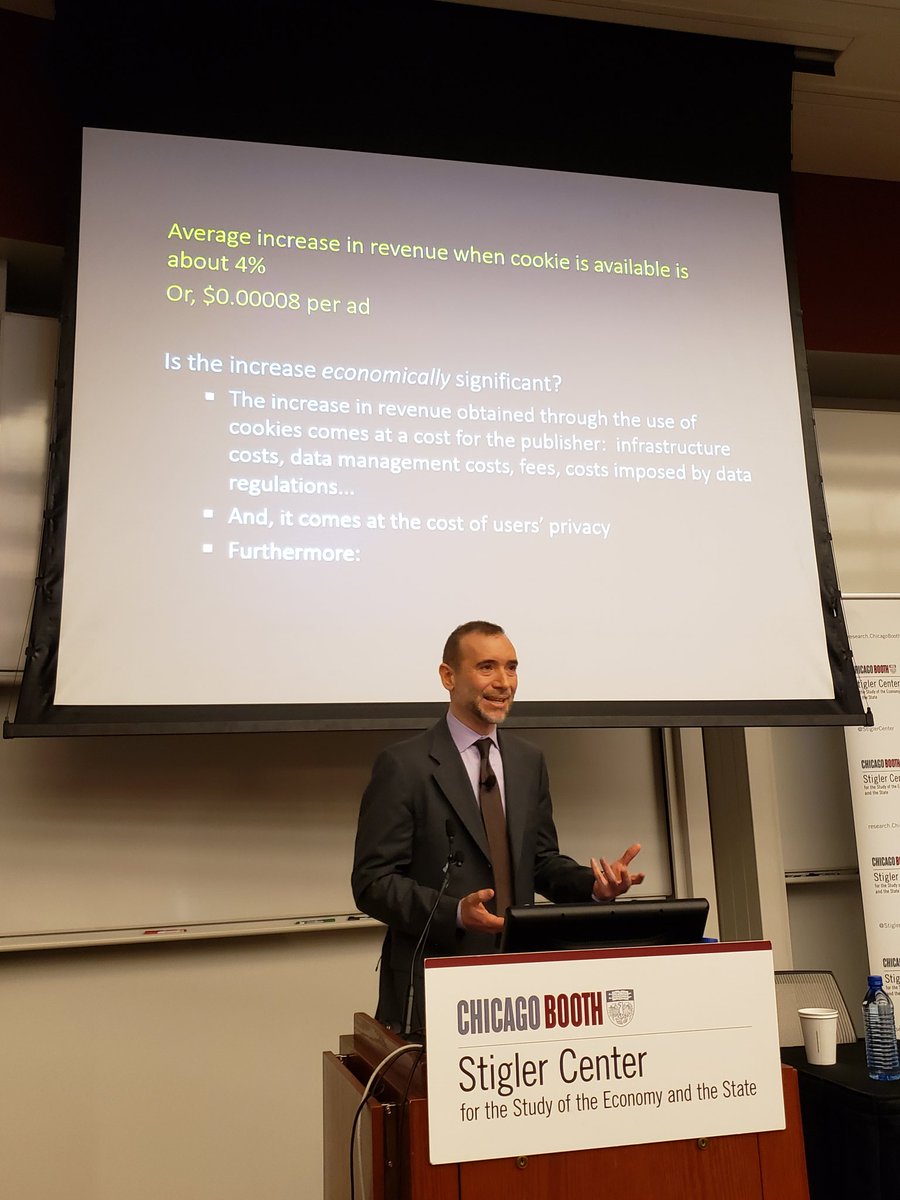
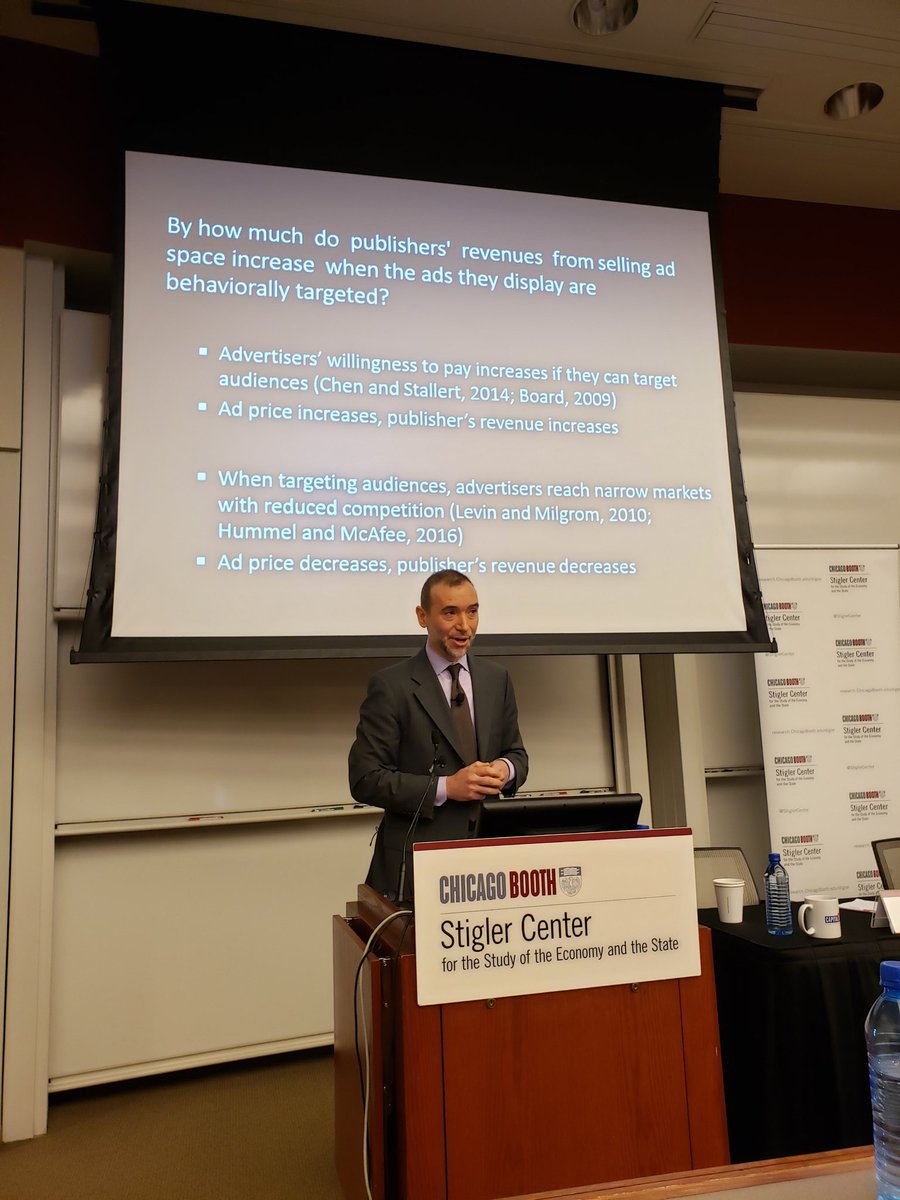
The benefit to publishers from targeted advertising is 4%, and that does not factor in the added costs from supporting it. This is a huge result: adtech, platforms are harming privacy to fleece publishers. #StiglerCompetition
♥ 57↺ 38
Wow, thanks, this looks amazing. It’s funny: my notes are precisely that I am looking for a framework comparable to Contextual Integrity, so this looks potentially very aligned! Will read soon.
♥ 1
“I was on the advertising side of things, and noticed how almost the entirety of every new dollar that entered the system went to Google or Facebook. This seems monopolistic.” — @DinaSrinivasan #StiglerCompetition
♥ 2↺ 2
Yes, it has to work in particular cases. As I was telling @internetdaniel, this led me in the direction of trying to come up with a framework similar to contextual integrity so as to account for actors, norms, etc. Have only notes yet
Excited to check out papers.ssrn.com/sol3/papers.cf…
♥ 3
“There is literally no way to audit what Facebook is doing in advertising. This is a reflection of monopoly power.” — @DinaSrinivasan #StiglerCompetition
♥ 3↺ 3
“Is it rational behaviour from The New York Times to include a tracker from Facebook on its pages? No. Facebook is a competitor in advertising. So why does every publisher in American do that?” — @DinaSrinivasan #StiglerCompetition
♥ 14↺ 5
@DinaSrinivasan makes a great case that you don’t need to establish harm, consumer preference is enough, and it is clearly being violated. #StiglerCompetition
↺ 1
I would love to hear more about that! Will it be applicable? We won’t know without trying, but worst-case scenario it will be interesting?
♥ 2
The paper will be published soon — watch this space.
♥ 1
Highly recommended read: “The Antitrust Case Against Facebook”, by @DinaSrinivasan.
papers.ssrn.com/sol3/papers.cf…
♥ 6↺ 2
@DinaSrinivasan is explaining something that few understand outside the tech world (and folks in tech don’t think about): tracker scripts have full control to act in the browser, they can be changed without asking publishers or users. #StiglerCompetition
♥ 2↺ 1
@paulohm: “There is a ‘privacy paradox paradox’ which is why do economists think the ‘privacy paradox’ is an interesting topic of study given dark patterns.” #StiglerCompetition
This whole panel is on fire.
♥ 3↺ 3
@paulohm: “There is an oligopoly of snake oil salesmen called the ad industry that takes in money for no purpose other than to buy yachts for adtech CEOs.” #StiglerCompetition
♥ 1
@ashk4n: “Behavioural targeting is basically blockchain without the cryptography.” #StiglerCompetition 🔥
♥ 4↺ 2
Yeah, I’m not surprised but it’s amazing to get proof. It’s such an obfuscated industry.
@matthewstoller They should ask for RTB logs and impression logs.
One of the values of the CCPA’s “Do Not Sell” provision is that it breaks the current situation in which publishers are forced to sell data to third parties. #StiglerCompetition
♥ 6↺ 3
Yeah, I don't agree that that should count as consent but he does have a point that trying to force informed consent does not work in users' favour.
Not even! We were just talking about how fraud and audience reuse are not priced in (not from ignorance, just because that would be another hard study).
♥ 1
This presentation was teasing the result; the study will become available soon.
♥ 2
“If we give newspapers a greater share of income from algorithmic platforms we are cementing an unholy alliance between monopolists and clickbait.” — @grolnik #StiglerCompetition
♥ 5↺ 3
@CageJulia makes a very good (and passionate) case for supporting journalism through media vouchers. #StiglerCompetition
♥ 7↺ 2
You know what, it just might be!
I wonder if @CageJulia’s scheme could use a preference list for overallocation; pick the overallocating at random and move down their preference order.
It’s more complex but if I overallocate there are outlets I DON’T want to get any of my voucher money.
#StiglerCompetition
♥ 1↺ 2
So if I know my first choice is popular, I might be tempted to strategically allocate to my second choice. This could lead to weird voting effects.
It’s possible I’m overthinking the issue, too. #StiglerCompetition
Hey — Hal Varian basically told me I was poorly dressed so there are victories right there from that shirt!
I agree with @Sally_Hubbard that the idea of allowing platforms to keep CDA230 protection in exchange for better support for the press. CDA230 keeps platforms irresponsible for the harassment and harm they enable, it's a problem on its own. #StiglerCompetition
♥ 1
This is from the “Media Industry” part of research.chicagobooth.edu/stigler/events…. I don’t believe the report is available yet; I don’t know to which degree this specific idea is in it or just an idea thrown around on the panel.
♥ 1
I honestly don't know yet, we will have to look very closely at the details. It does suggest a path away from targeted advertising.
I just realised that that first sentence was hard to parse because it’s, well, missing the words: “…is problematic.” at the end.
Small detail.🙄
♥ 2
Much agreed! It’s an amazing event. I only heard of it from @jason_kint because he knows everything that’s going on.
♥ 2
There was a livestream, and I believe it’s recorded too: youtube.com/channel/UCWnfW…
♥ 1
research.chicagobooth.edu/stigler/events…
Amazing conference.
♥ 1
You all... I don't know how to say this... You all have weird shiny blobs growing out of your heads.
♥ 1
Whoa, fighting words from a LaTeX user.
It's more complicated than that. At some point it was described as an SGML schema which does generate a deterministic parser. But it wasn't implemented that way and the structural incentives for a distributed, extensible language don't match that method well (put mildly).
♥ 1
The HTML5 parsing algorithm does indeed map pretty much any arbitrary byte stream into a deterministic tree. As grammars go that may be considered a strange case 😉
You do! It's a big win and it matches its environment much better. But grammars rarely describe or accept arbitrary random strings.
Absolutely, but also forward-compatible and resilient. Errors are a bad user experience so browsers are incentivised to paper over them. So it has essentially no reject state to avoid incentives for drift.
Mostly you'll get gibberish in a <body> but there are plenty of implementations, knock yourself out!
Awww 😘
Isn't that a bot anyway?
Legit. Totally get it.
♥ 1
Oh wow, these look super interesting! I’ve started to accumulate a big pile from the conference but I’m definitely reading these, thanks!
♥ 1
It counts as publisher revenue in adtech numbers, yes (but not in this study since they looked at impressions actually seen by the publisher).
♥ 3
If you want to work somewhere with a great mission and that's serious about both digital innovation and ethics, remember we're hiring!
Quoting a tweet by @NYTimesPR ↗
♥ 6↺ 3
It depends on the position but in Tech there are definitely remote options!
♥ 2
Wait. So not only did the @IABEurope see the TCF as illegal but now folks like @mmatthiesen who pimped it to publishers are trying to profit from the play? How far is this from qualifying as fraud?
♥ 2↺ 1
Oh dear, this is pure comedy.
♥ 1
And under ITP cookies set on the client only last seven days.
But that's because you're turning the clock backwards on sustainable innovation, Jason. We can all see how sustainable this is.
♥ 2
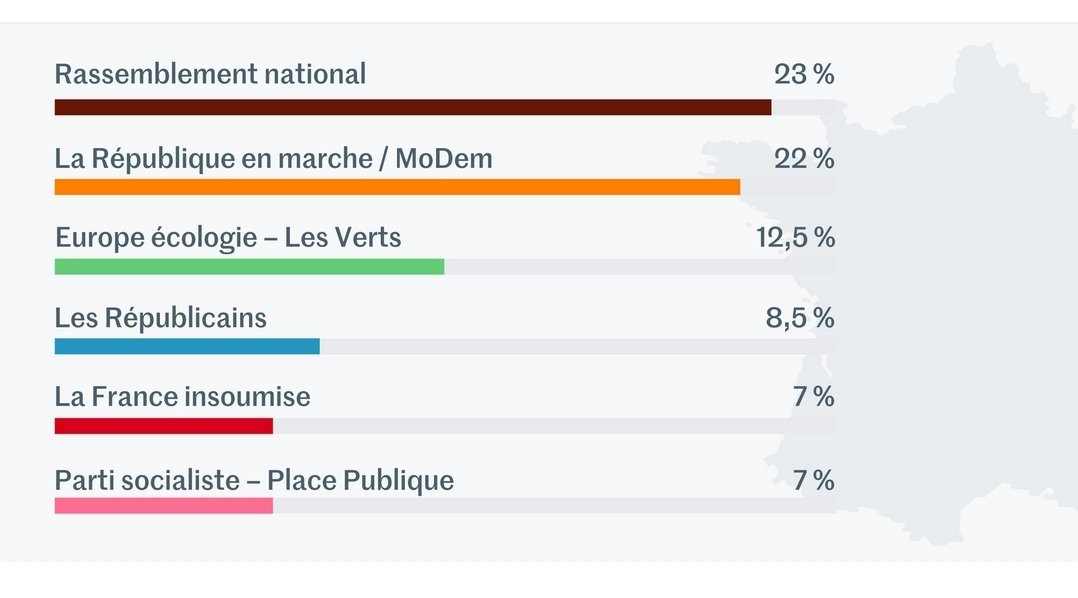
The map has a legend, bottom left?
Does a forced sale count as commerce, though?
We were talking about exactly that yesterday. Do you know what in the Wiretap Act enables this? It's still time to amend!
I would start with the EFF's Panopticlick.
Haha, yes. For GDPR they used the joint controller framework to assert rights over the data but not responsibilities, which stayed with the first party. Almost beautiful if it weren't so evil. So I'm trying to think of their CCPA jerk move!
♥ 1
Unless screwing up is a logical necessity.
♥ 1
To put it in @monteiro's words: "An algorithm is not a spine."
Quoting a tweet by @Chronotope ↗
♥ 23↺ 9
All those people who kept telling me that exercise was important... were right. It's infuriating.
♥ 1↺ 1
A lot of what the press finds is brought up by academics. Few others have both the time and intellectual equipment to dig into the layer of obfuscation behind today’s tech.
♥ 1
Buffy.
♥ 1
That seems relatively unlikely. The targeting would likely take place asynchronously from the writing; and ML models are hard to target like that on purpose.
Also: this is more generally a threat from advertising changing writing, and it’s no worse than clickbait.
Yes, I don’t disagree it’s a potential risk, but my points is that what’s profitable is likely to change faster (and in a more fickle manner) than can be written for.
♥ 2
Cool interview of @stuartathompson by @Bryson_M for @DCNorg: “The New York Times helps consumers decide where to draw the line on privacy” digitalcontentnext.org/blog/2019/04/2…
♥ 4↺ 2
Judging from your thread, I see a few red flags with your approach.
First, the distance between stated preferences and AdChoice numbers does not represent a “privacy paradox”, but it strongly demonstrates that AdChoices is a failed choice architecture.
In fact, from a policy standpoint you seem to provide robust proof that the “transparency & choice” approach that @privacy4america and friends keep singing about has no leg to stand on.
Second, you seem to be comparing CPMs for the general population with those for AdChoice opt-outs. Those people are not at all the same as untracked users: they are a tiny minority that feels strongly enough to overcome AdChoice clunkiness. They *should* command lower CPMs.
I mean those are people who are very clearly willing to put work into saying “don’t @ me”. That’s a strong signal that advertising to them is a lost cause.
It’s *very* different from a situation in which users are just not tracked, especially if by default.
I will read the paper, but pricing opted out users does not yield the price of regular uncookied users.
I fail to see how comparing several bad choice architectures somehow shows anything about revealed preferences. It’s only revealing bad design all around, and possibly a tendency for learned helplessness.
No: bad design in the overall choice architecture. Users who don’t know that their browser is sharing data can’t reach for an extension. It’s not revealing preference, it’s just revealing ignorance.
It’s hard to discern what point you’re trying to make. You state that 40M people have ad blockers out of 3.7Bn but somehow that accounts for 16% of blocked impressions? So… that 1% of users drives 16% of impressions? How does that add up?
The PageFair number seems accurate based on what I know.
But in general yes, the numbers in the paper don’t add up. And where they do they don’t tease out revealed preferences because they don’t get at literacy.
♥ 1
And I appreciate your interest in quantifying this but that’s precisely what I’m getting at: in quantifying it sort of matters that the numbers add up!
Only the first party should be a controller (with perhaps very rare and purpose-limited exemptions), joint controllership should die a fiery death unless there is unmistakable cobranding, the cases in which consent can be relied upon should be stringently limited.
♥ 1
At least a summary of DPIA and LIA should be public. User agents (operating system, browser) should exist in the framework with specific obligations. Location data should be sensitive at least at some degree of precision.
♥ 1
Tougher rules should kick in at a given level of industry concentration (measured eg. by HHI) to account for lack of user alternatives. Using the sentence "transparency and choice" seriously should lead to jail time.
♥ 1
And in my experience most users don’t differentiate between protecting their privacy and blocking ads. Ad blockers are privacy tools, it’s a key part of the problem with adtech not understanding sustainability.
♥ 2
is that in the cards?
♥ 2
I think that’s a fair comment, Fatemeh. The standards world has its own tools (GitHub isn’t particularly arcane compared to the rest, but that’s not saying much!) and when it moves into a new space there’s always this friction. If it’s any consolation it used to be WAY worse :)
♥ 1
BTW, is this in any way discussed in w3.org/community/web-…?
Yeah, discourse.wicg.io was meant to be a form of middle ground between these but I don't know how well that worked.
♥ 3
I was thinking about that but part of the problem is finding fraud people who aren't themselves fraudsters to get involved 🙄
Actually we did standardise on that back when we were called "hackers". But then the oldest passed, most went too Google/Facebook, and the rest went into hiding.
Quoting a tweet by @random_walker ↗
♥ 15↺ 1
Absolutely, the people who want this should be allowed to opt in and leave the rest of us alone.
♥ 6↺ 1
That's because they're illegally designed to force you to accept. The annoyance there also stems from adtech, it's certainly not done for privacy.
♥ 1
Why have it set a unique ID? I mean unless for people who specifically want tracking. But pre-setting consent strings for the whole IAB registry would be a good idea.
♥ 2
The benefit to publishers from letting others mine their audience is highly debatable. If some people want to be tracked and that gets higher CPMs, fine, but beyond that we'd benefit from first party more.
♥ 3↺ 1
Also, we have a relationship of trust with our users. That's something the adtech universe can't seem to even comprehend. We can't be deceiving people for some purported good that they don't choose. Beyond publishing, that's not how you run a consumer business.
♥ 2
Better UX is a start, it also can't be modal. The extension should allow things like blocking ads from sources that have displayed low quality crap (ideally from brands, but that's harder). Fuck up once, lose business. See how fast ads improve if users get a say.
♥ 3
Ewe.
♥ 1
You’re describing an idealised situation in which the two align well. The problem is that adtech is actively consumer-hostile, which forces publishers to pick a side. Pick the ad side means losing consumers, which then loses ads — so it’s a no brainer to align with consumers.
Of course, if the adtech industry had the wherewithal to get its shit together that would serve everyone — but it’s grown so used to getting away with aggressively anti-user behaviour that it doesn’t even understand how unsustainable that is.
The (potential) benefits of automation and some degree of targeting are well understood, but this is not a balancing test: if it can’t be done safely and respectfully at scale, then it doesn’t work.
♥ 1
You madman.
♥ 1
Il est grand temps de pendre le dernier notaire avec les tripes de l'avant-dernier.
♥ 2
The story takes place in an alternate history in which the Ducs de Bourgogne have taken over and imposed their will across the land?
♥ 1
Poland has summer?
♥ 2
Sincerity is overrated, we're here for the cats and making accents at @can.
♥ 2
Indeed — you don’t notice their absence, but they haven’t noticed yours either since they are still getting all your behavioural data…
♥ 1
I read a lot of you criticising the @PrivacyProject for publishing this piece by @heidimesser. I disagree (and not because they work on the same floor and can throw things at me). 👇
Quoting a tweet by @PrivacyProject ↗
↺ 1
Obviously, the piece is bad, in so many ways. But it is very representative of attitudes in the anti-privacy movement, and as such I think it should indeed be documented in the project. It should be on file, if only anthropologically.
♥ 1↺ 1
It's important to understand where this all comes from: these people essentially believe that there is some form of Manifest Destiny that got them to use personal data when it started leaking everywhere and they don't understand why anyone is mad at them.
Do you have a good source for the history of privacy? I'm not surprised that @heidimesser has unsubstantiated claims, but @superwuster's contention that serfs had no privacy was more problematic (on conceptual grounds alone); I'd love to dig deeper here.
Some people are extremely online. @LAM_Barrett is extremely on fire 🔥.
Quoting a tweet by @LAM_Barrett ↗
♥ 2
Thank you!
I can't speak for that team but the purpose of Opinion isn't to issue "Times-approved ideas" , that's not at all how it works. It's there to foster and create public conversations. There are many conversations worth having around this piece.
They had wine and prostitutes throughout, I don't think it's quite your typical faculty meeting.
♥ 2
Also, I don't know that any editor involved there thinks it's "obviously bad". That's just my take.
I would want to get citizenship so I could cast that vote!
♥ 1
I've done so before and it was an 8 hour nightmare at only five times the price!
I love trains, it's just that I have limited trust in Amtrak's punctuality (and they're overpriced as fuck). I still use them now and then!
Wait, you were in Manhattan and didn't come say hi? 😭
He's written a few! "Guarding Life's Dark Secrets" maybe?
Great, thanks!
♥ 1
Happy GDPRversary!
♥ 5
I knew you'd approve.
♥ 1
There's one way to find out...
♥ 1
Yup, there are details on how in brave.com/update-rtb-ad-… and if you look at the linked "Content Taxonomies" you can see the IAB designed the system to track people interested in alcohol and people reading about substance abuse.
↺ 1
Having a good source of information on the impact of GDPR would be interesting, both the good and the bad, but this is a cheap collection of opinionated fear-mongering.
There's evidence in both directions for the impact on Google, which is what you'd expect during a soft-launch year, and also what I'd expect to read from a serious source.
Favouring first parties is in line with consumer expectations. That's only a cost for businesses trying to reach consumers without being consumer businesses, which is a debatable position to start with.
It's a shame that adtech has given up on being a consumer-friendly industry, there is much potential value and innovation there. But you can't blame regulation for that, it's self-inflicted.
Further note that helping first parties and helping first parties when they appear in a third-party context (as G and FB do) are two different things. I expect impact against the latter on the horizon.
If you have consumer-friendly initiatives to share I'd love to see. Trying to keep an ad business long-term viable when the ad industry is hellbent on driving off a cliff is exhausting.
First-party controllership is very different from walled gardens.
There are many things that can be done with others. It has to involve accountability though, which will certainly shake things up - including for the platforms if they plan to keep playing.
Actually it is inherently more accountable and, yes, more ethical for data collection to happen through who you're interacting with than with a hidden party you've never heard of.
It doesn't prevent misbehaviour but it assigns responsibility where it can be seen.
It's hard to imagine a setup more hostile to small first parties than the current one. The question is whether we can pass data regulation fast enough to save some of them. Right now they're sharecroppers forced to use Roundup.
♥ 2↺ 1
Still got the Australian one!
Quelle raison de s'allier avec lui, il aurait juste dû se retirer.
LFI c'est quoi déjà? La Formation Inutile?
But donuts.
Je crois que quand tu mènes le PS en dessous de 10% tu te retires de la vie politique!
Votes should be counted proportionally to how far you are from average life expectancy. t.co/ELEv1IgJ5y
♥ 6
Merde. Ça collait tellement bien à la chanson.
Un homme AZERTY a la force de Gaule Dvorak. t.co/uUpiJEkVsQ
The first proposal to get to this collaboration was made in September 2014. It took a while but I'm extremely happy to see it finally come to fruition!
Quoting a tweet by @yoavweiss ↗
♥ 10↺ 1
I don't necessarily doubt that, but the question really is: how long would known issues with your incentive structure have to persist before they are considered if not malicious then at least negligent?
♥ 2
She would definitely be an interesting choice! economist.com/charlemagnes-n…
People just like goats.
♥ 1
Behavioural advertising isn't paying publishers. It's not what brings you free stuff on the Internet. It's just how Google and the rest of adtech sells your data. What value it does have - to advertisers - can be delivered without surveillance.
So let's. wsj.com/articles/behav…
♥ 98↺ 52
That's unfair. That's certainly not how they think. As far as I know the study is not yet published, they can't link to it.
♥ 1
I had no idea some people can't unpop. What a website this is.
I'm not sure about the rumble though. I can make a loud wind noise (for me) by blowing through my nose with that muscle clenched, is that it?
♥ 2
Not if you account for the costs involved in getting to that 4%.
♥ 8↺ 1
Also because it's a Ponzi scheme.
Loud *to me*, I don't think it's externally noticeable, apart from that I look like a moron when I spend five minutes focusing on it 🙄
Compliance costs, costs from having your audience resold by random others, costs from the engagement you lose because of crappier performance... It adds up.
♥ 1↺ 1
Yeah, but serious media have developed insulation against those incentives.
♥ 1
It's more complicated than that. Dropping BT would not result in a loss of only 4%: many deals are tied to it, notably in direct. This finding is about the cut and the myth of advertising powering the free Internet. But cutting BT requires more hops.
♥ 2
No, the finding is essentially that the notion that BT is bankrolling the Internet is a myth.
♥ 2
No, the current system rewards bad but brazen liars. Different results, Norm!
Exactly. The paper cannot convince a publisher to act alone — the game-theoretic setup is still forcing them into the current position — but it could convince some publishers (who aren’t yet) that privacy regulation is in their interest.
♥ 4↺ 1
Now I have to ask: Who's Gollum in this picture?
It's a position I've seen quite a few times from some publishers and definitely from the IAB and various other anti-consumer groups.
And it's going to be fun. User-first versus adtech.
♥ 10↺ 1
Because of Marcos I looked up tactical gear on Amazon. Now I know that tactical sporks are a thing. smile.amazon.com/Ka-Bar-Tactica…
Worth it.
♥ 3
I think that paper is not supposed to circulate; it hasn’t been presented yet.
I can’t speak for the WSJ but I would be very surprised to hear that they have a policy to avoid external links.
♥ 2