February 2021
261 tweets
Congratulations! This is excellent news.
♥ 2
It's a degralescent deadline, that's just it.
♥ 1
Now & then I find myself thinking that maybe the ad industry will consider finding lobbyists whose strategy is a bit smarter than fighting users.
GPC is good for everyone, and it matches the law. How about you updated your position for this decade, folks?
mediapost.com/publications/a…
♥ 9↺ 3
Maybe the saddest part here is that there are plenty of smart people in advertising, I know because I've met them. But somehow they're still represented by a rearguard of spokespeople who last took the pulse of the industry when clamshells were still hot.
♥ 4
As the guy who has keeping up with this as part of his job, I pretty much agree 😁 But of course, the federal one would have to be good.
♥ 1
At a quick read, the COPRA bill is interesting but not huge.
Not even the letter, just "transparency and control" or "consented data". But that's not everyone, there is some real progress, notably from marketers.
♥ 1
They need help figuring out what change they need.
Well if you don't sell it's a noop anyway!
♥ 1
(Speaking personally) We don't have plans to use the prompt, on iOS or elsewhere, because the kind of practices that are covered by the prompt shouldn't exist in the first place. Taking users into account means developing an ad market without that.
♥ 2
Following the announcement of GPC with @brave supporting it, Brave saw a 6% increase in daily new users compared with the previous month.
Privacy is good business. GPC is good business. I mean, 6% month on month? Privacy is basically growth hacking at this point.
♥ 10↺ 3
Dur.
♥ 1
What Chris said. Trade bodies should also serve as reality checks. At the very least they shouldn't be counterproductive. If you're in an association and they haven't noticed something's going on with privacy, fire them!
♥ 1
In case that's useful to some folks: I've been using Firefox with the “Auto Tab Discard” extension, and it works just like a charm.
♥ 10
Ha, it might not help if you need to apologise for tabs — it keeps the tabs there, just inactive. For tab management I use another extension called "Other Win" with which I can give names to windows and send tabs around easily to keep them sorted.
♥ 2
I have a setup that I like, it's not perfect but it's usable. Happy to share!
♥ 1
Gotta have some sympathy for the Chrome users.
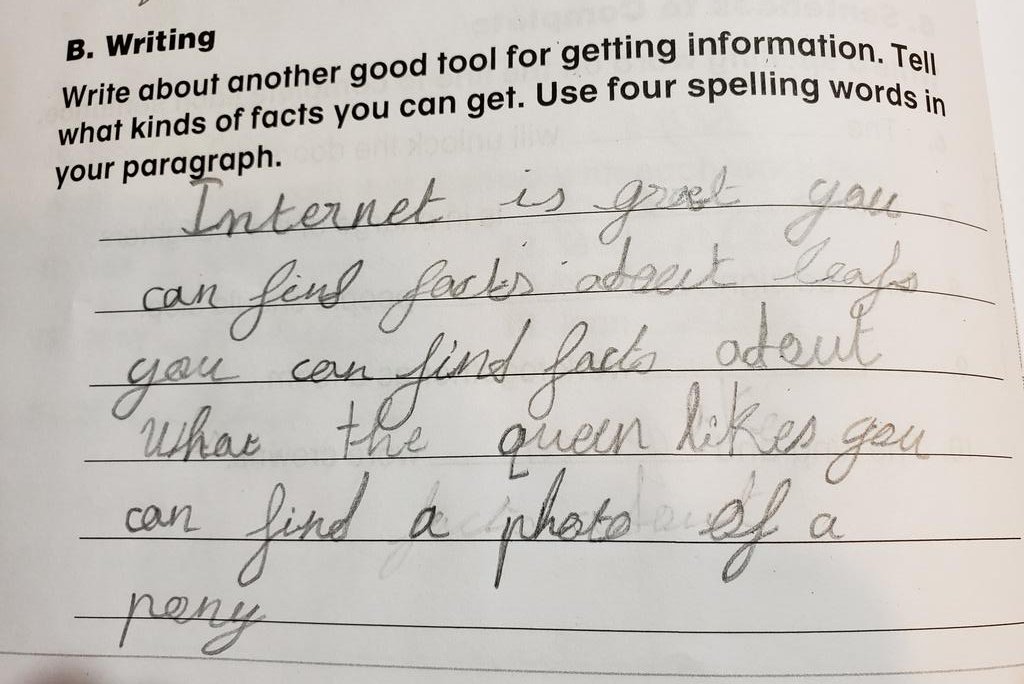
That's my Internet.
Leaves, queens, and ponies. That's the only defence big tech will be using from now on.
♥ 4
Bilingual schooling 😁
♥ 1
It's the damn ponies.
♥ 1
It's great! I get to have two million tabs but the resource consumption remains pretty reasonable.
Thank you ♥️
♥ 2
I would like that Internet too.
♥ 1
GPC support is live; having a GPC resource isn't required, it's just a way to declare support. I've been meaning to track that down, though, so it might happen soonish.
♥ 1
They Stormed the Capitol. Their Apps Tracked them. @cwarzel and @stuartathompson are back at it! This time they got geolocation data for the Capitol rioters and promptly deanonymised them.
nytimes.com/2021/02/05/opi…
♥ 11↺ 8
I think the headline tells you everything you need to know about the quality of the arguments that follow.
♥ 2
Thanks, that is indeed a good interpretation of the spec!
I know, accountability in the ad system, kind of a wild idea 😁
♥ 1
"Only in philosophy" - might you have heard of tech people?
♥ 9↺ 1
I think the worst part is people starting to have completely uninteresting conversations about some tangential detail in your mentions. And sometimes it can last for months.
♥ 3
Mute? Yes, but sometimes it just keeps happening 😅
♥ 1
Haha, I blame @NYTStyles for the photobomb 😁
♥ 1
I've never seen this enforced.
“I think that your readers should take it very seriously that our attorney general has tweeted that the GPC standard meets the current CCPA regulations,” said @Dominique2010.
digiday.com/media/why-a-tw…
♥ 16↺ 9
Mince, c'est cassé non?
♥ 1
Like I said elsewhere in the thread, it looks like he may have been pointed in the wrong direction for his ask. I'd need a bit more context to probe, he's of course welcome to DM if needed!
♥ 9
Has anyone kindly made and shared a redline of 230 with SAFE TECH?
♥ 2
No worries! Haha, well, always happy to provide some good discussion fodder ;)
♥ 3
Thank you! Perfect *chef's kiss, en français*
♥ 2
Got one twitter.com/ewlamy/status/…!
♥ 2
Thanks! This is amazing.
♥ 2
I think the part of this critique I disagree with the most is "the Times keeps playing with M-80 fireworks while telling us all how bad and dangerous explosives are."
People have a clear intuition that explosives are dangerous. They really don't have that intuition with data.
Quoting a tweet by @cwarzel ↗
♥ 16↺ 3
We've been through these motions so many times over the past couple decades.
Explain it's bad: ¯\_(ツ)_/¯
Give examples of how it could be misused: ¯\_(ツ)_/¯
If people treated explosives this way, it would be a journalistic duty to blow shit up to show them.
♥ 3
This shouldn't detract from the fact that using surveillance data for journalistic purposes, of which the authors list other cases, is a practice that still needs to be figured out. But I don't think that "just say no" is the best option.
♥ 4
They are!
♥ 1
That's an excellent comparison! You can in fact see @cwarzel and @stuartathompson in their best u uniforms demonstrating just that in this video.
Quoting a tweet by @NBC_EarlyToday ↗
♥ 1
Enforcement is a shit show because it wasn't designed right. That's a GDPR problem.
♥ 2↺ 1
Absolutely, but the thing is that we knew that going in. People were already worrying about the DPC being a problem before enforcement proved us right. If you don't design governance for a predictable problem, you're going to have a bad day.
I would have preferred a unified DPA that could knock some issues to the courts when they depend too much on ties to local law. But I'm not an expert in building European institutions, my area is Internet governance - it's easier 😁
♥ 1
One alternative to the "big bureaucracy" option is to have it so that if you process more than N% of a population's data subjects' data in a given year, you're in scope for the local DPA. Sort of similar to the CNIL's argument. That way you can kinda have it both ways.
♥ 2
That's true, and you also run the risk of rogue DPAs in semi-authoritarian states with politically motivated suits. It's certainly a concern I would have from where I sit.
Isn't having famous friends what Twitter is for?
♥ 1
The vibe I'm getting is that the judge has seen this one before. "Oh, yet another one of those. Let's explain the filter thing calmly, they probably have a child or assistant who can help."
♥ 1
Also, in case you're looking this is the costume for my zodiac sign and I wonder if I could pull it off.
Quoting a tweet by @nahhhlina ↗
♥ 3
I'm looking up toupee tape.
La drogue, je pense. Mais je ne sais laquelle.
♥ 1
The GPC could be used for that. Technically, nothing prevents browsers from sending it differently to different parties. Its scope is limited to the provision of data to data controllers other than the first party, but that's already a first step.
♥ 2
Under the GDPR, for transfers to 3P controllers, it conveys a withdrawal of consent or an objection to LI/PI depending on which legal basis was used.
Did they remove the thing where browsers would have to abide by site-obtained consent?
♥ 1
"In light of end-user’s self-determination, consent directly expressed by an end-user should always prevail over software settings."
This is nonsense, and does not match the purpose of user agents, which is to help the user through automation.
Quoting a tweet by @LauKaya ↗
♥ 5
What is being proposed here is that dark pattern consent obtained by the site would prevail over the browser's blocking, withdrawal of consent, or objection to processing.
It's removing a tool that works in the user's defence.
Now, if you're concerned about systems that make decisions instead of the user, then we agree: those need to be burned with radioactive fire and buried in a toxic waste dump, then forgotten about.
♥ 1
But when confronted with automated systems, the user is at a disadvantage. The idea is that the browser — the user's agent — can level that playing field somewhat. That should not be prevented under any circumstances.
It's back-of-the-envelope but it's a very interesting number from @matthewstoller all the same (and at first brush it seems fair). It would be fun to have running tally, including for other social media like YouTube. t.co/KJpx54e5xa
♥ 9↺ 4
Is there good literature on private nonprofits (or similar) that essentially act as utilities or produce that type of level of public welfare? I'm unsure what to look for.
♥ 4↺ 1
Thanks a lot!
Thanks! I'm familiar with co-ops in general, would you have good pointers for energy co-ops?
I encourage you all to read this thread from @pbannist and then understand this fact: we haven't removed targeted programmatic (yet), we removed 3P data for direct sold.
So the crap ads that Paul is complaining about? That's open programmatic *at its best*.
Quoting a tweet by @pbannist ↗
♥ 34↺ 4
Yes, thanks — that seems to be the example everyone is converging to. Thanks!
Indeed, I need to dig into those, I hope someone has written about their governance models.
Oh, I didn't know that about the Fed! Somehow I suspect that it's too much of an odd one out for what I'm working on though ;)
♥ 1
I think a lot of that depends on what you describe as "working for The Times". If you're thinking "direct-sold to global luxury brand" then that's probably right. But I would say that most of the other things we have a potential interest in are good for all publishers.
♥ 1
It's important to remember that the "oh but they have subscribers" argument doesn't hold water. How do you get subs? With advertising. A subscription model needs an effective ad ecosystem. What we all have to contend with today is pretty crap.
♥ 1
I won't write an essay here, but there are plenty of inefficiencies to squeeze out, from fraud to useless data to intermediaries using your audience data against you to bloated and dangerous ads.
♥ 3↺ 1
The way I think about the future of ads is through a priority of constituencies: users over publishers over advertisers over intermediaries. We have a mess today because that order is reversed.
There's a lot we can do to flip that and the benefits should distribute broadly.
♥ 2
I would love a conversation if you can spare the time. My DMs are open, or first.last@nytimes.com also works — thanks a lot!
Yes, I'm aware of a whole host of co-op systems notably around credit unions and insurance, but I know very little about energy ones and that looks a lot like what I'm interested in. I just need to find something to read about their governance :)
♥ 1
Yes, it's only used for the latter. BK has all sorts of different applications, but our use is relatively limited.
♥ 2
That's a very valid concern, but the way I see it things have to be phased. In the beginning, it's new and experimental, and yes pulling it off requires a solid team. But then innovation gets commoditised and everyone can use it.
♥ 1
My primary worry is the timing. So much of the ad industry is still in denial, there is too little thought or investment in the next step. So things are likely to get rougher before they get better, which will inordinately impact small players. That really sucks.
♥ 2↺ 1
Thanks a lot!
We've removed programmatic in Europe and in our apps already, so you can try the experience there if you want!
♥ 1
Right — I'm sort of interested in what happens at levels of complexity upward of what's in Governing the Commons. She deliberately limited it to moderate numbers of appropriators, but there are issues of scale (which she acknowledges) at which something more is needed.
♥ 1
I'm not sure I can discuss all the details of this in public. I don't know if (technically, with current systems) subs could get a higher floor, that's a good question.
♥ 3
I grew up in a country with nationalised utilities so this is very familiar :)
♥ 1
The thing is, letting shoplifted handbags be sold in front of your store is a bad idea whether you're on 5th Avenue or not.
Thank you! I will try not to impose on them, but if I don't find leads I'll ask.
♥ 1
If you have to use a specific browser to get a good open experience, I'm not impressed. If the idea is that RTB is good for small pubs but The Times can't get it right, that's not a great argument either.
♥ 2
What Paul describes matches my programmatic experience everywhere. If anything, I don't get buttflap/cleavage ads on The Times that I see other places.
♥ 1
I never claimed otherwise, I only pointed out that Paul was making a strong argument that open market as currently defined is crap. It was built on foundations that weren't sustainable from day one, and has been sinking since 2017 when users pushed back. Time for change.
♥ 1
I love me a blaster! If you shoot it first, though, you best not miss 😁
♥ 4
You're right, we could do better. I'll have a word with the team.
Amazon suing @TishJames is like Google taking on Australia. They're so used to getting their way, I don't think they see when they take that step too far.
♥ 9↺ 2
You can't prove that something is more dissuasive by comparing fine sizes: what matters is behaviour change. When the FB FTC fine happened, their stock went up because it was too low and would have no impact.
The uncomfortable truth is: neither the US nor the EU is good at this.
Quoting a tweet by @NicholasVinocur ↗
♥ 15↺ 1
That is a very good point.
So long as punishment is below profit, a system with larger fines could readily be less dissuasive. It's just not a strong proxy metric. Vectaury, Fashion ID, and recent consent guidance led to clear changes. The EU has been too slow, but the FTC has basically been sleeping.
↺ 1
He seems to have had a remarkable life. I'm sorry for your loss Natasha, sending some hugs.
♥ 2
For the reasons you give, in 1995 I would have predicted Perl, later I would have said Ruby.
♥ 1
And the FTC seems to be gently shaking its torpor. Whoever wakes up first will make this interesting.
♥ 1↺ 1
People keep saying that better privacy only helps the big platforms. Facebook’s SEC filing tells a different story (as does their battling against better privacy).
Increasing privacy is key to building back a competitive digital market.
Quoting a tweet by @WolfieChristl ↗
♥ 47↺ 7
This isn't the only indication.
Facebook and Google have taken considerable regulatory and reputational risk in order to track so much. It is hard to believe that they would do that if they did not need to so much.
♥ 2
The value of data has network effects: the more you have, the more valuable each datum. This entails that an unregulated data market will lead to monopoly. Experience seems to confirm that quite well.
♥ 15↺ 5
This is why adtech building unified ID systems is self-defeating. This is why schemes like the @CMAgovUK's to make tracking data widely available are anticompetitive.
I fully expect the Lumascape five years from now will be only made of privacy-preserving companies.
♥ 3↺ 1
There's still much left to do, but let's keep pushing!
♥ 2
Ah, but you're only looking at one dimension — variety matters! It's not just transactions but: where I was before and after transacting, what sites I visited before, what was my health and mood, who was with me, what music I listened to… It adds up.
♥ 1
It's hard to tell who of Google or regulators is most to blame for this profoundly asinine implementation. It's like some auction design geniuses got together to figure out the way to destroy the most welfare through nothing more than a choice screen.
Quoting a tweet by @NathanLazarus3 ↗
♥ 20↺ 9
Can we not have a standard implementation for choice screens? The folks at @DuckDuckGo have put a lot of good thinking into it. spreadprivacy.com/tag/preference/
♥ 13
It's so many things wrapped in one!
♥ 1
Ah ouais, c'est comme quand mes filles me suppliaient d'acheter un livre de coloriage à la gare en jurant qu'elles ne l'abandonneraient pas à mi-chemin 😁
♥ 1
I agree with this take but I also see a deeper connection between surveillance and AI (as practiced today): both are rooted in the idea that technology should decide for users what's good for them.
Nothing good can come from this ideology and it needs to be burnt to the ground.
Quoting a tweet by @artificialnix ↗
♥ 7↺ 1
I mean, everything that's wrong with Facebook is actually in this headline.
nyti.ms/3cVl4oB
♥ 2↺ 1
I could go on (you know not to get me going about Netflix...). It's what you get for letting engineering drive products: users come second.
♥ 2
Hey, I'm Australian, maybe I should apply!
I TOLD YOU NOT TO GET ME STARTED ABOUT NETFLIX, BEN.
Damn, missed my chance for some adtech in the sun!
♥ 1
That's a fair point but I'm not sure that it shifts the blame. In 2020 we were already deeply in a platform-dominated world. In this world, it's a better investment to give them money than to invest in building a good product.
In my humble, personal opinion, "meaningful investments in innovative video journalism by YouTube" sums up News Corp's pivot-to-Google deal reasonably well.
Quoting a tweet by @satariano ↗
♥ 5↺ 2
Funny how Facebook is much more efficient at blocking news than they are with QAnon.
Quoting a tweet by @donie ↗
♥ 111↺ 37
Well, at least News Corp gets to share its content on Google Plus.
♥ 29↺ 3
Free as in beer.
♥ 1
You can trust Facebook to pair a bad idea with careless implementation. This is clearly their internal classification of what counts as trustworthy news sources. They didn't check what it contained before the censorship move. t.co/ErSMvX5Mq4
♥ 15↺ 8
Hahaha 😂 OMG this is beautiful.
♥ 2
I know right? It really is "if (isTrustworthySource) return false" running as a filter.
♥ 2
How far into it are you? I was really looking forward to it but I gave up somewhere in episode 2 when the Bewitched setup didn't seem to want to stop...
I was too at first. But I don't want to spoil it for you if you keep enjoying it!
♥ 1
Any reason why the solution would be anything other than just doing what the EDPS says needs doing? They wrote it up a while ago and it seems to address both the CSAM-monitoring needs and the creation of a legal basis.
♥ 1↺ 1
Can we ban TV personalities?
♥ 3↺ 1
Somehow I'm not entirely surprised that Cruz family friends would be the kind to share their texts 😁
♥ 70
I'm not sure that I follow that processes don't have boundaries, or that boundaries need to be clear so that you can have an ontology?
No value. That's why when we ask them to stop fucking with news they were happy to do so and didn't at all build yet another product to own news with.
♥ 8↺ 1
His whole thread yesterday made no sense whatsoever (whether you agree with the premises or not). It read like he's reading the situation with journalism and the web as they were in the 90s. The game's changed.
♥ 1
"Bateson was a scholar with no scholarly place to be." It's heartening to see there's precedent, and that he and a few others figured out how to build something all the same.
♥ 2
Is there a specific tune you sing that to?
♥ 1
If you recorded it I think we'd use it at work whenever we find one of those :)
♥ 1
😂 that's a perfect match!
♥ 8↺ 3
I know you're all tired of bird proposals, but it looks like Microsoft's PARAKEET could have some wings. github.com/microsoft/priv…
♥ 20↺ 3
I actually mean it!
♥ 1
Maybe Google doesn't care about ethics, but maybe it's that they don't care about AI. How could we tell?
Quoting a tweet by @mmitchell_ai ↗
♥ 20↺ 2
I may have been sarcastic.
♥ 2
I don't think that the AI that can make decisions this bad has been invented yet.
♥ 2
I started hacking and working on tech in the 90s, and I made mine many of the progressive cyber-libertarian ideas of the time. When the outcome was dystopian, I changed my mind.
This thread is good to ponder for old friends who haven't updated their worldview in 25 years.
Quoting a tweet by @matthewstoller ↗
♥ 60↺ 16
I can't find the article now, but didn't Facebook block traffic to Wired as retaliation?
♥ 1
It's flawed but at least they're doing something, and even as is it's a lot less harmful (even just to the web) than letting Google and Facebook go unfettered.
♥ 1
Oh, thanks, that's exactly what I wanted to read even though I didn't know it!
It's largely thanks to hanging out with good and smart people like you! Eventually it had to percolate through.
Except it's not. I'm not saying that this is what we must do, simply that I would rather we did this than nothing because doing nothing is worse.
If you're wondering what's going on with this whole thing between Australia and Googbook, this @doctorow thread is:
🌟 🌟 🌟 🌟 🌟 Would buy again.
Quoting a tweet by @doctorow ↗
♥ 5↺ 3
I came to it from a different angle, but similar overall story. I grew up very much on the far left, moving around Trotskyism and anarchism. In many ways, that's still where my values are (and always were). The net gave me the impression we could basically just do it.
I added a free market component to that set of beliefs and a form of laissez-faire for tech based on my experience online. That eventually brought me to co-found the "Mouvement Libéral de Gauche" (the French sense of "libéral" which is closer to libertarian though not quite).
♥ 1
And then later drifted towards the Pirate Party. That wasn't very functional :)
Anyway — the core problem is that none of these featured a solution for the provision of institutions to manage our digital commons. And from there, only bad things can happen.
Thanks Thomas!
♥ 1
Some people feel like the chance to spend more time on conference calls is worth the privacy impact? 😁
♥ 4
I think @KateKayeReports points at an important issue in adtech today (and that can't be addressed for instance at the GPC level): if you're relying on a signal passed along to indicate data processing rules, eg. the TCF, how can you ensure compliance? digiday.com/media/new-york…
♥ 9↺ 2
I disagree with one aspect of this piece (but it's a difference of interpretation that does not reflect on the quality of Kate's reporting): I would not qualify our approach as "conservative" and certainly not driven by "risk-aversion".
♥ 1
The data free-for-all of the past decade isn't innovative, innovation is on the side of mapping a path out of it while maintaining a business for publishers. Sustainable data isn't conservative — it's the future.
♥ 5↺ 2
Likewise, the goal of our approach isn't to decrease risk: it's to increase trust. Privacy is about trust, and news has to be trusted.
That often helps with compliance risk, but if that were the goal it would be simpler to just do "industry standard" whatever.
♥ 1
There's business risk in heading for privacy, especially when the behemoths disagree. There's reputation risk in calling attention to it when it's a process and we're not perfect yet. Overall, we'd probably be safer (in the short term) ignoring the problem.
♥ 2
Ha, on n'en est pas à 4 ans près entre amis ;)
This is anecdotal from the recruiter messages I get, but I've been sensing a trend towards joke recruitment. I have definitely received several recently.
♥ 1
Very cool "Resource Bundles" spec from @littledan: github.com/littledan/reso….
It's a useful approach to address the bundling mess we see in JS (and other similar issues), building on smart work from @jyasskin and @yoavweiss but without the bits that help Google take over the Web.
♥ 25↺ 5
This might form the model for a good advertising creative format that could also help solve the madness in ads.
Bundles are first and foremost a way to control content. Making other people's content easier to control is rarely appropriate — but for ads it clearly is!
♥ 1
For @w3ctag nerds out there: this also adds new technical information to reopen "Authoritative Metadata". That has been an antipattern and I wish it were fully rescinded, but if the metadata is attached to the data, as it is here, that's a different story! w3.org/2001/tag/doc/m…
♥ 1
You can support this proposal here: github.com/WICG/proposals…
Yup! As you know my preference goes to not sharing data in the first place, but I certainly like the idea of traceability when one has to.
You mean to get compound responses but cachable, eg. for graphql that plays well with HTTP?
Which part of the framing? I think the nuances of how bundling is executed matter a lot to web architecture. Happy to discuss, as always!
♥ 1
I was going to say: I don't think it's reporting-specific, I get that with almost anything I write if I reread it. I tell myself it's a sign I'm doing it well 😁
♥ 2
If it's that, I'm not sure what other way to look at it I could have? We have an existing system that already created excessive concentration of power with Google and SXG proposes to have the same thing just a bit less painful. It's not like we can't see the consequences already.
♥ 1
Publishers are asking for the AMP cache to be sunset by 2023; the response is to standardise it. That's… not great?
I am not claiming that this outcome is what Yoav or Jeffrey want, but POSIWID: the Purpose Of a System Is What It Does.
♥ 1
Oh, I would never think something like that. If someone told Yoav to go dominate the web for Google, he'd punch them in the face or tell them to fuck off, I'm pretty sure 😁
That doesn't change the fact that the AMP model is a huge problem and furthering it doesn't help.
♥ 1
We've made several attempts at constructive proposals and been building consensus with publishers to make this easier on everyone. So far Google is just stonewalling, they seem to have no interest in the opinion of people who don't already agree with them.
♥ 1
It sucks — we could have solved this among smart tech folks who want to make the web work; instead some antitrust court or regulator is going to have to detangle AMP/SXG/CWV/Showcase/etc. and we'll have to hope they do it right.
♥ 1
Not that I know of. I hear your point, but I think most people are still focused on the tricks Apple is using to try to kill them.
♥ 1
I don't claim that the aim is for Google to take over the Web, only that it's the result.
So long as SXG isn't simply abandoned then the decoupling feels very theoretical from this end.
♥ 1
Or timetoplayfair.com. Or the fact that even with Spotify at the front, hitting the play key on OSX will still sometimes open iTunes.
♥ 1
- "But you didn't address that problem."
- "Oh yeah, that was, uh, an oversight. It's what we do."
Excluding pseudonymous entirely feels like it would make it largely useless?
♥ 2
There's totally a mashup to do with Lumascape 😂
♥ 3
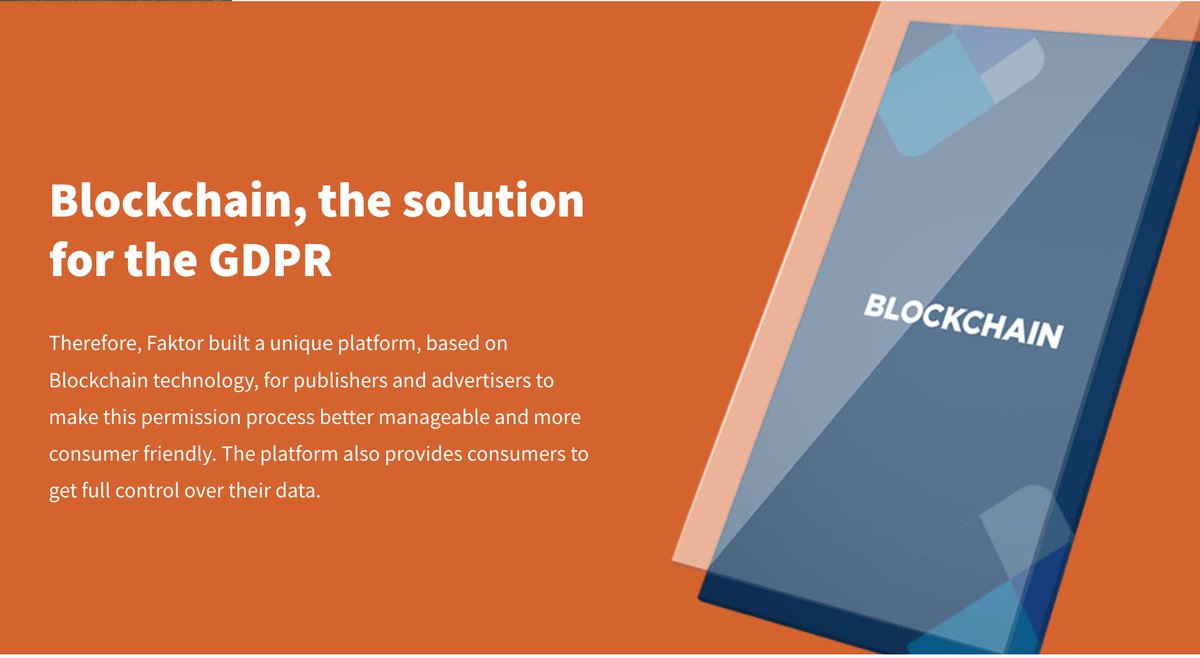
I think I still have that "GDPR Compliance On The Blockchain" banner that a vendor has tried to pitch me back then, I think it would be nice to throw that in the mix!
♥ 4
Oh putain! Il doit pas avoir loin de 20 ans ce code!
Presque: la dernière version est un bugfix de juillet 2003, la précédente est de juillet 2002. J'avais 25 ans, choupinou. C'est un peu dingue que quelque chose dépende encore de ça!
♥ 1
Je pourrais envisager un update 😂
I do love providing options, I'm not sure about presenting them on a thermometer though. I wouldn't have used that order, and it also gives the impression that some of these are more reasonable or radical, which could influence the outcome.
♥ 1
Perhaps the most amazing part of @themarkup's annual report is that it's only been one year. They've published more high-impact investigations than seems possible on a first year, with rock-solid methodology, top notch tech execution, stunning graphics...
It's a thing of beauty.
♥ 70↺ 19
I'm really looking forward to what they'll do next. Of course, I'd like to fix tech so they don't have so much to write about, but I reckon that might take some time... 😁
Best of luck for many years to come!
♥ 7
Hahaha, parents are so disappointing! 😂
♥ 2
♥ 7↺ 1
The Times has also been working to improve accessibility.
open.nytimes.com/a-more-accessi…
♥ 10↺ 1
If?
This is genius.
♥ 1
Self-governance as a group is kind of what anarchism is after, though 😉
♥ 2
Perhaps more to the point: there is a libertarian idea of decentralisation that, like most of libertarianism, does not understand the value of institutions. Self-organisation at the local level to manage commons and public goods, though, is the done right version.
♥ 1
Agreed, it's hard to pin them down. I think it might be worth coming up with a clear set terms to help make the debate healthier.
♥ 1
I love the idea of embedding ethics, but I'm not sure that it should be C-level nor that it should be "just" ethics. In my experience, you want a team that can really build trust in the trenches with every team in the company. That's more powerful than top-down.
♥ 3
And for the scope of that team, I think it should be more broadly all the long-term/global topics that are important to the flourishing of the whole company but will never be the OKR priority of any given department. So ethics, privacy, accessibility, etc.
Of course, what I'm describing is basically how I approached the problem at The Times and what I would like to build out my team to be (definitely not there yet). So, as biases go, I think we can say I'm pretty biased 😋
♥ 1
I'm not sure what you mean "all that in one team" or "a lot of work". Are you thinking that that team would be doing the implementation work? Because that not the case, and probably wouldn't be possible given the scope is tech+data+advertising+marketing+etc.!
Doing things top-down is the surest path to checklist compliance, precisely because people at the top can't see the details. CEthO says "improve privacy", teams respond with "we support the TCF" — no one will point out that it has no actual real-world impact.
My team routinely coordinates the work of ~70 teams that implement the changes, and when people see something they think isn't right they come and tell us. That trust comes from being with them & building from the fact that they do care, rather than telling them what's ethical.
Anyway, I should probably stop before I write a whole book about the governance of tech in a sequence of tweets :) But I don't think that you can command & control good governance. People think I'm joking when I say I'm running an anarchist commune inside The Times, but… 🙃
Many good points from @doctorow about why paying people for their data is a dumb idea that can't die fast enough. I'd like to add two more ↘️
Quoting a tweet by @doctorow ↗
♥ 10↺ 5
First, inferential hazard. If you're paid for data, presumably lying is a form of theft (at least a breach of terms). So your choices are to be truthful or to abstain.
If the truth is fine, then just collect your money. But abstaining from answering can reveal information.
♥ 2
You're a closeted gay kid in a bad environment and the new cool network has an orientation field, do you:
a) Come out, possibly at significant risk?
b) Lie, which is illegal?
c) Abstain, which everyone will understand means (a).
Can't fix that? Can't pay for data.
♥ 2
Second, the collective hazard. Having a single centralised entity know a lot about a huge chunk of the population is a threat to democracy. Such data can be leveraged for political gain and for top-down control in ways that have no checks & balances.
♥ 2
This is similar to Cory's point about shared ownership, but scaled up to society.
I'm part of the way to thinking that privacy laws should be flipped around: we should forbid individuals from sharing too much. Basically treat releasing data into the network as a pollution issue.
♥ 4
(Evidently, you'd need a corollary being that inducement to share unnecessarily would be treated as tortuous.)
It feels backwards because the way we think of privacy as only individualistic is truncated. Social-scale privacy violation is legibility. The law should prevent that.
♥ 3
I might be misunderstanding your position, but CEthO (which is the thread root) certainly feels like it comes from the top?
Governance is not a "diffuse mission". Do you need to set priorities? Of course, you can't do everything at once. But it's not like the menu is bad.
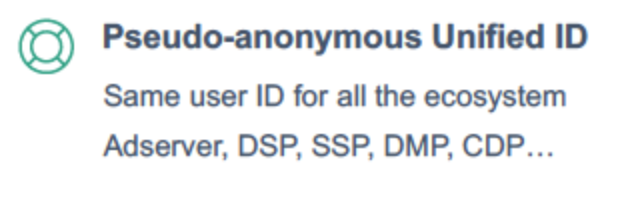
Hey, it's Friday and clearly everyone is still very confused about anonymous, pseudonymous, pseudo-anonymous, and more. So here's a thread with all the variants I can think of — please add your own!
♥ 60↺ 29
anonymous
You can’t be identified, except the data contains geolocation so it’s trivially traced back to you.
♥ 7
pseudonymous
An elaborate set of technical controls is supposed to keep you anonymous except in clearly defined cases but no one bothered to build it so everyone knows who you are.
♥ 9↺ 2
Next month, there's a @PrincetonCITP event with @hartzog about "A Duty of Loyalty for Privacy Law". Needless to say, I'll be there!
citp.princeton.edu/event/hartzog-…
♥ 30↺ 10
Thank you! 🤗
♥ 1
Hahaha 😂
did that one!
♥ 1
With the data subject as polluter, not that I'm aware of. I had the idea while running this morning and the thread seemed like a good place to try it out. It's not even in my notes yet, it might prove to be totally stupid 😁
♥ 1
David Attenborough's "A Life On Our Planet" is well worth watching. attenboroughfilm.com
♥ 6↺ 1
Man, they're all so good I can't choose!
♥ 4
The one I get the most often is about how I how I "hate the open Web" 😂
Quoting a tweet by @johnwilander ↗
♥ 19
Don't make me look up who your manager is 😜
Because it's sponsored not to be?
It can, indeed, be, but this really looks like the web was out of scope? Or maybe I'm being cynical and it's just not great work.
Now you're just showing off 😘
♥ 2
I mean, is middle management really a good career choice? I say either stay at the minion level or go for the big guy's job.
♥ 2
I don't want to make a dent in the status quo, I want to burn it to the ground and rebuild it 😋 But for everything else I totally agree. I think there's a way to help fix this, let's talk about it on our next call.
♥ 1
Thank you!
♥ 1
This one might have a few different topics, but let's do something all together very soon after!
♥ 1
Just don't read the Endymion sequel.
♥ 2
Good to see you too!
Right, actually let me correct that terse assessment. Endymion makes for fine sci-fi and has some good ideas going for it. But reading it with the expectations of Hyperion can IMHO only lead to disappointment.
♥ 1