The @nytimes's data governance engineering team is hiring a senior engineer! I work with those folks a lot and they're amazing.
linkedin.com/jobs/view/2934…
This is getting shared a lot because she says that Putin wouldn't hesitate to use the bomb, but there's a lot more to this interview and all of it is worth reading.
politico.com/news/magazine/…
That feeling when your unified "privacy-first" advertising identifier is so good at privacy and at being unified that you have to make a EU-specific version. And *still* no organisation wants to take on the risk of managing it.
adexchanger.com/online-adverti…
Vous ne me verrez pas souvent partager une vidéo de Zemmour, mais celle-ci est superbe et mérite d'être vue par le plus grand nombre. 😘
youtube.com/watch?v=4dlkGM…
This is similar to how some of us have been thinking about privacy: the set of rules about how information can be used not just when it is about people but also when it impacts people. *Receiving* undesired information is also a privacy issue.
Replying to @johnsnolan and @ShannonVallor, @OUPPhilosophy, @Lucy_Randall_
I have a wishlist with about ~10 Oxford Handbooks on it, both out of financial prudence and concern for the load-bearing tolerance of my office's floor I'm hoping to progressively acquire them as paperbacks :)
That's my experience as well. Privacy is a factor, but the main reason I moved away from Google search is just that it's cognitively inferior. It feels like I have to wade through random stuff Clippy thought I wanted instead of just getting results.
It's a pattern: in order to be good and stay good, you need market feedback. But you don't get that when your products don't win on merit. They made the same switch as Microsoft in self-preferencing and it shows.
Also, Google is the ultimate Clippy company, they want to organise information for you, not to put you in charge. Their ideal product is the Google Home, where that's the only option.
But that's exactly the problem, Ben :) As someone who's been in small businesses most of my adult life, the very last thing you need there is yet another massive bureaucracy making mistakes that you have to spend inordinate amounts of energy fighting.
What you need is a system where the power is balanced out. Either there's a person you can easily talk to, ideally in person, and a clear process of accountability (including covering damage if wrongful). The French tax office is pretty decent at that.
Or you need to be able to just go "fuck it, these people suck at this, I'm taking my business elsewhere."
Either way, the asymmetry of power is the problem here. I understand the challenge of scale, but if it doesn't work at the scale it's operating at, then it doesn't work.
Replying to @alextcone and @btsavage, @dmarti, @Meta
I'm well aware of the limitations of the tech (and I don't think that this is Ben's fault!) but all the same: what we're talking about here is the automation of governance (FB has rules about ads, this is how they get enforced). It's too easy to accept the profits but not costs!
Getting governance right is absolutely fucking hard, no question there, and dealing with bureaucracy is painful too. But we should consider that maybe it's hard and painful for good reasons. If FB is as key to SMBs as they claim, this kind of error is devastating.
Replying to @alextcone and @dmarti, @btsavage, @Meta
I know it happens at small companies too — but with those you can usually find someone to yell at (with effect) or you can take your business elsewhere.
Replying to @alextcone and @dmarti, @btsavage, @Meta
The publishers aren't wrong either! Both brands and pubs have legitimate expectations of outcomes. Who gets to decide what corners can be cut by automation is key here. There's almost certainly a Pareto frontier decision to make!
Replying to @alextcone and @dmarti, @btsavage, @Meta
I don't think it's about being mad — it's just that making strong claims about the upsides means actually owning the downsides, profiting from the automation means also covering the cost of its failures, etc. We all tend to stop too easily at "computer can't do it!"
Well, shitty tradeoffs that don't admit of an optimal solution is what politics is for! That's why significant infrastructure under unilateral corporate control doesn't work well, to the point that we're better off with an explicitly political process.
No reason that it should be lawmakers in the national sense (so regulators would likely be a poor choice), there are plenty of other political levels and structures. Think PTA but you get to vote in markets in which you run enough ads.
Replying to @alextcone and @robleathern, @btsavage, @dmarti
Regulators are good for requirements that are nation-state aligned one way or another, but I don't think that that's the best idea here. Having people speak through trade bodies isn't wonderful either as those tend to be single-stakeholder-type (or dominated/captured).
The idea here would be more to design a system that gives different constituencies voice without enabling any to dominate. And the only way they get change is if they hammer out agreements (with the pain that entails).
I think that's what Rob was thinking of? It's certainly what I'm thinking of, and it's why I put it that way in the Garuda example.
Ideally, you might want it layered too. Transnational decisions for what applies everywhere, but more local chapters too where relevant.
Local means you get to develop a polity gradually, and it also means you can adapt to local needs, eg. in America, tits are evil for some reason. Sucks for Americans, but that's not for, say, the Danes to fix.
Yeah, I'd expect random and you choose filters and sort (eg. price, reviews as @mmitchell_ai says, or even weight, how many other people have bought it in your neighbourhood, etc.).
I don't know if it's what they mean, but my guess is a clumsy empowerment-to-management spectrum.
At one end you get basically a SQL interface and at the other a black box sort obeying someone else's opaque KPI. The former is hard to use but the latter only works if you believe in the totalitarian view that there's one best way to organise information.
Replying to @ruchowdh and @mmitchell_ai, @sivavaid
If I'm less speculative and read this the way I would if I had to figure out how to comply, this reads like the statute leaving room for more specific regulation. Absent regs I'd take a "sensible" position (eg. sort by ratings) and wait.
If you needed a reminder that adtech needs in-depth reform or if someone is trying to sell you the lie that publishers can fix their supply chain alone, this is a lovely thread to rage about!
For me it appeared a day or so after I joined my first community. Maybe killing and reopening the app?
Other than that, I am just as baffled as you are.
Wanting to keep the Internet free from capture and centralisation is cool and all, but can we find a way to be methodical and rigorous about it?
berjon.com/capture-resist…
Well you helped! I ended up killing the section where I explained why I'm thinking about a cybersecurity approach here, but it undergirds the argument.
This is good and I think there's a lot of agreement! We probably shouldn't be doing this separately for the Internet and Web, if this distinction even means anything any more. I'd like to figure out how to get prescriptive about this across the board.
I think the sparsity is mostly because we haven't thought about it as a cohesive discipline. There's a lot of good expertise out there, my hope is that we can get it to coalesce.
This needs to be repeated until we are rid of the delusion that search results could be neutral even if they tried to be.
Every search engine ranks content based on subjective editorial decisions. To pretend otherwise is to lie.
Often, I find that people confuse truth and relevance. If you search for "cats" you could equally well get the names of my cats or a link to the Wikipedia entry on cats. Both are *true* facts, but relevance varies (all the time). There is no true relevance: it's editorial.
You can accumulate a lot of invasive data about people to try to tailor relevance to them, but that's not scientific. You're just (editorially) picking a KPI to optimise for — there's not proof that it's the right one, nor can there be one.
I hear you, but I think you're making your life hard by thinking about data. It's a weird commodity and it's hard to cast everything as labour. If I read an interesting article or watch a fun show, does it become labour because someone monetised the data?
There *are* things people do that should count as labour when someone monetises it: creating content for platforms (as we're doing now), providing quality filters (eg. liking), that kind of stuff. I think Nick Carr has written about that.
I think that the term might be wrong. The event "Robin read this page" is hard to cast in terms of surplus, I think. It's more like an externality that can't be internalised. And that can be captured.
I agree with the assembly line view: we're dealing with a system of taylorist management. We're looking at the industrialisation of social interactions and private life. There is a whole slew of issues with this.
My concern is that looking at it from the angle of data as labour isn't all that helpful because data is weird enough that this leads you weird places that quickly don't make it clear who did what work.
I suspect that it might be a more promising lens to see this not as labour, but as a process of doing to private life and other aspects of society the same thing that was done to labour. In a sense, we need Luddism but for stuff that's not labour.
I have Carr teed up too, we'll see what happens there!
You might be right, my worry is that we miss something by reusing that frame. It's definitely the same ideology of control, optimisation, and management at work, but it may manifest differently in new spaces.
Oh, I agree with a ton here. I don't think that we're starting from zero (there's a ton of work on taylorism, optimisation, management, control that applies) and at least some of it is labour, and needs to be handled as such. That's already a big chunk to work with!
Re Zuboff: I think that the conversion from exhaust to surplus is a question of capturing a negative externality and making it positive (for someone — it's always for someone).
That's very hard, it's a bit like favourite books or music, it changes every day! I will almost certainly disagree with myself quite violently tomorrow… But here are some:
For the general why is this important thing: bookshop.org/books/why-priv…
For a theoretical understanding of how to think about privacy, I would recommend the intro and ch1 of this: cambridge.org/core/books/gov…. It's Nissenbaum's contextual integrity meets commons institutionalism — very powerful way to handle these questions.
Replying to @BuggeErik and @johnnyryan, @Andreas_Schwab
This is indeed a very significant improvement! Thanks for al the hard work.
Do you think there's any hope of removing the consent exemption entirely? Allowing individuals to consent to anticompetitive advantage isn't great (even if this text is indeed much much better).
I'll disagree on the "ick" factor, though. It's too easy to manipulate (in either direction, see the Science review above), including through motivated reasoning and relies too much on agenda-setting and processes of opinion formation. slate.com/technology/202…
When entering a topic I go for breadth: follow all the interesting links or references, find all the people tweeting, etc. but stick mostly to abstracts and scanning. Patterns emerge: people who are all saying the same things or engaging in repeats of the same boring debate.
Also people who have a sharp point of view, a voice, an ability to explain will tend to stick out. I stick with those and iterate over time in smaller batches.
No silver bullet, but I think broad+shallow and trusting you'll see patterns helps.
Oh yeah that one was brutal! I didn't take it too personally because Forrest Gump is my spirit animal and so I just wandered innocently into privacy, skipping past a lot of BS, but it still made me feel a lot of rage.
Ha! I should be more careful 😁 I'm trying to figure out how data markets behave, people are treating them like normal markets but they're not. I just read an unpublished draft about externalities and it got me thinking. What are you looking into?
We try to make computers suck less is how I see it. I've also heard dumpsterfireology. My team sometimes introduces itself as "imagining dystopian outcomes as a service" 😁
Thanks all, this is helpful. For context, I'm looking at `ping` as a good example of failure of a purported privacy-helping feature. It was argued as supporting opt outs, but the moment that opting out actually works then it goes away.
“Google policy on a lot of these things is to get right up to the creepy line and then run, run as fast as possible, and keep running far past it.”
— Eric Schmidt, I think
Currency is infrastructure. In order to operate properly, infrastructure needs an institutional arrangement attached to it in order to ensure the stability of its provision, enforce rules about how it can and can't be used, etc.
Using a state (or suprastate) as that institution isn't arbitrary: states are large enough to make decisions that usefully affect a currency and have very real ways of enforcing rules.
There are other currencies though, with more limited scope, like Starbucks points!
I think the useful question here is: do state institutions provide better or worse support for currencies than blockchain systems? I think a lot of the future of cryptocurrencies is predicated on having a good and honest answer to this.
The USD is backed by military might and oil. That's not great! But it's also attached to (insufficient) transparency mechanisms that afford some democratic control over it and prevent some bad uses. These things should not be discounted.
There's a lot of promise in crypto that we can get better governance, I presume including of currency, there. That's an interesting idea. But so far I've seen nothing that brings solid proof and doesn't come with significant downsides or unsolved problems!
No question about that, the state/currency relation has been contested since well before we had computers. Local alt currencies started in the early 20th, there are hundreds in France (SELs, I think "LETS" in English).
This is a good illustration of what I mean when I say that Google Search is cognitively inferior: the amount of work you have to put into it to parse an actually useful result is staggering. In total time to find something, Google is a *lot* slower than the competition.
Yes! I'm excited for the budding renaissance of innovation in search. There's a few things to fix to make this a more level playing field, but we can get there.
Replying to @ruchowdh and @seanmmcdonald, @sivavaid
One advantage of corrupt states is that you know who the corrupt leaders are and they share a geography with the people. It's dangerous and far from foolproof, but it's there as a potential check.
I certainly don't disagree that we need much better non-state institutions for the digital world. I'm not sure that the current world of crypto is showing a credible way forward, though.
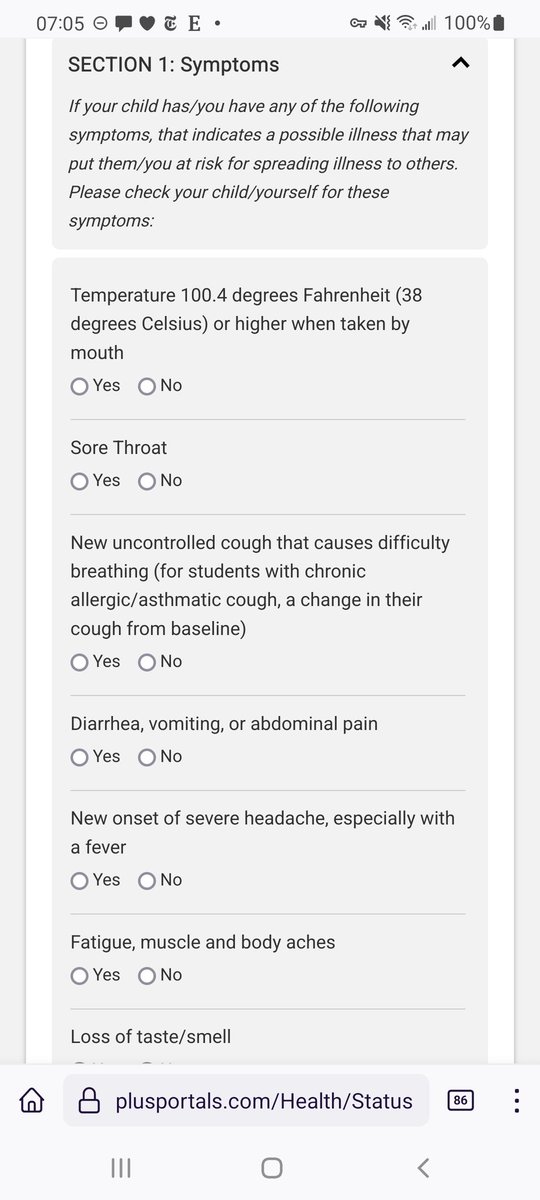
Masks may be gone from schools, but given the quasi-religious status of red tape in America I assume that I'll be filling these out every morning until my kids leave home.
Il n'est peut-être pas trop tard pour comprendre que la souveraineté numérique serait mieux servie par le développement de bonnes idées que par l'imitation de mauvaises.
This guy wasn't allowed on the desk. Then I let him look out the window. Then I blinked and added a folded blanket so he could nap while I work. Now... he just spent 15min unfolding and readjusting the blanket so as to have more room.
I hope I can save some space for the laptop.
The CMA has whispered to me in my sleep that you can only disco if the mirror is a floor AND a ceiling, and everyone needs to sing at the same time so people have a genuine choice to genuine innovation by being less important than genuine companies.
Aha! I hadn't understood it that way, but totally agreed! It's the old portal theory: organise all the world's information your way, the less it makes sense the better the ads start to look!
I've been thinking about that a lot and I reckon we can fix it. Building a good index and building a good search UI are two very different things (as Google keeps demonstrating). The only reason to have them together is that the ads in the UI pay for the index. But...
...we can split that. There are many proposals for interoperability in social, which is useful but hard, we need to look at interoperability in search, which is a lot easier and comes with great benefits.
Competition in UI, built-in multihoming, integration into browsers and more, diversity of business models (ads or pay), build your own, merge results, no AMP, a return to media pluralism...
It's pure upside. We are *choosing* to live with shitty search by not doing this.
Maybe I don't have a clear view of what you have in mind, but that's not the adversarial I have in mind. I'm worried about malicious actors deliberately decreasing the value.
Indexing has to be automated, there's too much drudgery. How do you only get good indexing?
I love this model (and librarians)! So, this would need shared access to crawl (so as not to duplicate infrastructure, à la common crawl), an API to query federated indices, and ILP so people can be paid and infra costs covered. It's not crazy hard!
Maybe not, but crawling can get a little intense, there's a bunch of ways to get it wrong. By sharing the crawl, you can set up your own index with some filtering params and a lambda. It could lower the barrier to entry.
How about: sites *push* their content to be indexed, along with IP terms (to prevent the hostile mining that Google does but also independent repub), and Hyper agents are used to verify that real site content matches the index, to catch cheaters.
I think it's possible to be more distributed than Wikipedia, but I agree that providing infrastructure is key. You need a lot of common interfaces and the ability to develop bureaucracy where needed.
I don't think any company is better than Google at punishing users who don't behave the way they want. The internal docs of their privacy office show they justify that as done "for everyone" but poorly explained. Who knew the profit margins were so high on such public service!
But it's not even that. Tweets there are public. It mostly controls who can reply. It feels... half baked.
There is value in polycentric social media, but it seems unclear how/if platforms can build it.
Is there a useful concept for the intrinsic/contextual connectedness of a piece of information? Eg. "zgl" might just be connected to three Latin letters and to three-letter words, but "cat" has etymology, translations, many facts of the world, etc.
Interoperability isn't technically trivial, building standards and making them work is, well, work. That changes nothing to the fact that the quoted statement is pure and utter bullshit, though.
Replying to @null and @blakereid, @lutherlowe, @jasonfurman
Perhaps the most crucial thing that that quote is missing is that, absent interoperability, we are missing out on all the integrations from third parties that would be way superior to the UI drivel we get from those two.
Replying to @null and @blakereid, @lutherlowe, @jasonfurman
Perhaps the most crucial thing that that quote is missing is that, absent interoperability, we are missing out on all the integrations from third parties that would be way superior to the UI drivel we get from those two.
Et encore, la photo ne montre pas qu'elle a un radiateur dans le dos et une mangeoire à oiseaux de l'autre côté de la vitre... Je crains sans cesse l'intervention des services sociaux.
Replying to @alexanderhanff and @RobertJBateman, @neilmrichards
Yes, you're making exactly my point. ePD is a rigid system that cares more about legal procedures than supporting personal autonomy. It assumes that informed consent can be copied from HSR without the infrastructure that makes it work there, like IRBs.
Replying to @alexanderhanff and @RobertJBateman, @neilmrichards
I know you disagree, Alexander. I just figured that if you decided to pick this up again months later you might have a new view.
The Charter is very aligned with my values as a European citizen, and aligns with the privacy model I seek to establish.
Notably, the difference between Art.3 that requires informed consent and Art.8 that has a much broader scope (including for consent itself) is IMHO particularly relevant. ePD treats the latter as if it were the former. I think that's a mistake.
Now if there is a revolution in behavioural science or HCI demonstrating rules for consent in the wild, under adversarial assumptions, that are actually guaranteed to support greater autonomy in real people instead of homo economicus I'll be the first to change my mind.
I think a lot of that rides on what you would consider to be a successful match between a knowledge resource and a person. Is it that the knowledge is high quality or truthful (for some function)? Or that the person accepts it as a good match? Are there different populations?
I think that the specific flavour of despair we feel at being observed by a computer is fatalism. With thin mediation (eg. binoculars) there is or will be a human to argue with. With thick mediation, the categorisation has been set in motion and there is nothing we can do.
Relatedly, many problems digital privacy are issues with the governance of inferences.
In the specific (fascinating) research covered here, people carefully curated their online presence, are comfortable with employers checking it, but not using computerised means.
When we curate how we present, we know that others can draw further inferences. But there are rules to that: it's limited by human cognition, you can often appeal a mischaracterisation by talking to the person, you know how to course-correct... That's informal governance.
A computer inference however may draw upon massive data and complex correlations, you can't argue with the machine, and you can't see how to change. You have no say and governance is replaced with management. It's like data informed nudges vs manual ones.
Get this: the "laptop" part of your home office actually disconnects and then it keeps working, you can use it like a smaller home office but elsewhere. It has a weird small screen but I'm kinda digging the experience!
Offering book vouchers instead of paying a freelancer €400 despite massive margins is a great summary of where scholarly publishing is as an industry. Not all oligopolies are tech companies!
My sympathies! In a previous life I spent quite some time working at a company that tried to make this whole thing not suck... Maybe I like pain, but sometimes I think of trying again!
"Our democracies are at war with Putin, with the Chinese state, with Google, with Facebook, with Amazon. These are all monopolists." -Barry Lynn, #disruptedtimes22
@MonikaSchnitzer makes the great point that without competition in social media (and more generally in gatekeeping, notably search) you cannot protect freedom of speech. She calls upon the Commission to have a role to play in standards setting to help there. #disruptedtimes22
@ThierryBreton plans to hire dozens of technologists to work on the DMA. I am very curious about what that will look like and how they will collaborate with standards groups. #disruptedtimes22
@linakhanFTC draws a direct connection between surveillance business models and anticompetitive advantage, showing how easily-available data gives monopolies multiple advantages. It's heartening to hear such spot on clarity. #disruptedtimes22
@MarietjeSchaake notes that almost everyone at a full-day conference of the world's best antitrust experts has talked about protecting democracy much more than about antitrust. It is worrying that we have let it get this bad. #disruptedtimes22
I share her diagnosis and sense of urgency, but I do see pro-democracy forces rallying everywhere and I'm cautiously optimistic that we can free ourselves from tech monopolies.
@joshgans explains that the proven decentralisation properties of the blockchain were wiped out by the layering of centralised interfaces.
That's why I prefer "capture resistance" to describe what we need to do. #disruptedtimes22berjon.com/capture-resist…
The issue is that decentralisation is a static property which attackers will eventually overwhelm, like an unpatched system: someone will find a way.
Capture resistance has to be active and relentless, it is the dynamic version of decentralisation.
Absolutely! The maintenance aspect of capture resistance is key. There is no architecture such that it will *stay* decentralised if there's value in capturing it and it is not adaptively defended.