January 2020
268 tweets
At the same time it's pretty much the kind of reckoning I would want from a computer-assisted world. "Your cheap shots were popular. Big fucking deal. Do better, ffs."

Let's make 2020 the year we get together across disagreements and turn tech around. It's on us, tech friends.
♥ 4
That's an interesting chart, thanks. One thing that seems strange (but maybe I'm reading it wrong) is that a lot of spend that I believe is typically targeted seems to be at least in part on the "random people will buy" side.
I don't think there's a bubble in online advertising, but there could be a bubble in behavioural. It could be ROI-positive and overpriced. A shift in spend within digital channels would definitely burst *some*bubbles 😁
Sure, but if you're looking at targeting gender, coarse location, industry, and income bracket you can burn 90% of the data offering available and come out ahead. That's most of the "random people" targeting, and it's much much less than what BT purports to achieve.
I'm not sure people in the Northern hemisphere appreciate how far New Zealand is from Australia. The image below must be roughly 2,500km away from the fires. t.co/b5rEpWWwbC
♥ 5
2020 readings!
This year in going to try to remember to 1) put most of my reading in this permathread, and 2) give a bit more detail about what I read than previously.
♥ 30↺ 3
(Note: this is one of those autoscanned editions, and is therefore full of typos and poorly typeset.)
His thesis has problems, chief amongst which assuming that engineers are naturally good. I'm mostly interested because I want to understand modern technocracy.
♥ 4
Read the whole thread: 98 tweets, continued until 28 Oct 2021 →

I'm with you my friend, I really am. But it turns out that running that kind of thing can prove tricky when you also have other things to do, and mine is down because of routine maintenance I couldn't finish... 🙄 I'll bring it back, and yes, I'll tie it to this thread!
♥ 1
There definitely have been other instances between Inbox and now, but in terms of things that are really high profile that's probably right. Then again, Inbox might be their last major launch 😁
I don't think it's about education, rather it's about what's valued. Making things work outside Google's walled garden won't meet your OKRs.
He does indeed mean it as a (heavily structured) council, essentially an organisation able to take over (in his case) running the industry for the greater good in a pretty top-down manner. Not with the Communist connotation, but similar in centralisation.
It’s a vision in which people who understand technology can deploy it for good simply because they know how it works; it doesn’t question whether that could have bad consequences. I’m interested in the history of that approach.
♥ 1
I’m aware of TWC (which is thankfully different!), it’s good stuff!
♥ 1
Oh yeah!
♥ 1
It would be really good if someone ran an inventory of these, indeed for this purpose.
There are always valid reasons.
Standing makes it harder to scribble marginalia in books, though.
♥ 1
No offence Anna, but a quiver sticking out to the left like that? No thanks — that’s a drag on the train.
Yeah, I mean, there are plenty of tricks — enough that there could be a feature about the pros and cons — but it’s still bouncier.
If I could figure out better stability I would probably never sit indeed.
♥ 1
Don’t ask me why I already had this in history. amazon.com/Potassium-Iodi…
♥ 1
He didn’t nominate himself but I *definitely* recommend @Chronotope!
♥ 9
Web friends, I know a lot of you have waited to read this one day 😁 You can thank @caityweaver!
"Internet Explorer is a discontinued web browser introduced by Microsoft in 1995, and the best course of action would be to never think about it again for the rest of your life."
Quoting a tweet by @caityweaver ↗
♥ 8↺ 2
The Times browser expert said so.
♥ 1
Such is the way of the Web! Whatever will have replaced Chrome fifteen years from now when Caity writes about people not knowing what it is will have a surveillance mode for Chrome compatibility!
♥ 1
It's the problem with building things at scale, even relatively small scale like us: small things matter.
But for end users, our mysterious browser expert is right!
♥ 1
2020. Totalitarianism replacing democracy, pervasive surveillance from the technocrat overclass of corporate behemoths, incipient endless worldwide dirty war, and climate change burning whole countries down.
Clearly, whoever was meant to invent zombies really *really* fucked up.
♥ 4
I can see the last meeting of the Dystopian Eschaton Steering Committee.
Silvia killed it delivering fascism to the US simply by getting some dirt on McConnell so election security would never happen, and George had a killer idea noticing that bad hair always won in the UK.
Ernestine and Wassym knew from the start that the hacker activism of the 90s, umoored from humanities as it was, would just need free food and a push from the rationalist movement to lose its bearing and work on greed as if it were good. They really delivered.
Alice's war project hit a wall when Al-Qaeda faltered despite Bush & Obama efforts, but Trump gave her an unexpected save.
Bruce had to go over budget to lobby politicians into being stupid enough to deny the climate emergency - but it worked.
Karen...
Karen, what do you mean there won't be zombies?
What the fuck, Karen, WHERE ARE THE FUCKING ZOMBIES??? 🧟♂️
Anyway, we're pretty fucked but a thought for Karen who's having a really bad day working at Immanentize™.
Shouldn't Californians who rent on AirBnB have to offer #CCPA rights for IoT data collection taking place on their property?
♥ 9↺ 1
Yeah, I've thought of similar issues for hotels back when I travelled a lot, and they have the same problems. It would be a great product in general!
♥ 2
Yeah, they would have to derive enough consideration from the sale, which is unlikely.
Under GDPR I would definitely expect trouble! 😁
♥ 1
"Telling people that invasive corporate tracking is their fault simply isn’t a serious position in 2019." @LAM_Barrett is on fire, if you read nothing else on privacy in this early 2020, read this one.
Quoting a tweet by @FastCompany ↗
♥ 24↺ 4
Yes, and when you connect your phone to the infotainment system over Bluetooth it immediately asks for access to your contacts 🤣
I insist!
♥ 2
Well, it's a benefit to them 😉
♥ 1
The manufacturer definitely has obligations, but how can you exercise them after you've left the house?
♥ 2
Yeah IANAL either (but hey it's Twitter) but it doesn't matter who owns the device or where you are, it's your data!
♥ 2
As far as I understand, households are actually in scope of the CCPA, as basically like persons.
There's no way that such a small group would count as aggregate, too.
Also, many devices can readily identify individuals, eg. by voice print.
♥ 1
That's the Illuminatus trilogy, I don't know that anyone has made a movie out of it yet but it's actually how it w written!
♥ 2
Not WebKit, Chromium, but yes. We're down to three major engines, and it's definitely not great.
♥ 3
“In this new world, it feels like an obligation to make sure we’re not aiding and abetting those who seek to exploit our data.” Great announcement from @dhh!
m.signalvnoise.com/the-last-track…
♥ 1
Forgot to say: heard via @masooga.
♥ 1
People laugh about this but it's true, and it needs to be dragged to the back of a dark alley and shot in the back of the head. I used to think the Web was robust against abuse but that was before create-react-app.
Quoting a tweet by @jackgannon_ ↗
♥ 11↺ 5
Isn't @dmarti doing that?
♥ 2
Did she pick the right one? I need to know.
It basically makes it very easy to build a Web page that downloads megabytes of dependencies.
♥ 1
It wouldn't hurt if it were clearer, some aren't convinced this means DNT.
♥ 3
Is there a name for the overused plot device where protagonists are in a dream/game/shared hallucination/cyberspace but if they die in the virtual world they die in the real world too?
♥ 1↺ 1
THANK YOU! This is perfect :)
♥ 1
Neuromancer also has that, from 1984. But I'm pretty sure there are much earlier instances, I can't seem to bring up the memory but I'm recalling something similar maybe in Poe or Maupassant.
♥ 1
Been there!
♥ 1
You're joking, but a spec for some form of header (maybe a client hint?) with the spec clearly calling out CCPA Do Not Sell as the semantics of the header would definitely match the regulation text.
♥ 2
Absolutely. I think we could even tie it with requestStorage.
♥ 1
I agree that no one should be able to opt into a universal ID, it’s just insanely unsafe. It’s also bad for publishers.
Opting into the option of being tracked by a specific company and only by them could work though.
♥ 1
The numbers look lower these days because Safari removed the option. But I would expect them to add it back if there were meaningful support for it.
I heard Beyoncé was super popular with SMTP servers. They just keep singing "I can see your EHLO (EHLO) EHLO ooh" at each other.
♥ 3
Is this not the quality content you came here for? 🤗😇
♥ 1
I'm here all weekend!
♥ 1
With your palm on your face like that, you can't see the EHLO, Angela.
♥ 1
You're missing out! I mean... EHLO... Is it me you're looking for?
♥ 1
That's just sendmail.
Hahaha, careful it seems to be contagious!
Perfect gif!
♥ 1
If you liked it then you should have called ATRN on it.
Oh oh oh oh oh oh oh oh oh oh oh.
I feel so much love from this joke.
♥ 1
42 years in I still haven't found it!
♥ 1
Congratulations ♥ ♥ ♥!
♥ 2
Is that a pet goat 🐐?
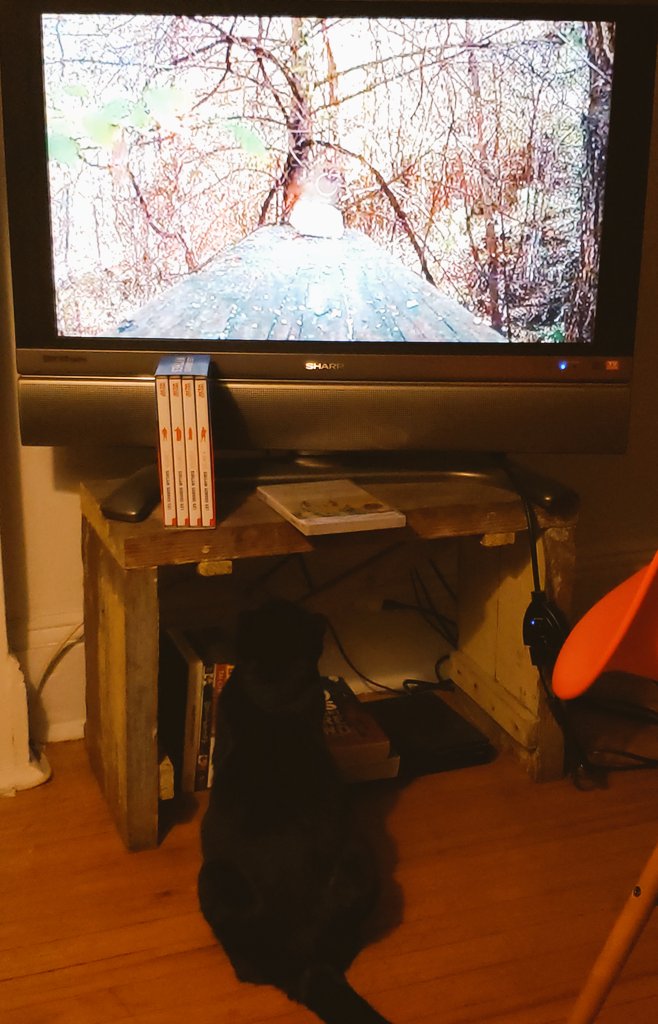
I got my cat watching Cat TV, then the Internet went down (because @GetSpectrum) and she totally lost it.
I feel that this is a major milestone in interspecies empathy. At last they understand our suffering!
♥ 7↺ 1
I have been worried that making my cat discover TV would lead her to become hooked and yell to ask for it. We’ll see if this happens…
Well. Played.
♥ 1
Any particular show they like?
From a privacy perspective it's not entirely wrong 😁
♥ 3
“These are very small, but ultimately the plan is to make them to scale,” said Levin.
You can feel the excitement :-D
♥ 2
Indeed! We’re still far from where we’d love to be, but we’ve shut down programmatic in Europe and are doing the same in apps, removed a ton of tracking, we don’t have GPS (and don’t want it), and what sensitive data we have is certainly not handled that way.
♥ 10↺ 1
Sure enough we need to do better, but we have people dedicated to it.
One thing that makes this hard is the “everyone is doing it” attitude in adtech. We need innovation, not people who are content with doing something if “everyone is doing it”.
♥ 8↺ 1
The market is ripe for disruption but everyone in adtech is just trying to make a copy of Google or Facebook’s tracking but with less scale. How can that succeed? I promise you: we don’t need yet another universal ID let alone a “personal identity graph”. *yaaaaaawn*
♥ 10↺ 2
Anyway — we’ll get there! My personal intuition is that you can run a successful business on the internet by doing what your users want instead of acting against them. It’s a minority model today, but I think it has a bright future.
♥ 11↺ 2
Do you mind summarising the update? I saw nothing new in the post, what am I missing?
♥ 1
But... Where is the plan?
I'm not being facetious, I've read this three times now. Is there a link I'm somehow missing?
Oh OK. Sorry, given the length I was expecting more details. Without knowing "how" it's not clear what to make of it. It could be a huge improvement or it could be worse, or it could just be meh. Eg the conversion measurement proposal from the Sandbox does not solve the problem.
♥ 2
Hahaha
Stealing “creepo” and “corporate creepo” as new terms of art.
Quoting a tweet by @PrivacyProject ↗
♥ 5↺ 1
No. I haven't been at The Times forever but I have seen no indication that we have ever done anything nearly as invasive as what is reported here.
And that's a misconstrual of how reporters work. They operate separately from the business, and if we screw up they investigate us.
♥ 4
Sorry, I have no idea what you're trying to say?
No, having reporting depend on business would be highly unethical. Also, reporting real issues is not "self-righteousness".
Programmatic works by broadcasting personal data. It gives away a lot.
♥ 1
I’m sorry if you’re disappointed, but the reporting is about companies sharing sexual orientation and HIV status along with high-precision GPS data. Even before working to improve The Times has never done anything like that. Programmatic is the closest, but stops short.
What’s more, we’ve covered our own practices before. We can discuss them more (and will), but it’s not like there’s a lid on it. We’ve written about it.
No, it isn’t. That’s why we have a clear separation between the newsroom and the business.
♥ 1
He is explicitly saying that reporters should, through taking into account their business’s practices, “take down the self righteousness a peg”. That’s *exactly* asking the newsroom to modify its coverage based on the business. It would be completely unethical.
♥ 1
I realise that this is different from other businesses. But our whole work on the business side is to make it so they can write and not care if they’re criticising eg. brands or business practices. That’s the point.
♥ 1
I do have a good understanding of the personal data that we are sharing.
Go back to the beginning of the thread: I never claimed that we are perfect, only that we are headed in that direction.
If you want to read about the outstanding work done to understand how dating apps share intimate details with third parties, I highly recommend this thread as having the highlights and the pointers:
Quoting a tweet by @WolfieChristl ↗
♥ 41↺ 17
One thing however that @WolfieChristl touches upon but that bears highlighting: this is only possible because Google and Apple actively enable it.
They have the means to prevent it, and the means to police it, but instead they profit from it.
♥ 11↺ 4
The key behind this surveillance is the Mobile Advertiser ID, or MAID as the adtechbros like to call it. It's an identifier that never needed to exist and that Apple and Google make available — to anyone — for the sole purpose of enabling your tracking.
♥ 11↺ 1
This is something on which Apple could put some money where its mouth is. So long as they support mobile IDs all their excellent work on ITP will look like just a way to drive business into apps, where they control the money.
♥ 8↺ 1
But more importantly: it's great that @NOYBeu and @Forbrukerradet are suing, but what of the enablers? Browsers, mobile OSs are user agents and when they choose to share data for their own ultimate benefit they should be treated as the data controllers that they are.
♥ 10↺ 1
Lol, yeah. We should embed that tweet in all our privacy coverage :-D
♥ 1
The reporters often understand it better than the companies that sell it though :)
♥ 4
Ok, you claim to not want to be a troll but you flood and act like one?
If you think a company can change its business model overnight in the most adverse climate in memory then I have some lovely fairy dust to sell you.
♥ 1
So if you have some actual solid and thoughtful consideration about how to speed up our transition timeline I’m happy to listen, but if it’s just more half-baked whataboutism trolling would you do me a favour and find a Russian bot to bother? Thanks.
♥ 1
And as I’ve said we covered our own practices before and will do so more.
Oh, I’m sorry — you’re right and I didn’t see it before. This is just about revenue! All we need to do is not pay people, I can’t believe we didn’t think of that one.
So again, and for the last time: if you have suggestions on how we could transition faster I would be delighted to hear. But if it’s more name-calling of Wirecutter and “why not just”, please have a good night!
We have worked with some of the same partners (like, uhm, Twitter) and since you’re a frequent reader you know that all Privacy Project pieces have disclosures. Should there be a privacy flag to turn that on? Maybe. But we have never used most of what’s described in that piece.
And, again, it’s not like we haven’t written about this. Just off the top of my head:
• nytimes.com/2019/09/18/opi…
• nytimes.com/2019/04/10/opi…
No, she didn’t.
Ok, parting words — I’m sorry, maybe you are sincerely trying but it’s hard to argue if you’re not even reading.
She said “has moved in a big way toward contextual ads + away fm the targeted-ad bidding”. You somehow read “doesn’t use programmatic”?
Good night!
I have some ideas in that area, happy to chat!
Do they realise that even the NYTimes *Styles* section is ahead of their IT game? nytimes.com/2020/01/03/bus…
In fairness though, who even has office numbers?
Now I want this as a native feature.
♥ 2
I would go so far as to say...
♥ 1
I would be curious to hear, dear friends, if you have good ideas or know good work on defining the opposite of privacy. The best I have is "perfidy", which I think has merit but am still unsure about.
I am also looking for a name for the anti-privacy ideology.
♥ 11↺ 4
Note that not all violations of privacy are surveillance. I am also unsure that "surveillance capitalism" captures the paternalistic and technocratic aspects of the ideology.
I find myself looking for a political economy.
♥ 8↺ 1
I don't think it's not being smart, I think it's hard! Privacy is a right to appropriate flows of information. You can:
1) Deny the right.
2) Not care and be inappropriate.
3) Claim the data is not personal.
4) Claim you know better what's appropriate for the user.
All different!
♥ 4↺ 1
I like "perfidy" because all of these have elements of treachery, there is always a level at which trust is broken, and -fidy is trust (fidelity, fiduciary, etc.)
But I still hesitate. It doesn't work without explanation. That may be OK.
♥ 3
Nope. If you confide in me and I tell everyone I have violated your privacy but not built a panopticon. (See notes in response.)
♥ 1
Neither of those is the opposite of privacy. They're the opposite of secret. That's a whole other thing.
Privacy is the right to appropriate flows of information. There are plenty of cases where transparency is perfectly appropriate.
Unfealty is an interesting one!
Privacy and "being private" are two different things, though. If you write a book about your deepest secret, your privacy is not violated. The fact that your partner sees you during sex is not an issue either.
If I were to write a book about your deepest secret or to watch you during sex, that would be quite different though! Yet the transparency is the same.
Absolutely, and the common thread is inappropriate flows. But that's not a name!
There's always an expectation, but the expectations vary!
♥ 2
I like it! But it's also not all violations of privacy. But it could be used in some cases all the same!
I'm not necessarily looking for loaded, but privacy isn't what's opposite of public. If I use facial rec or GPS to track your every movement it's a violation of privacy even if it all happens in public.
If you tell me something personal and I share it inappropriately it's a violation of your privacy but it's not surveillance!
Exposure has similar problems, it's not contextual in the way that privacy is.
♥ 1
Yeah, for the ideology that’s an option. In that same vein “data strip mining” works too. I’ve been wondering about, simply, “technocracy”. Because it’s always more data, it’s always about tech being neutral, and always about knowing better than people.
Oh, my working definition of privacy is pretty much entirely @HNissenbaum’s — I haven’t found anything else that I feel I can use operationally in all kinds of contexts and still land on my feet. But the opposite is indeed complex because it can be denied in several ways.
Privacy is the right to appropriate flows of information. I would argue that these are inappropriate flows!
♥ 1
I don’t think it is! I have two pages full of stuff, trying to come up with portmanteaux and neologisms, but so far it all sounds like crap.
♥ 1
It’s not about it being illegal, but about it being inappropriate. It could *become* appropriate after public debate resulting in clear governance over the practice, with a delineation of when it is acceptable and when it isn’t.
♥ 1
If you’re interested in the topic, I highly recommend _Privacy in Context_ as the book-length treatment for this approach.
♥ 1
I would go even further: it’s not even that it abridges your rights, but it’s *appropriate* (even if you don’t like it). As a society we’ve agreed on the fact that if the police can convince a judge then surveillance can happen.
♥ 1
We can (and should, and do!) debate cases where it’s unclear that that provides sufficient governance, but most of the time, in a semi-functional democracy, it pans out.
♥ 1
(•_•)
Yeah…
( •_•)>⌐■-■
…it’s time…
(⌐■_■)
…to break out the Linguist.
♥ 2↺ 2
So, one is easy, the other is hard. For the ideology, any sentence in which you could have “patriarchy” it should work in. I’m actively considering “technocracy”.
For the ¬privacy one it’s harder because there are options!
♥ 1
Does it pertain to the person? “I value my privacy” / “I hate my ___.”
Or is it something that’s done to one? “I thought I had privacy, but it turns out with Google all you get is ___.”
♥ 1
I tried to play around antonymy for “sanctity” as a point of comparison but I hit the same wall.
♥ 1
I think that the value of choosing appropriacy over ethics is because it is tied to reasonable expectations. If something is (generally) considered appropriate but you feel it is unethical, that’s when there is discussion to change its acceptability.
♥ 1
This isn’t meant to be a static framework: on the contrary it needs to be able to cope with change.
♥ 1
Consent makes things… even more complicated. There are all kinds of consent! And it is very, very malleable.
♥ 1
Not reading this as snark at all, I really want this to be a solid discussion (which is why I was looking for a plan!).
Google’s proposal for conversion measurement maintains a unique identifier for people.
So it does nothing (that I can see) for users’ privacy and nothing to protect publishers from having their audiences re-monetised by intermediaries.
It’s unclear to me (but I might have missed an argument) why Google didn’t just adopt Apple’s proposal, apart from NIH?
That’s an interesting avenue, I mostly hesitate because neither feels like they cover the covert nature of most digital violations, if you see what I mean?
♥ 1
Yes! I’ve prodded around gossip but haven’t found anything sinister or mercantile enough!
Yes, I know I am difficult :)
You have a horse in this race, Marion. It’s a different kind of horse, but preserving the independence of the press in the face of intermediary capture kind of matters.
♥ 2
I actually had “datamongering” on my list! I like that it also gives datamongers. It felt idiosyncratic, but maybe not?
♥ 1
It doesn’t have to be the same word for both :)
♥ 1
Yeah, I’ve been prodding around encroachment, impinging — but it’s not clear.
♥ 1
Already on it!
♥ 2
Ooooooh. I like! And also “scandalmongering”.
♥ 1
I really like “privymongering” as capturing the practice of those trick your confidence, through dark patterns, to monetise your personal data.
Thanks @LinguaCelta :)
Quoting a tweet by @LinguaCelta ↗
♥ 3↺ 1
I don’t know, fishmongers can be really quite dodgy.
♥ 1
I thought of that one too :-)
♥ 1
The semantic games are the less-well-hidden duct tape.
♥ 2
Nice!
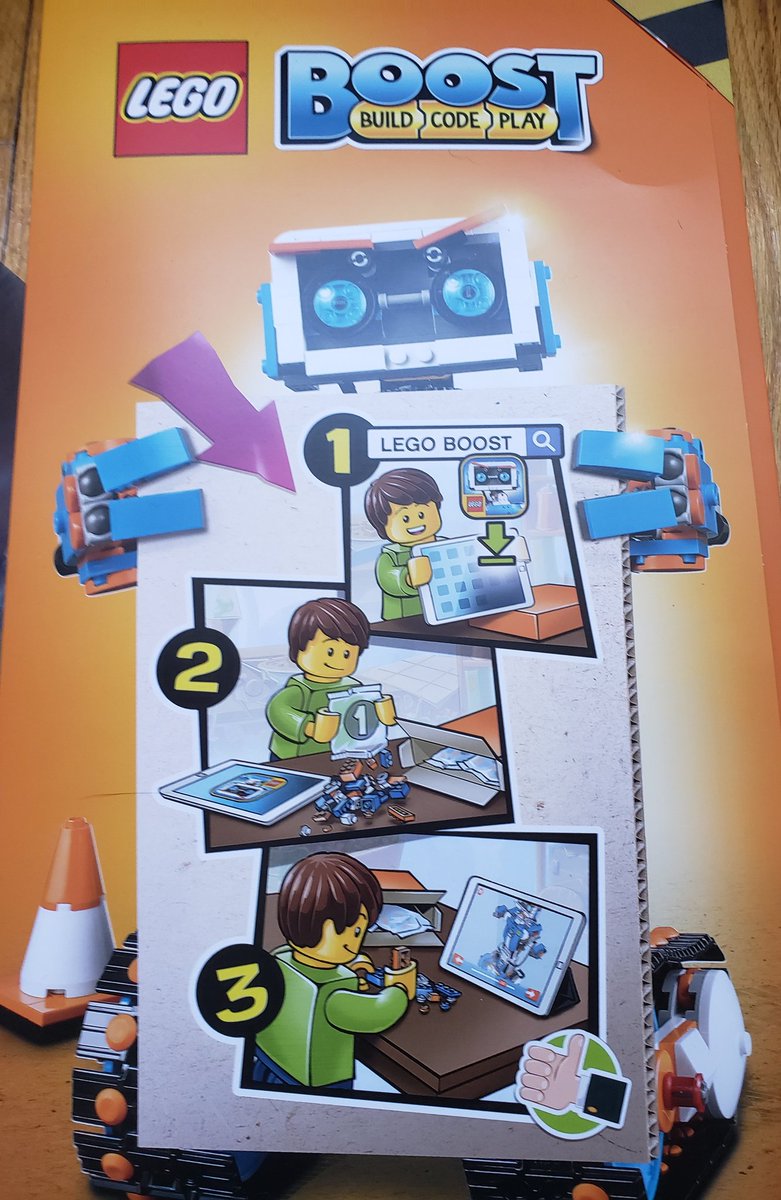
When you get a #LEGO Boost it will only let you build a model if you've unlocked the previous ones in the order that @LEGO_Group determined as acceptable.
That's great! It's very important to teach children early on that they should have no agency in front of electronic devices.
♥ 15↺ 4
A disappointment would be fine, in a sense, but forcing the order is actively stupid and the opposite of what LEGO used to be about.
♥ 2
You mean, like, StackOverflow but for kids? 😂
♥ 1
True true, though not across the entire offering.
♥ 1
You'd think they have the means to hire someone who can make nice, user-first apps that focus on kids' needs and preferences...
Why would they not be unlocked by default? Why would this not be clear right away to a kid?
♥ 2
Quality relevant advertising.
♥ 1
Have you set a date for the next one?
Is it not part of trying to assert sex over gender? Female being meant as biological(ish).
Right, so same usage as MRAs.
♥ 1
Can you beat the Privacy Chicken — or are you just too much of a coward? This great moment brought to you by @stuartathompson and @everydayarcade!
nytimes.com/interactive/20…
♥ 2↺ 3
Even if you don't read French I recommend getting past the language barrier to read this outstanding (and unfinished!) thread on all kinds of vending machines. Can you give @temptoetiam an example she hasn't seen?
Quoting a tweet by @temptoetiam ↗
♥ 4
Haha! "Ms. Denham did not weaken the rules in response to the industry pressure, but she did clarify and amend (...). For instance, the final code suggests that instead of trying to determine a user’s age, online services could just apply the standards for children to all users."
Quoting a tweet by @natashanyt ↗
♥ 2↺ 1
Oh, it's too complicated to identify children? Well you can just apply the rules that make the Internet safe for them to everyone then! Loving this small detail.
♥ 5
Oh yeah.
It makes me want to invent vending machines.
I constantly refer to this article: theguardian.com/technology/200…
I've been wondering for a while if a mash up of ITP and Safe Browsing would make sense, as a way to have the benefits of both rule-based detection and list-based uniformity. Could that be a good way forward here?
Quoting a tweet by @lukOlejnik ↗
♥ 3↺ 1
The problem is getting browser vendors in a cooperative mood over this.
Of course, the point is first and foremost to increase friction and to make tracking a deliberate circumvention. When you're in exploit territory there's a point at which a different legal regime applies.
Legal friends: has anyone given thought about whether there's a point at which circumventing tracking protection (eg. putting the exploit below in the field) would rate as "exceeding authorized access" under the CFAA or similar?
Quoting a tweet by @lukOlejnik ↗
♥ 10↺ 5
Possibly, but that assumes that the first party's ToS actually covers the behaviour of the third party which would most likely be using the exploit. That seems relatively unlikely?
♥ 1
Precisely. While it was a free for all it seemed unlikely, but the moment you are writing code to deliberately circumvent a user's protection, I think that's a different matter.
♥ 2
Of course, IANAL and all that.
♥ 1
I'm up for eating bugs. It counts amongst the most responsible futures. I look forward to this market developing!
Quoting a tweet by @Birdyword ↗
♥ 2
As far as I know the Chrome team is sincerely working on catching up to other browsers on privacy, and that's incompatible with unique ID schemes. Those are a train wreck at every level. You can absolutely have deep history with resets.
Can anyone sue under the CFAA?
There's a wine pairing for that.
♥ 3
There has to be a story there. Is it the same shoot and for a reprint they decided to lose the dog, or did they somehow redo the same shot years later with the same tie in the same place for some strange reason?
♥ 1
My assumption, and I believe that of all entomophagic schemes, is not that we would eat *wild* insects. Bugs are very easy to grow/raise. In fact, it's extremely hard not to. This should not contribute to the crashing population.
It's not luck if it's a key part of the reason people are thinking about it in the first place!
But the Web isn't an app store. Also, both major app stores actively encourage this.
Chrome is engineered for tracking, and tracking sustains an economic model with inherent scaling effects that fosters concentration and intermediary capture. This helps Google and to a lesser degree Facebook, and no one else.
I too am a Web developer, but the Web is much more than just technology. Apple's approach is a problem too, I do not claim otherwise, but less essentially.
Apple makes apps more competitive, artificially. Google makes the Web less healthy economically.
Eventually, we need to fix both. But while the Web can endure unfair competition it cannot survive if its economic model is withers and dies. That's why I believe we need a better Chrome much more than we need a better Safari.
Which premise?
There are also limits to what Chromium enables. Some of the major integrators have told me first hand that when they wanted to add privacy features Google intervened to stop them.
Chrome is the only major browser coded to share 3P cookies with everyone and anyone. It's a deliberate decision.
♥ 1↺ 1
We both know that these companies rarely have Chromium as their only touchpoint with Google. You can have a flag, if it means losing search royalties or Android integrations it's not a real choice.
Having said that I sincerely look forward to these new efforts, particularly on clarity as to which group(s) they are to be discussed in. I also hope we can correct that misunderstanding over publisher revenue. That study is a high-precision answer to the wrong question!
Chromium could have a flag for, say, mixing margaritas, if you rely on Google for other parts of your business and Google says "no" then you're not getting margaritas.
Now you *have* to write it.
♥ 2
I did not say all, but yes some. I've mentioned this before, guys, I didn't think it would be news?
I had the exact same question regarding Mozilla, I don't have an answer. But I have converging accounts from several places and no reason to doubt them.
I can only share so much, is there a specific aspect you want greater clarity on?
Those two aren't mutually exclusive!
I have no doubt that there is no intent to strangle the web. But a healthy Search and a healthy Web aren't necessarily aligned, see AMP. Search increasingly drives to other Google properties.
What people want and what drives adoption are overlapping but different things. People want things but might not immediately react to them (eg. due to search costs), conversely things can drive adoption outside of wants, eg. ads, defaults.
I'd be curious to hear if someone has tried to correct for the effect of being the default browser on the world's largest OS and a years-long constant ad campaign across Google properties on Chrome adoption. Do you know of such a thing?
Yes, that's what I found ~1.5 years ago when I went digging i into this topic with the same question @jyasskin had. No evidence of the same issue with Mozilla.
The ad fraud world is full of wonders: “Ad Fraudsters Exploited Grindr In A Scheme Targeting Roku Apps“
It's good to see more mainstream coverage of ad fraud: it matters more than people outside this space often realise.
buzzfeednews.com/article/craigs…
♥ 10↺ 8
At first it seems like it's just smart people stealing from companies, and to many that's just ¯\_(ツ)_/¯, perhaps even kind of cool.
But the companies being stolen from are 1) publishers and 2) mostly consumer-facing ones. Not all good but overall more often on your side.
♥ 1
Other companies, however, profit from this: intermediaries. Adtech makes money from ad fraud. It's a clear sign of intermediary capture that fraud levels are as high as they are. They're incentivised to have it below a threshold, but not zero.
♥ 2
So ad fraud matters to a healthy digital ecosystem, and to all the good we get from having publishers alive and still able to maintain independence from intermediaries. It's worth paying attention to!
♥ 1
The @nytimes’s Data & Insights Group is looking for a new VP — come be a colleague, it’s an amazing team!
nytimes.wd5.myworkdayjobs.com/en-US/NYT/job/…
♥ 1↺ 1
Do you care to extrapolate a bit?
The core problem with the Google research is that it doesn't even answer the question it was meant to. It talks about loss of cookie in a world in which buyers can choose (and are driven to) and says nothing about a world without cookies.
♥ 1
If you hold down both red dots at once you can hear it.
♥ 1
This happens regularly. Hilarity ensues.
♥ 1
It's concerning to see this analysis from @FTCPhillips that misses the structural interplay between privacy and monopoly, in this case between dominance over browsers (piggybacked off mobile OS dominance) and ads, with poor privacy in both. Thread 👇
Quoting a tweet by @PrivacyProject ↗
♥ 3↺ 1
I know first-hand that Chrome has an outstanding engineering team that cares deeply about its users, yet the browser remains engineered for tracking. Without influence from Google's ad arm, even if gentle, they would have implemented excellent privacy years ago.
♥ 3
Because of strong network effects in personal data, and of the non-excludable nature of data, advertising based on personal data will, absent intervention, lead to concentration. The rest of adtech tries to be a bunch of small Googles when scale alone decides returns: can't work.
♥ 1↺ 1
Is there a way to switch off that insane @Twitter thing where tweets you've asked to be notified about are in your activity tab instead? It's maddening. Please tell me this is the AB test of a bad idea and I can opt out?
♥ 1
Well, for one my activity tab constantly tells me I have activity when it's just a notified tweet. I liked that it told me of actual interactions.
Also, now when I look at my activity it will wipe my notifications. Don't touch my notifications motherfucker!
♥ 1
Better put than I did!
♥ 1
Thanks! I'll check it out.
Ce n'est qu'un au revoir. 🇪🇺 ♥ 🇬🇧
♥ 7↺ 1
Well used, sadly.
♥ 1