November 2022

258 tweets

I am convinced that forced, milquetoast neutrality is a core driver of distrust in news. No one believes you're neutral, and no one should. People might believe that you have a process to get at the facts despite your bias, though, and then you can tell it like it is.
Quoting a tweet by @jayrosen_nyu ↗
↺ 4

Replying to @heidilegg

Ownership is part of the problem but not the whole story. You could have an outlet owned by the most ethical group you want, they could still write in ways that breed distrust.
Who said standards weren't exciting?

Replying to @null and @benharnett

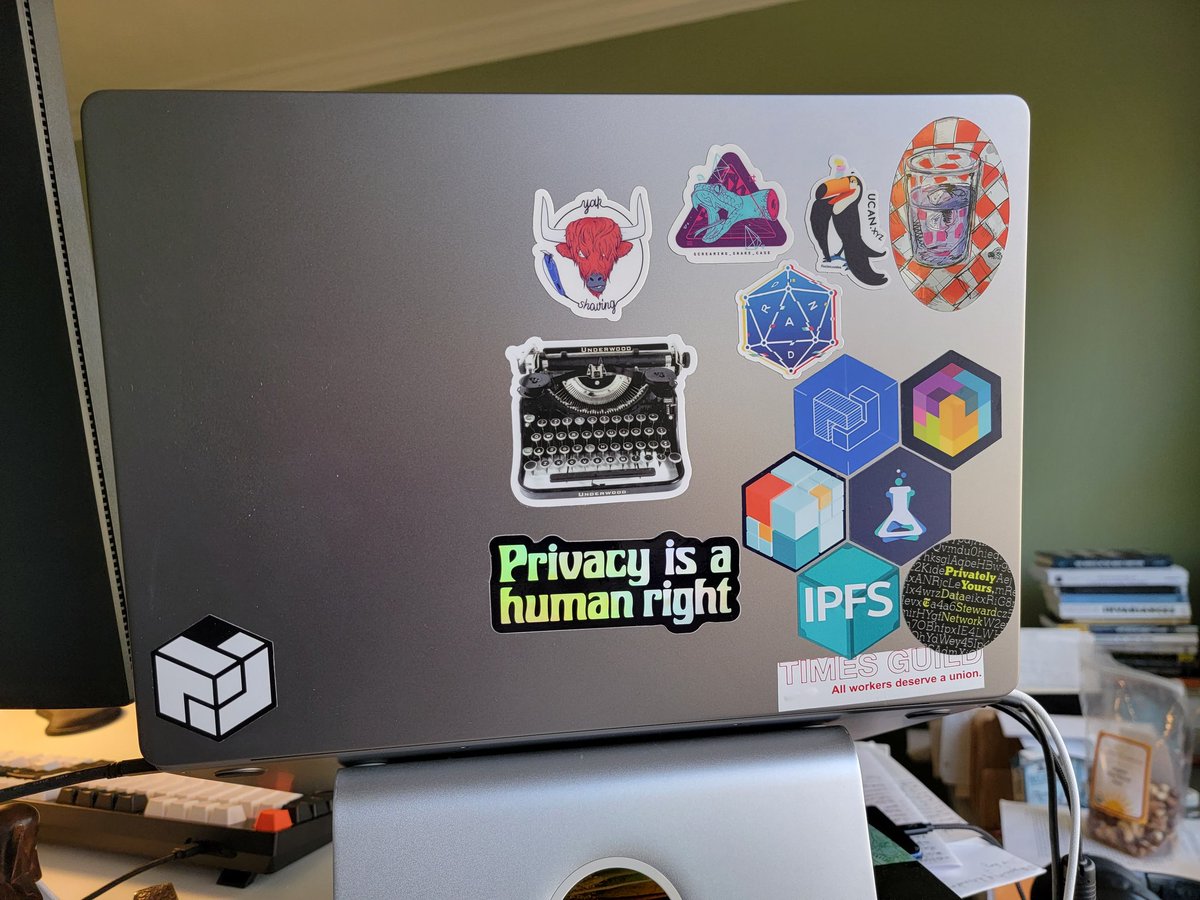
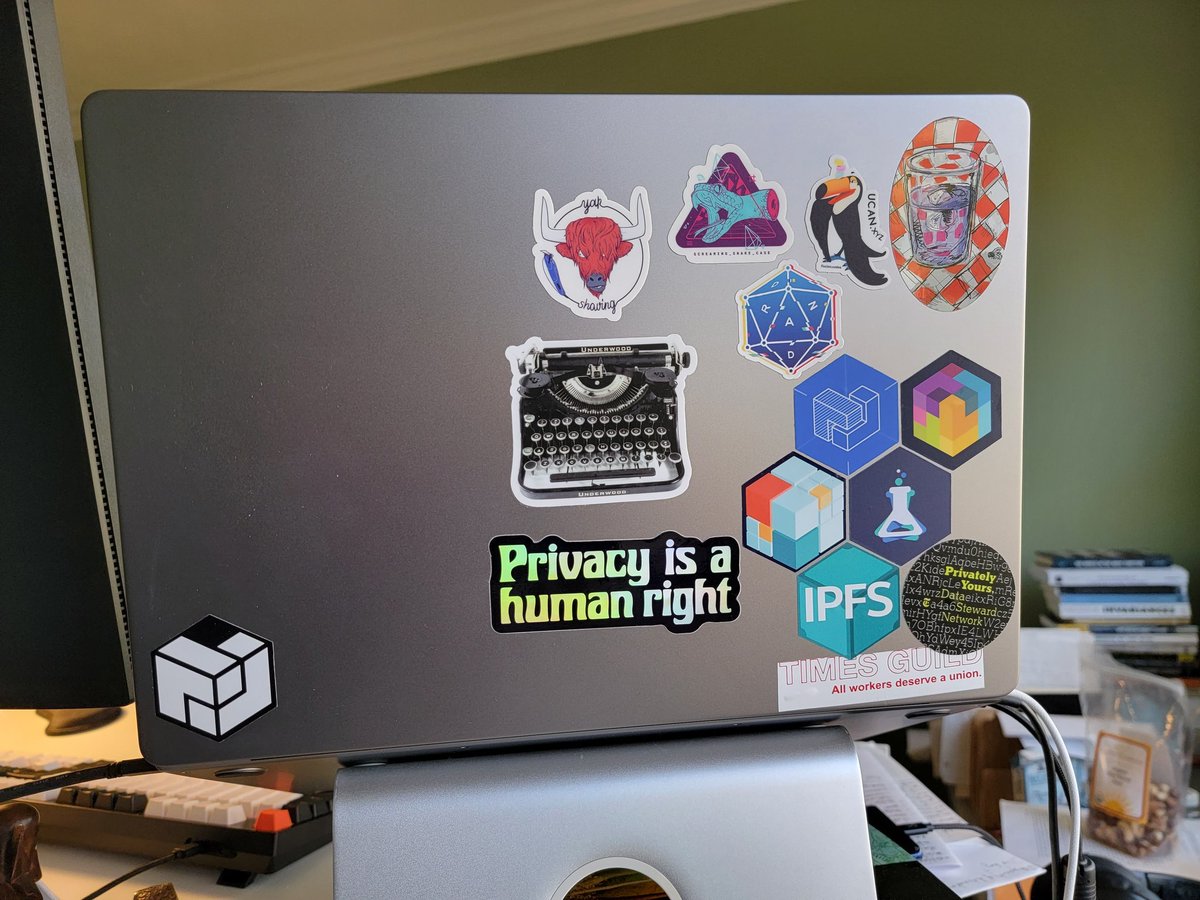
Thank *you* for writing this and for being you! Hey, look at the top right of my laptop 😉
You should go grab your copy of "The Happy Valley." Why? Because you want to read it. Why? Because it's good! And full of different stuff that you would think shouldn't work together but actually does! t.co/WPGi7y7jQn
I read it ~a month ago and had good things to say (thread includes a short passage):

Replying to an earlier tweet of mine

"The Happy Valley" by @benharnett. I loved this! It's hard to describe well, in a sense like one of those cocktails the ingredient list for which seems like it could never mix but that come out exquisite. And the structure really works too, enticing hints to the last chapter.
↺ 1

Thread of 3 tweets

Replying to @BrettFrischmann and @SMirandaField, @Harriet_Vane_

That's an excellent life choice.

Replying to @matthewstoller

WTAF. The explicitly stated assumption that a business press lens shouldn't be tough and investigative is quite revealing. This should be the standard for all business, and it's nowhere near tough enough as it is.
↺ 3
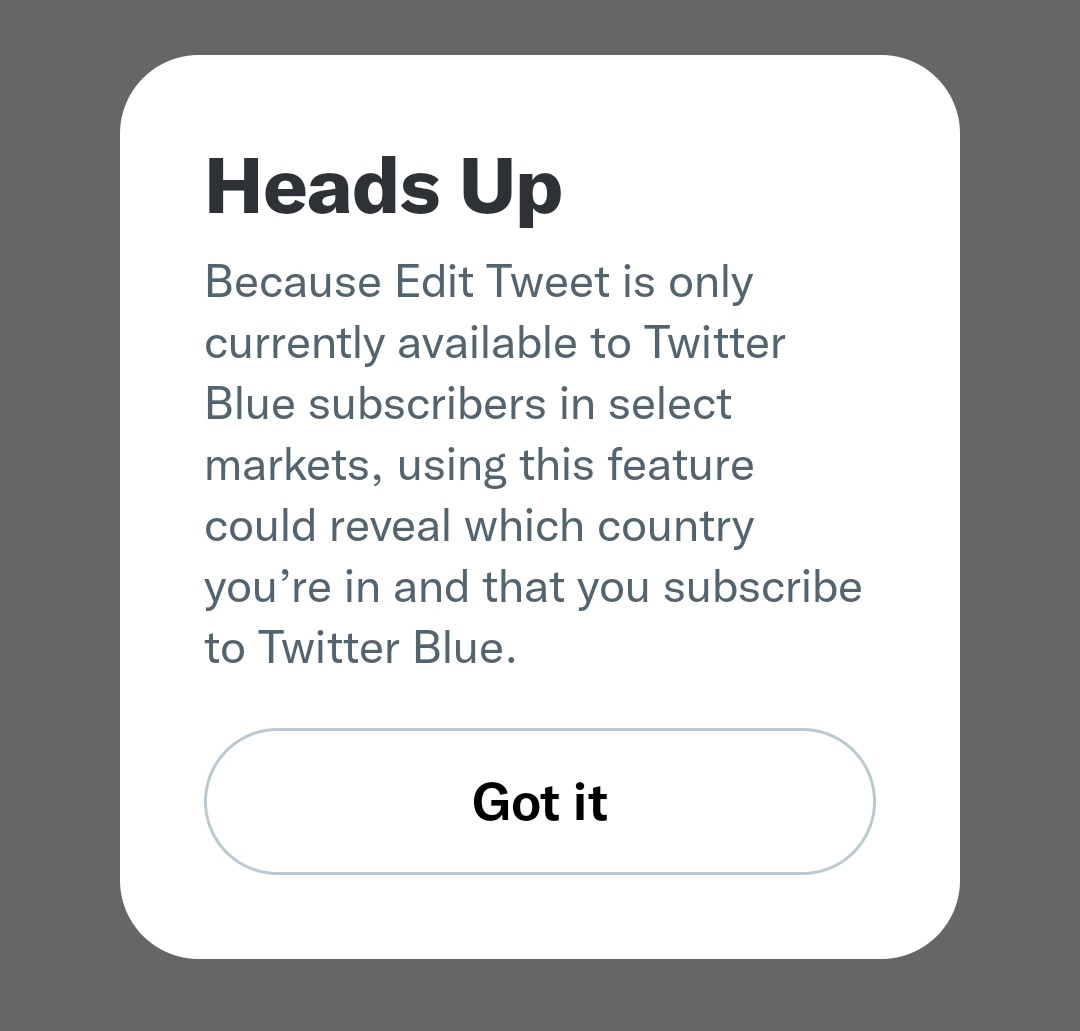
Twitter has been the only Big(ish) Tech company that has felt like it was sincerely trying to make things better in a way that connects with the real world. Whoever put the care that went into the warning below: we saw you, you did good, we won't forget.
↺ 11

Thread of 2 tweets

A new chapter of the Internet is opening.
Quoting a tweet by @chris_bail ↗
If you're good at tech and not in love with the Linux-on-the-desktop vibe you're getting from Mastodon (some of which comes from protocol limitations), you could do a lot worse than getting up to speed with atproto.com/docs.
↺ 1
You might need to learn about DIDs, UCANs, IPLD... but I'm betting that, in the years to come, you'll be happy you picked those up. I expect to see a lot more of them.

Thread of 3 tweets

Replying to @chris_bail

Let's hope it's not too much wishful thinking from my part! But I'm seeing both good next generation tech emerging and becoming mature, and incumbents struggling to do anything meaningful (even when not in immediate financial trouble). I reckon we can do this.
↺ 1

Replying to @JoanDeitchman

Thank you, you made things better while it lasted.
If you run ads on Twitter, I will block your account.

Replying to @_alastair

I actually have some notes somewhere about what NYT building that would look like. It doesn't have to go against small local news. You would need good governance over problematic stories (not to mention opinion), but it's doable.

Replying to @descopemore

I'm crazy that way.

Replying to @_alastair

CoMo is hard depending on affordances. A model similar to NYT's but scaled could be interesting for this specific context. (It doesn't scale beyond, but this has useful restrictions.)
Update: I blocked fewer than a dozen, now I haven't seen a single ad in hours. Try it!
↺ 1

Replying to @dmarti

They're on autopilot...

Replying to @ACBrewst

I still haven't seen an ad. I'll report when I see one again. One weird trick!

Replying to @Chronotope

Oh man so THIS is what circles are for!
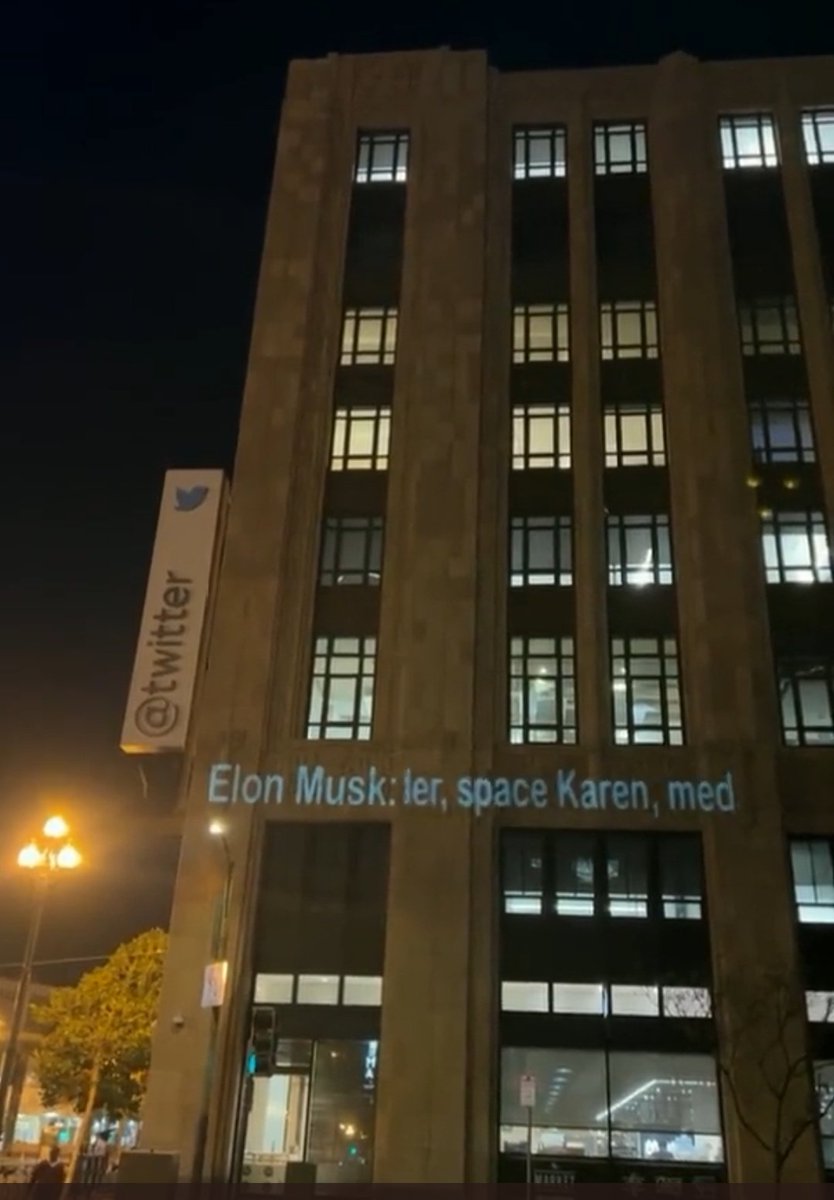
@elonmusk starring on here as the Space Karen of free speech.
Quoting a tweet by @trekonomics1 ↗
Digital eugenics is the word for this.
Quoting a tweet by @GertieTheDino ↗
↺ 4

Replying to @DgtlNmd

I'm afraid I might have.
Disinformation doesn't just magically happen, it thrives because there's money in it. Who funnels the money? Who maintains the opacity that props up this system? Who gathers data everywhere to make this work in the first place? Who profits? Whose salaries does this pay? Yup.
Quoting a tweet by @CraigSilverman ↗
↺ 23

Replying to @kkomaitis and @javierpallero, @David_MSullivan, @jilliancyork, @sivavaid

Replying to @null and @sivavaid

Since Twitter was microblogging, we could call this... macrotweeting! Seriously, though, I'm down. Mine's still up and running at berjon.com!

Replying to @daniellecitron and @markpmckenna, @UCLAtech, @ariezrawaldman, @hartzog, @neilmrichards

♥ that line-up, I wish I could have joined!

Replying to @javierpallero and @kkomaitis, @David_MSullivan, @jilliancyork, @sivavaid

It doesn't allow me to request entry? I'm robinberjon there.

Replying to @null and @Ravieshwar

That's an interesting case indeed.

Replying to @javierpallero and @kkomaitis, @David_MSullivan, @jilliancyork, @sivavaid

Warren Weaver distinguished three problem classes: 1. of simplicity, like relating two variables 2. of disorganised complexity, that can be attacked with stats 3. of organised complexity, where details and structure are key. Engineering is good at 1, ML at 2, social media is 3.
Quoting a tweet by @richburroughs ↗
↺ 2
I'm oversimplifying of course, but I think that the coarse mapping is roughly right. What's really funny with the elonites is that they don't even understand how hard 1 is at scale, let alone that the real difficulty is two whole complexity classes harder.
↺ 1

Thread of 2 tweets

Replying to @guilhemlettron and @e3d5_fr

Ils ont quand même éliminé l'intégralité de l'équipe accessibilité. Pas besoin de spéculer beaucoup pour se faire une idée de ce que ça va donner.

Replying to @daniellecitron and @JuliaAngwin

I cite this article regularly: theguardian.com/technology/200…
↺ 1

Replying to @guilhemlettron and @e3d5_fr

Ça ne veut rien dire "accessibilité parfaite." Ils ont été pionniers en a11y sur les réseaux sociaux et sont objectivement bons.

Replying to @guilhemlettron and @e3d5_fr

Lol, whatever.

Replying to @CatherineBaronx

Thank you!
I reckon that's what they call a flowerbed.

Replying to @internetrebecca

This except for socks.

Replying to @CT_Bergstrom

It's in the Chicago Manual of Style somewhere.

Replying to @cobun and @KirstenSM

Sorry, I'm not sure who owns that since I left!

Replying to @null and @podopie

Hahaha, I saw!
Do you like standards? And exciting tech? And radically improving the Web to take it back from lumbering megacorporations? Then this job might well be for you! Talk to me if you're curious, as we would get to work together. boards.greenhouse.io/protocollabs/j…
↺ 2

Replying to @EverFallibly and @heyorson, @chris_bail

Clearly, you don't understand how easy it is to get a card with an arbitrary name on it.

Replying to @EverFallibly and @heyorson, @chris_bail

Sorry, but that's just wishful thinking. Payment intermediaries aren't identity providers (and don't want to be). This shifts from a system that was working to one that is riddled with holes.
It's uncanny how much this sounds exactly like what Mark Zuckerberg would sound like if he ran a social network.
Quoting a tweet by @justinhendrix ↗
↺ 2

Replying to @EverFallibly and @heyorson, @chris_bail

You seem to be confusing moderation and verification. The verification system worked. The moderation system can't hinge off of that. I'm not a knee-jerk critic of anyone. In this case there's rather ample evidence.

Replying to @justinhendrix

Yes, I saw that the next second! It's incredible, like he cribbed Zuck's notes or something.

Replying to @recifs

That's not different from what I said.
*laughs in GDPR*
Quoting a tweet by @CaseyNewton ↗
↺ 8
Lawyer friends: is it possible (in some meaningful global jurisdictions at least) to attach terms of use to a standardised protocol? Say I were inventing HTTP today, could I attach some reasonable provisions, eg. on privacy? If so, how would that work?
↺ 4
To be a little less cryptic, what I have in mind is attaching fiduciary user agent duties to implementations of a specific protocol. Can it be as simple as "By implementing this protocol directly or through a library you agree that the User Agent you produce will yadda yadda"?
↺ 1

Thread of 2 tweets

Replying to @adatta02

Why not? This works for IP, for instance. Protocols routinely come with patent pools attached (even if they are RF).

Replying to @coolharsh55

Right, but noncompliance with a standard is rarely punishable without there being additional instruments. I would like an obligation that isn't technical (eg. violation of terms leading to fines or remedial action) but is legally binding.

Replying to @tim_libert

Replying to @coolharsh55

I don't know! That's why I'm asking what people think 😁

Replying to @AmeliasBrain and @adatta02

Right, but I think that drawing parallels with copyright might lead us astray because what you can dictate matters. Patents work where copyright doesn't because a claim can be essential to implementation. I'm wondering about similar mechanisms eg. for privacy.

Replying to @hartzog

Hmmm, interesting! Thanks! From reading the abstract it looks like this could be a devil-in-the-details question in terms of whether it would be possible to impose such contracts in a protocol, but I'll definitely read more!

Replying to @blaine

You're not wrong, there are plenty of ways in which blending technosocial powers like this can go really wrong 😂 But, to speculate, what if SMTP came with a provision that using it to send spam is a violation of terms that led to contractual fines?

Thread of 2 tweets

Replying to @adambroach and @adatta02

Do those prevent any terms or just block some specific ones?

Replying to @blaine

Oh no that's the opposite of what I'm trying to do!

Replying to @MaxGendler and @hartzog

I think it does indeed give a good prism. They have a way to get people into the contract and enforcement is terrible. I don't even have the first step figured out 😂

Replying to @dietrich

Dietrich, if you make it public it might stick!

Replying to @KeirStitt and @TheRealRevK, @neil_neilzone

Right, none of these options is really any good to use intrinsic properties of a protocol for binding rules that extend beyond what the tech itself can enforce. Thanks!

Replying to @mikarv

Right - it's the contractual thing to hang it on that I was missing in terms of figuring this out conceptually, and why it doesn't work.

Replying to @TheRealRevK and @realnickperry, @neil_neilzone

I guess that you could have an RF patent pool that is only accessible if you abide by some terms then? That *could* make the system possible in eg. the W3C where the pool already exists. But the politics of aligning pool participants on a policy & paying for enforcement...

Replying to @adambroach and @adatta02

That's a very interesting idea. And cert revocation could hang off of some form of open court system for conflict resolution. It could require remedies, issue temporary bans, etc. I like it, something to mull over, thanks!

Replying to @cobun and @hartzog

Right, the problem is whether losing the trust mark would actually matter? Most people ignore these, and the signal of noncompliance is the absence of a signal, which is problematic from a UX perspective.

Replying to @alextcone and @MaxGendler, @hartzog

Thanks! Looking...

Replying to @jonahbenton

The problem starts at "proprietary" 😁

Replying to @MaxGendler and @hartzog

I also don't have that!

Replying to @adambroach and @adatta02

Thanks! I've been staying away from CAB because of an ingrained distrust of browsers, but you've convinced me 😁

Replying to @KeirStitt and @TheRealRevK, @neil_neilzone

Or in fact a cryptographic certificate that you can revoke. It would have to be for more than handshaking as that would be too open to defection, but heavy cryptographic involvement is where protocols are headed anyway.

Replying to @kkomaitis

You need something to give in exchange for a contract, if the protocol is open, that's hard. But using certs could work!

Replying to @TheRealRevK and @KeirStitt, @neil_neilzone

That is indeed a good question 😁 A key concern I have is that you can harden a protocol against all kinds of problems but it is essentially impossible to protect against the user agent.
The classic example is: you can make the web as private as you want, there's still the Chrome Sync backdoor where Google tricks people into handing over their entire browsing history. So what motivates me is: could we attach constraints to a protocol to impose fiduciary UAs?
It's not the only path there, just one option I was wondering about. Another is to tie revenue streams to this, but that too is hard.

Thread of 3 tweets

Replying to @BartlettMorgan and @montezumachavez

Right, that's where all the branches of the thread seem to be converging. Modelling after how certs work seems interesting precisely for that reason.

Replying to @adambroach and @adatta02

Hahaha, I think it might take more than one beer for me to get over 25 years in this space but I'd love to take you up on it all the same 😁
First race ever, longest run by far for me too, was fun!
↺ 1

Replying to @null and @amyvdh

Thank you! Great soundtrack 😁

Replying to @mariafarrell

Thank you 🤗

Replying to @fatemehx2

Bravo to you! Crazy stuff, people get hooked on this.

Replying to @skwinnicki and @CT_Bergstrom, @hellyeahcorks, @drdrewsteen, @john_d_beatty

I agree with your general point, but there has to be some arbitrary way to select people? ORCIDs aren't difficult to set up, and it's not necessarily uncommon for people who don't work as researchers (like myself) to already have one they set up for a publication.
This looks like a good attempt at network portability for science twitter (it assumes that you have an ORCID). Sign up!
Quoting a tweet by @CT_Bergstrom ↗
↺ 4
This is the first thread I see that makes the Twitter chaos make some sense. There's no optimistic out, though.
Quoting a tweet by @pwnallthethings ↗
↺ 3
I'm very sad that this site is going to die, but at least we're going in style.
Quoting a tweet by @Fly_Sistah ↗
↺ 5
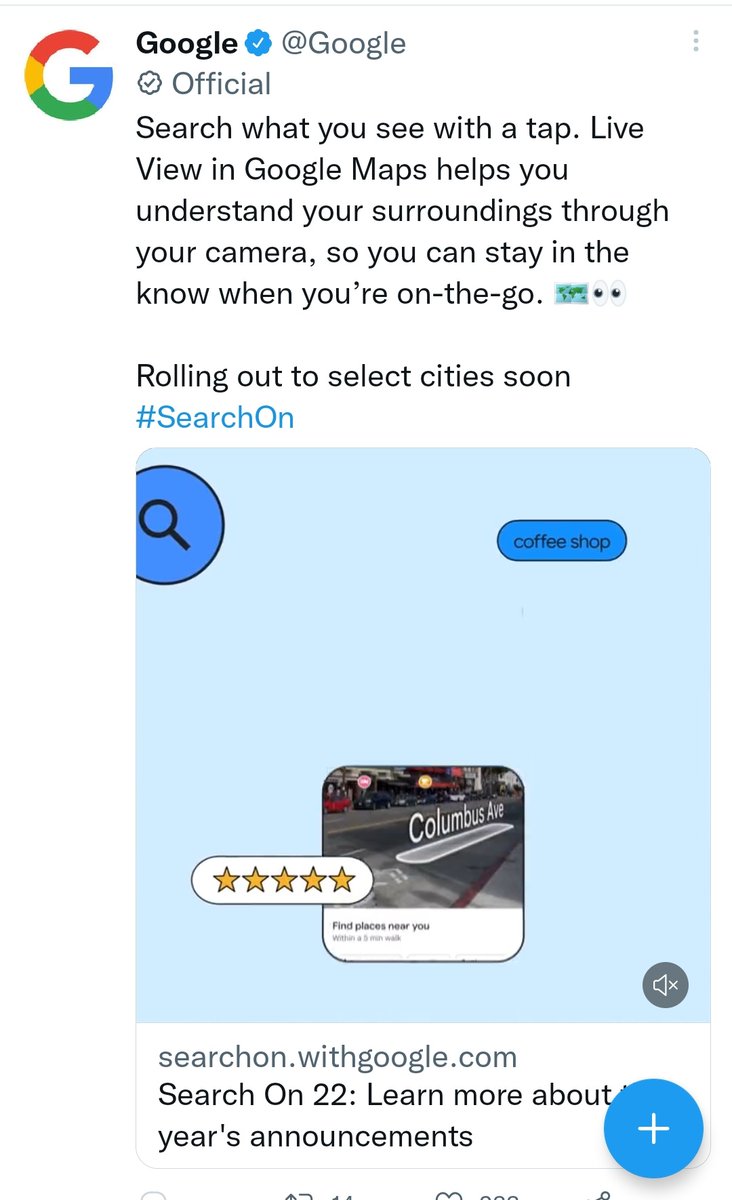
So it looks like @Google is still advertising on Twitter. Everyone in advertising knows they're bad at brand safety, but you'd think they'd make an effort for themselves.
↺ 2

Thread of 2 tweets

Replying to @null and @MadronaCitizen

Brutal but fair.

Replying to @fatemehx2

I don't know yet! I simultaneously feel both the addictiveness and the drudgery :)
The level of quality assurance we're seeing on Twitter right now is exactly why it scares me that people are driving Teslas through my neighbourhood.
↺ 1

Replying to @robertsharp59 and @mariafarrell, @WebDevLaw

I really enjoyed the first half, the second half felt a bit phoned in or uninspired?

Replying to @MarietjeSchaake

I honestly can't tell him apart from Trump anymore.

Replying to @WebDevLaw and @robertsharp59, @mariafarrell

Exactly!
A lot of hard truths from Google execs in there!
Quoting a tweet by @jason_kint ↗
↺ 5
@protocollabs + @igalia collaboration lands pre-defined protocol handlers in Chromium with IPFS protocol support! blog.ipfs.tech/14-11-2022-iga…
↺ 8
In Electron, has anyone built a `BrowserView` that tracks a (custom) element's size and position? The docs strongly encourage avoiding <webview> but embedding is hard to beat.
☑ No fact-checking on Twitter ☑ No fact-checking across Meta properties I guess we'll have to hope that YouTube suddenly becomes a responsible actor... 🤔 🤷‍♂️
Quoting a tweet by @YaelEisenstat ↗
↺ 5

Replying to @TC_4KBW

It's hard to even begin listing how much of this is evidently wrong. There is no global privacy law nor any regional one that would be acceptable for this purpose. Having a standard comply with the GDPR is a meaningless proposition. You could obtain consent and anything goes.
Open standards aren't made by the members of an SDO, they're made by the community at large. Eg. W3C standards are made by the Web community, which includes having to address substantial concerns from anyone. It's what makes them so legitimate; it also rules out contracts.
Using pinky promise contract banks à la SWAN is a technique that has been implemented as a solution by the tracking industry for over two decades now and it has nothing but abject failure to show for it. SWAN is nothing but a clumsy mishmash of failed ideas, that's one of them.
Finally, it's patently transparent to everyone in industry and policy that the SWAN coterie is just an effort to preserve intermediary power to the detriment of people, publishers, and advertisers. No one is fooled. That it is also inept in every way is just added comedy value.

Thread of 4 tweets

Replying to @joannekcheung

I never knew photons were that creative.
If you're running a news site and you embed tweets, I hope you realise that Elon Musk, a famously petulant man-child who openly hates independent reporting, has direct and hard to detect control over the entire pages that have embeds, including hitting your backend as your users?
↺ 14
Third-party code embeds are always an attack vector, the fact that they're common on the Web is an endemic problem that we'll have to fix eventually. But I would suggest that the threat level here is more elevated than the ambiant "the Web is poorly architected for security."
↺ 3
In addition to the attack vector, there's the problem of archival: a lot of these articles are going to become meaningless or to lack important context if the tweets are pulled.
↺ 3

Thread of 3 tweets

Replying to @WebDevLaw

We have that — I'm just waiting on the blog post that goes with :) github.com/meandavejustic… replayweb.page/embed.html Details forthcoming!
↺ 1

Replying to @donohoe

I'm considering chatting about a solution with various news people — interested?

Replying to @scodtt

I'm hoping that we can automate some of the pain away.

Replying to @scodtt

Magic ;)

Replying to @minabird

That's better, but it's certainly not what everyone does!
↺ 1

Replying to @_mql

I really hope so!

Replying to @WebDevLaw

I'm *very* glad to hear that that is better now.
If this really is #RIPTwitter, I'm going to miss you. Your kindness, your intelligence, the discussions we had have been invaluable. Being able to engage with brilliant minds across the world & disciplines and also shitpost is ♥. If this is it, see you: mastodon.social/@robin

Thread of 2 tweets

Replying to @null and @MadronaCitizen, @trekonomics1

Totally worth getting banned over.

Replying to @BrendanNyhan

It's not supposed to be just one site, it's meant to be a bunch, but everyone heads to mastodon.social by default and it's getting hammered from everyone jumping ship at the same time.

Replying to @mberk

"Our trusted third-party partners" - they're just very trusting 😁
There is nothing more inimical to progress and innovation than the concentration of power. You can see it in the megacorps and their products that smell of meetings, and you can see it in billionaire behaviour. Billionaires and monopolies are symptoms of social sclerosis.
Quoting a tweet by @AnandWrites ↗
↺ 22

Replying to @HalSinger

Nitpick: Yoel is former head of trust & safety, not security. Pointing this out because it makes his point of view even more relevant.

Replying to @null and @MadronaCitizen

You can safely report on Monday with a screenshot of this gif.

Replying to @tangled_zans and @wjmaggos, @_julesh_

I would add that no one said that it (inherently) federates by topic, only that that's the structure that has emerged, which it seems undisputed. As @tangled_zans said that's not an excuse, but it certainly seems worth tending to.

Replying to @null and @wjmaggos, @tangled_zans, @_julesh_

I think we're all in violent agreement on all of that. Also, I'm not sure why NYT hasn't spawned an instance yet!

Replying to @null and @wjmaggos, @tangled_zans, @_julesh_

That's part of my concern with Mastodon/ActivityPub: they support decentralised operation but they don't enforce it. That means they're not capture-resistant and susceptible to various attacks based eg. on bundling, defaults, or entry convenience. Same as email is 85% Google.
Excellent point from @daphnehk. The unchecked power of app stores is staggering, and when I say "staggering" I mean "not afraid to threaten to remove one of the world's largest news apps from the store." What is journalistic independence living at the mercy of privatised infra?
Quoting a tweet by @daphnehk ↗
↺ 1

Replying to @hsivonen

That's a very good point and one with a simple explanation: I don't think that most people in digital businesses see the web as less subject to the power dynamics that prevail over app stores. We can debate whether that's exactly right, but I think it is directionally correct.
What are the only two browsers that matter? Chrome and Safari. So we're already dealing with the same companies. Can you keep your user data to yourself? Nope, Chrome Sync means Google spies on your business in the same way that app platforms do.
Who makes the most influential decisions regarding features or privacy? Yup, same folks. The Web's remaining difference used to be that you could decide what parts of the experience you prioritise for your users, as opposed to eg. Apple telling you to do dark mode now.
But CWV killed that. Now some random Silicon Valley bro overrides your product priorities with their own. So why *wouldn't* you push people into your apps? The Web is just as controlled just messier.

Thread of 4 tweets

Replying to @hsivonen

I take issue with it too and work to change it, but it's not a framing, it's reality. Any product manager who needs to get things done on a budget will only look at those ~95%. Hoping for things to be different without changing the structure of power is magical thinking.
It doesn't look like Mozilla has any plan other than driving Firefox to obsolescence one angry blog post at a time. And everyone else is too small.

Thread of 2 tweets

Replying to @tobie and @hsivonen

Yes, people are trying some new things in browsers (in search too). Some of it is cool, but I think the reinvention needs to go deeper. So long as browsers stay in the business of selling people to search engines we're unlikely to get anything long-term good.

Replying to @null and @adjiboussodieng

Bravo!! 🐯

Replying to @teleclimber and @tobie, @hsivonen

I have thoughts, but it doesn't fit in a tweet 😅. Thankfully, it's part of my job to think about this now (as opposed to having to steal time to consider long-term/foundational issues as before), so I hope to be able to share ideas soonish.

Replying to @rocallahan and @hsivonen

For all intents and purposes that's exactly what search engines and social media do.

Replying to @rocallahan and @hsivonen

At no point did I imply that it was deliberate. I am simply observing that it is happening. There doesn't appear to be any kind of leadership or plan, and good devs can't carry the whole thing.

Replying to @tobie and @hsivonen

Agreed!

Replying to @tim_libert and @hsivonen

I'm with you, but look at it this way: rate limiting is trivial, yet none of the big ones who do this (LinkedIn, Reddit, NYT...) do it. Why? Because what you gain from moving people to the web, even those you ask fifty times, exceed what you lose from the attrition.
If that doesn't tell you how bad the web has become for people who make a living building things on it (but who aren't monopolies)... I'm as web as they come, but when I left The Times I was putting a case together for a desktop app along small standard changes to accelerate it.
There's no guarantee that it would have happened, but I think it's only a matter of time before someone does it. Use the web only for top funnel feature-light use and drive people into the app. I don't see the trend improving short of major reform in browsers & search.

Thread of 3 tweets

Replying to @rocallahan and @hsivonen

By volume there actually aren't. That's a bit like saying that app stores have no gatekeeping power because you can sideload APKs and sometimes use a Web app instead. If someone can single-handedly withhold a life threatening amount of traffic then they are gatekeeping.

Replying to @can

Replying to @jason_kint

Princeton is a heavily Tesla town, and now I'm seeing these crop up.
↺ 5

Replying to @rocallahan and @hsivonen

Two points: * The same companies could, in fact, kick Twitter off the web. Blocking the domain in browsers and in iOS/Android/osx would be effective. That they don't is just convention. * Twitter is rare in not needing referral traffic. Everyone else does. The control is the same

Replying to @tim_libert and @hsivonen

Yup. People pass the pain on to users. The short term fix is to try to pressure those companies, but that's whack-a-mole. The longer term fix is wrest control back from the companies that are making this mess.

Replying to @rocallahan and @alexanderdanilo, @hsivonen

Agreed - I think that FirefoxOS was a good move and arguably the last time that Mozilla tried something big? There's still good stuff happening in KaiOS not to mention Capyloon!

Replying to @RickByers and @davidbaron, @hsivonen

It does, but I'm not sure that it's the people you are thinking of who need to be educated about the power dynamics they encourage. For any of these companies, dropping in search is a death blow just as dropping off an app store, yet browsers all maintain that power. Worth it?
I know you spend time thinking about these things, so please take a step back to consider what your frame on this is. You're approaching this with the assumption that they don't understand the dynamics, that they need to be "educated", like an expert to hapless villagers.
I just spent 5y there & the reality is far more sobering. They understand the dynamics v well & spend a huge amount of time strategising around them because their livelihoods fully depend on getting it right. Yet they still prefer app stores. What does this tell you abt the web?

Thread of 3 tweets

Replying to @RickByers and @davidbaron, @hsivonen

Ah, sorry I didn't get that. Rick! Educating the users has never worked!

Replying to @RickByers and @davidbaron, @hsivonen

Sure, but I think that we'll get better outcomes by opening up better choices than by educating people about the current ones.

Replying to @RickByers and @davidbaron, @hsivonen

This could be interesting! I've been toying with similar things. I see what looks like a rich card in the screenshot, what is the format?

Replying to @RickByers and @davidbaron, @hsivonen

Last I looked most publishers still have RSS, so if it's really that then it should Just Work, no? My immediate expectation upon seeing the screenshot is "oh, this is yet another way to force people to use AMP." Making it (and keeping it) just RSS would be neat.

Replying to @RickByers and @davidbaron, @hsivonen

I mean, the whole thing looks like the below except I don't wear ties. For the purposes of this thread and twitter brevity, the best move is IMHO to create a revenue model for browsers that doesn't involve artificially propping up a search monopoly.

Replying to @RickByers and @davidbaron, @hsivonen

Explaining how it works and what the vision/plan is would go a long way. For instance the fact that it works without RSS worries me: who controls the feed? If this adds yet more "Google decides what's relevant" then it is good neither for publishers nor for users.

Replying to @RickByers and @davidbaron, @hsivonen

I'm not characterising it that way to be antagonistic. The effect of defaults is well documented and the biggest player can pay more: this creates an obvious feedback loop. More generally, search and browser are the same product to users. We have to pick which one eats the other.
Right now search is eating browsers. I honestly don't think that Chrome will still meaningfully exist in ten years under the current dynamic, it'll be replaced by the Search app with in-app browsing. Or become indistinguishable from that.
Igalia is very cool, but that's not scalable. A better business model for browsers means a world in which we can liberate Chrome and Chromium (and Firefox) from Google. I think that's an ambition worth having.

Thread of 3 tweets

Replying to @RickByers and @davidbaron, @hsivonen

Indeed! And publishers actually prefer user control there: it tells them what people actually want (as opposed to what an algorithm prefers)!

Replying to @Benjamin_Aster and @RickByers, @davidbaron, @hsivonen

The trick is to understand that they're right and you're wrong 😁 What matters is function, not architecture.

Replying to @RickByers and @davidbaron, @hsivonen

It's of course a prediction but we can ask about current trends. If that's not the end state, what is that app for? Why does it have an in-app browser? That works differently from Chrome? Do you feel funded to not force your users into Google accounts? Into Sync?
To give them better, more informed choices in search? To protect their privacy including aga Google? If you can't do those, why assume you'll be able to prevent the continued slipping towards similarly bad outcomes elsewhere?
If there's real benevolence, how many bad quarterly results separates it from a change of hearts? I'm really not saying this to annoy you, but a credible good future rides on checks and balances that, right now, just aren't there at all. Nothing prevents the bad outcome.

Thread of 3 tweets

Replying to @rocallahan and @hsivonen

And we just spent years in which Google would drop you off the web if you refused to do AMP. So we're aligned to a point I guess?

Replying to @RickByers and @davidbaron, @hsivonen

I absolutely encourage you to spend your weekend elsewhere and I hope it's a good one! I'm entirely sincere when I say I don't intend to rile you. The primary point that I would like you to consider (later, and knowing I have friendly intent) is that hope isn't a strategy.
I believe that the "forcing" part is readily supported by UI analysis and that the same logic that supports it and that claims that people like these defaults equally well supports replacing Chrome with the Search app.

Thread of 2 tweets

Replying to @alexanderdanilo and @rocallahan, @hsivonen

I disagree. I think that browsers are dying in part because they're stuck in the tabs+windows metaphor. Who wants to write advanced behaviour in that kind of crappy context? I think it was a good direction to explore and that there is business potential in supporting apps well.
Evidently this is all speculation, but I think that money could be made in the space of "thicker" browsers and that FxOS explored that.

Thread of 2 tweets

Replying to @ElliottZ and @davidbaron, @alexanderdanilo, @rocallahan, @hsivonen

These aren't completely comparable. They didn't target the same markets, and hardware folks trust Microsoft about as much as they trust Google, which is to say not at all. Mozilla had an angle.

Replying to @PrivacyMatters and @hsivonen, @brave

I am keenly aware 😁 But in the context of this thread, browsers like Brave are too small to influence behaviour. I regret that, a lot, but it's the situation we have to deal with.

Replying to @PrivacyMatters and @hsivonen, @brave

I agree, but that's missing my point. If you want to *understand* the behaviour of those who build sites, you have to treat these alternatives as non-existent. Why? Because empirically they don't factor in the calculus. If looking for solutions, of course count them in.

Replying to @PrivacyMatters and @hsivonen

Ah, gotcha, but then I disagree. If the choice is build what works for 95% of users vs for the remaining 5% then doing the latter is a luxury few can afford. This isn't defeatist, I do think that we can fix this, just not by hoping sites will take a leap of faith en masse.

Replying to @fareszr and @hsivonen

Mostly legal? Where does the traffic come from and who sets the rules for it? You can get a website on your home screen too, if that were enough it's a lot less work than making an app!

Replying to @alexanderdanilo and @rocallahan, @hsivonen

Oh sure, no question there. In a sense it's a perfect Mozilla story: outstanding engineers and tremendous potential thwarted at every turn by woefully incompetent leadership.

Replying to @alexanderdanilo and @rocallahan, @hsivonen

Don't forget Tizen, which is still around!

Replying to @rocallahan and @hsivonen

It looks like you're great at sideloading then.

Replying to @mattecapu

I'm not likely to follow it much in the first place, but I wonder if there isn't a better option we could think of? A boycott strikes me as very unlikely to work, would there be ways to make rainbow flags et al as visible as possible somehow? (Not sure I know how, just thinking.)

Replying to @FascinatingTech and @brucel, @daphnehk, @OxfordHCC

Do you have a sense for when you'll be done? (Or is that one of those questions you don't ask PhD people? :) To add a bit to the #a11y bit: I think that we could use apps' a11y tree to put some automation power in people's hands, eg. to autoreject cookie banners or whatnot.

Replying to @daphnehk and @FascinatingTech, @brucel, @OxfordHCC

I poked him over there!

Replying to @clancynewyork and @chipswoon, @Chronotope

I would be very interested in hearing if this experience of paused creatives restarting is common. That could be Twitter trying to boost its revenue in a very, very dodgy way.
↺ 1

Replying to @Chronotope and @clancynewyork, @chipswoon

Eww ffs that's all terrible.

Replying to @RickByers and @davidbaron, @hsivonen

I didn't say that hope was your actual strategy, only that the strategy you described was hope. I understand if maybe you can't fill out the important details!

Replying to @RickByers and @davidbaron, @hsivonen

I'm here to look for common ground too and I don't believe that that requires "aligning on strategy" (ew) but that's hard to do when we can't discuss solving the Web's major problems because your employer might be help liable for having caused them in the first place.
Getting some bit of RSS right would be neat, but it won't make a dent in the issues I see. Happy to provide some feedback because the deck chairs should be arranged neatly, but incremental times scale doesn't mean impact.

Thread of 3 tweets

Replying to @RickByers and @davidbaron, @hsivonen

Sure — I'm not interested in the moral high ground, I'm working on a very practical problem, namely (cf. upthread): mitigating the externalities and consequences of of browsers' business model. Allow me a schematic overview in an imaginary world to see if you find commonality!
In this parallel universe, people use bookmarks a lot, for everything. They're exactly like us, except they're all demented Marie Kondos. Every browser is integrated with a bookmarking service because it would use useless otherwise. People confuse the two.
Bookmarking services (BMSs) pay browsers to be the default. That's how browsers make money, and we want browsers to make money so that's good. It pays for infrastructure. We don't need to care how BMSs make money, it suffice that something like ARPU be scale-dependent.

Read the whole thread: 10 tweets →

Great intro to UCANs by @expede: "Decentralized Authentication". I had been thinking about unearthing Web Intents on the way to a composable Web, but this made me realise I hadn't noticed the overlap between UCANs and intents. youtube.com/watch?v=FXndHj…
↺ 5

Replying to @RickByers and @davidbaron, @hsivonen

Good questions, thanks. There is indeed a gradation of risks, but I think that it has threshold effects beyond which gradation doesn't matter. One number that would be interesting to publish is: how many people change the default search engine. Also: how many encrypt Sync.
I wouldn't see Safe Browsing as editorial control so much as a security mechanism. It doesn't decide what's relevant, it doesn't rank the world. Sure, it occasionally censors things that it shouldn't, but I don't think that that's a highly damaging concern at this point.
I do believe however that it should be shared infrastructure, under collective ownership, and that there should be public transparent governance over its decisions and processes — because it has potential for harm. (Last I checked that wasn't the case, happy to be corrected.)
I absolutely think that this is *not* a zero-sum problem! I don't want to work against browser vendors' interests at all. I want to establish a new way for browser vendors to make money so that they aren't beholden to search (sorry, to bookmarking).
Exactly how to set that up is longer than a tweet but I have drafts. But that's what I mean about changing the business model of browsers. It's not against browsers! On the contrary, I seek to make browsers independent. Along the way, I think we can also make search suck less.

Thread of 5 tweets

Super interesting thread from @julien51. I set up Flocker and I'm excited to see what I can do with it.
Quoting a tweet by @julien51 ↗

Replying to @mraginsky

And we're only imagining the trench coat.

Replying to @RickByers and @davidbaron, @hsivonen

Yup, I have the arbitrary 90% for engines, 10% for browsers pencilled in. It might be wrong but it's a detail we can look at later. I don't think that we can completely escape some form of taxation model (this is infrastructure) but yeah of everything seems unlikely 😁
My goal is to leave as much untouched as possible so the funds still come from search, just in a way that supports independence.

Thread of 2 tweets

Replying to @_mql

Right. That's why my strategy is to not become rich or successful at anything much.
Getting ready to deep fry a turkey 🦃...

Replying to @montezumachavez

Me!

Thread of 2 tweets

Replying to @malanalysis

It's turkey seasoned turkey.

Replying to @BuggeErik

This is America, Erik, everything is an extreme sport!

Thread of 2 tweets

This looks amazing.
Quoting a tweet by @SoulPhysics ↗

Replying to @FISSIONcodes and @bruno_monts

Where can we get the stickers? 😍

Replying to @_mql

I was joking 😉

Replying to @FISSIONcodes

Wheeeee! ♥
This broke me.
Quoting a tweet by @Rainmaker1973 ↗
↺ 5

Replying to @ntnsndr

Isn't the problem here the underlying assumption that there is a one-size-fits-all way to learn? It takes me tremendous feats of focus that leave me drained to listen to any podcast episode to the, I think I've only managed twice. Yet they clearly work for many.
(to the *end) Conversely, I can read for hours in a row, and if I take notes it'll largely stick. I can only assume that it's the same but reversed for others? You make a good point about editing in books vs podcasts but I think that @VitalikButerin's point holds for audiobooks.
It's also true that most books are longer than they need to be. I don't know if that's true of podcasts? I often find that a good writer can do wonders in scholarly article form yet become diluted in a book if the argument isn't that capacious.

Thread of 3 tweets

Replying to @LMSacasas

I think that @VitalikButerin's question is actually valid, and I'm not sure that it implies the equivalence of all media, perhaps the opposite. (I also think that @molly0xFFF's take is unfair.) See

Replying to @ntnsndr

Isn't the problem here the underlying assumption that there is a one-size-fits-all way to learn? It takes me tremendous feats of focus that leave me drained to listen to any podcast episode to the, I think I've only managed twice. Yet they clearly work for many.
"If it is virtuous to do x, is it equally virtuous to do y, which bears some striking resemblance to x?" strikes me as a legitimate question. If someone cannot deal with writing (like I can't deal with audio), asking for alternatives isn't treating all media as equivalent.

Thread of 2 tweets

Replying to @LMSacasas and @VitalikButerin, @molly0xFFF

They do have some equivalence, not just in trivial FRBR terms but something of "long form linear" persists between the two. We have to assume that we can meaningfully discuss books with our blind friends - or at least I would like to!

Replying to @EvanSelinger and @LMSacasas, @VitalikButerin, @molly0xFFF

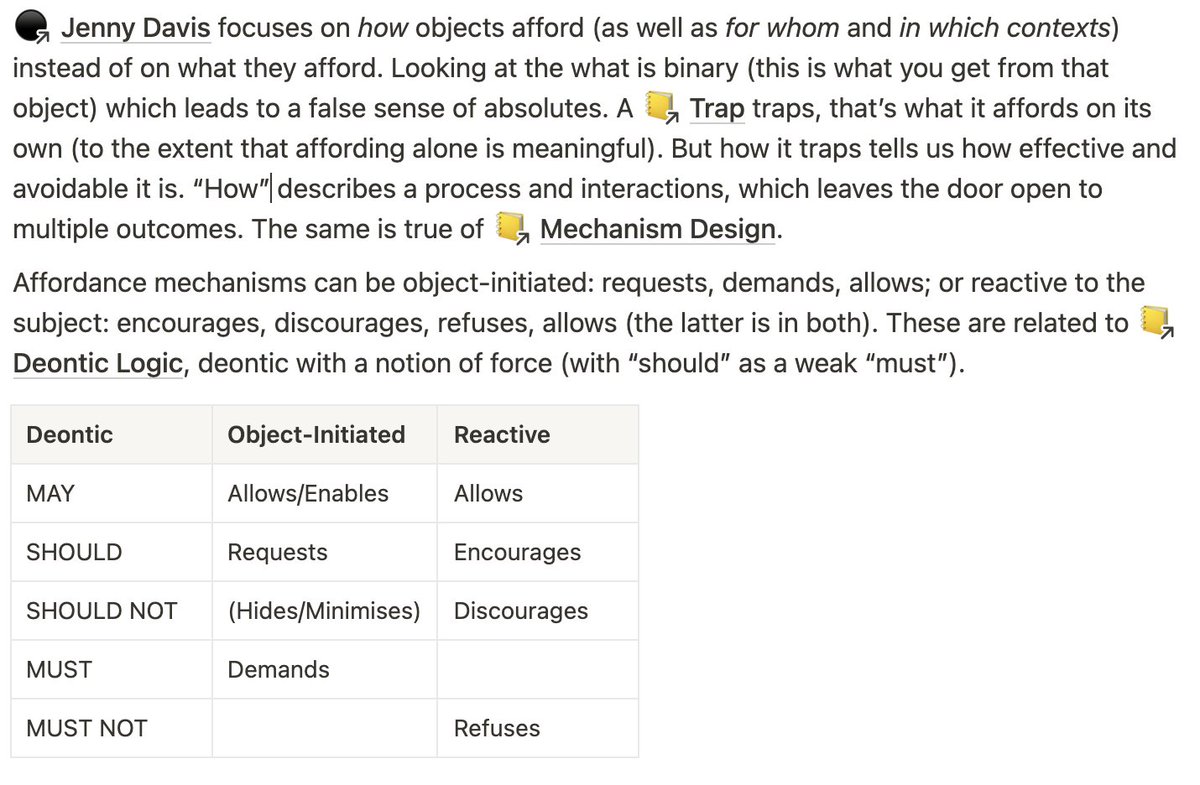
Ah, great idea reaching for affordances here! Maybe a slight modification: rather than situating affordances in media and mind, maybe they exist at their interaction point? A lone tree doesn't afford housing/dessert/scratching post, but the tree/{bird,human,bear} pairs do?
We can then steal from Jenny Davis and from there maybe we could poke at the differing affordances of audio vs text depending on what one's mind is looking for? I'm not sure that text should count as "visual" but (I feel) it allows questions (and daydreaming) when audio does not.

Thread of 2 tweets

Replying to @EvanSelinger and @LMSacasas, @VitalikButerin, @molly0xFFF

That was my impression from a remove, but alas I haven't yet reached Gibson on my reading pile. Maybe I should give audiobooks another shot 😂

Replying to @histoftech

Expect tough competition from my horse's marebnb.

Replying to @montezumachavez and @relja_pop

Yes!

Replying to @Chronotope and @montezumachavez, @alextcone

I agree, but I have no idea which specific products it may have influenced (apart from @nytimes). @HNissenbaum also wrote "Privacy in Context" which I highly recommend, and more recently I've much liked the bridge to governance from asistdl.onlinelibrary.wiley.com/doi/abs/10.100….
↺ 1

Replying to @MarietjeSchaake

3. Systematically blocking every ad?

Replying to @MarietjeSchaake

Same, and the quality is clearly dropping.

Replying to @v0max and @MarietjeSchaake

"Bring your own lighter" 😂
I'm experimenting with a next gen web platform using content addressing, intents, IPLD, composable content, interesting uses of cryptography and by far the hardest problem I've had to contend with so far is getting ESM and CJS to play well together.
The way things are set up we *could* be looking at an #AUS #FRA final :)

Replying to @null and @paulduplantis

Nope! Not yet at least.

Replying to @dckc and @agoric, @kriskowal

Oh wow. This looks great!

Replying to @tobie

The good news is that it now sucks just as much on the backend! A growing chunk of NPM is ESM-only but small details like Electron are CJS-only. There are hacks to make it work but fuck me. The worst thing that happened to JS is the people trying to make it a "serious" language.

Replying to @dml and @mariafarrell

If novels are anything to go by, Swedes too.

Replying to @alexanderdanilo

Let's gooooo!

Replying to @LuizaJarovsky

Depending on how group G ends, Brazil could possibly face either Australia or France in the semifinals. I wouldn't mind a replay of 1998 ;-)

Replying to @LuizaJarovsky

Hahaha, I prefer the other song 😉 We'll see!