June 2021
329 tweets
Are you a great engineer and into issues of data governance? Come work on the Data Governance Engineering team at @nytimes! wd5.myworkday.com/nytimes/d/inst…
♥ 24↺ 9
The link that works is here
God, I hate Workday. Here is the external link, thanks!: nytimes.wd5.myworkdayjobs.com/en-US/NYT/job/…↺ 1
♥ 1
This might not be the best match, but if you want to come work with us we should talk!
♥ 2
God, I hate Workday. Here is the external link, thanks!: nytimes.wd5.myworkdayjobs.com/en-US/NYT/job/…
↺ 1
I know; he should probably have my job ;)
♥ 2
You say that like that's not how I do my own job ;)
♥ 3
Thanks Olivier :)
♥ 1
Governance in digital advertising? I can hear you mock me from where I sit.
Yet I think it's a worth a shot to solve a relatively constrained problem (details in 🧵) and if that works maybe build a healthy ecosystem for advertising on it.
My first draft: darobin.github.io/garuda/
♥ 43↺ 9
One active area of work today is how to enable effective advertising — which is a source of revenue for which there is no clear alternative — without carelessly broadcasting personal data.
One important component to achieve that is the ability to anonymise ad requests.
♥ 6
With anonymised requests:
✅ Users get the privacy they want (not some "consent" nonsense).
✅ Publishers protect their audience from being stolen by third parties.
✅ Adtech can operate effectively by reusing a lot of existing infrastructure.
♥ 7
For those of you who are just here for the shitposting (yeah yeah, you know who you are), the tl;dr is that I made a bird-acronym proposal.
And it's a *good* bird-acronym proposal.
Governance in digital advertising? I can hear you mock me from where I sit. Yet I think it's a worth a shot to solve a relatively constrained problem (details in 🧵) and if that works maybe build a healthy ecosystem for advertising on it. My first draft: darobin.github.io/garuda/♥ 43↺ 9
♥ 10↺ 1
I don't make the rules, Ed.
♥ 2
It's the king of birds, Shoshana. You can't not click! Also, in a sense, it's literally what it does.
♥ 3
Sooner or later, I know I will have to do that one. Its time has yet to come.
♥ 1
It's advertising, man, if that isn't a war zone...
♥ 1
Truth.
♥ 1
Thanks Ido!
Any DPA that wants to talk, I'm game 😁
♥ 1
I've seen things you people wouldn't believe. Attack ships on fire off the shoulder of Orion. I watched C-beams glitter in the dark near the Tannhäuser Gate. All those moments will be lost in time, like tears in rain. Time to die.
♥ 2
That was rough.
♥ 1
The strongest argument I've heard in favour of returning to the office (more than a little), at companies that have been doing well through 18 months remote, is that presence helps retention.
This would indicate that that might not hold water.
Quoting a tweet by @SteveMatthews12 ↗
♥ 12↺ 8
Rachel, you're a genius.
♥ 1
When life runs you out of gummy bear molds...
♥ 1
From the conversations I've had, they haven't grasped the difference between new standards and new vendors. They think new things are being wrought but that they can always choose between the new and the old.
♥ 8
The problem with using email for login is that it breaks the promise that you can trust the Web because you don't need to trust websites. The second you log in, you've handed over a tracking and spamming vector. Architecturally, it's not great.
Some notes gist.github.com/darobin/77868e…
Also, identity is context-dependent. People do not have the same identity in distinct contexts and they should not be made to have that in digital contexts either. darobin.github.io/pup/#identity-…
I'm definitely committed to the "starting from dumb" approach.
♥ 2
Aha! I saw a mention of "Steven while he worked at Mozilla" recently, and I wondered where you might be going. This is an excellent match, DDG are lucky to get you!
♥ 6
I agree that that's the point — but it does not entail that it should be the same identity in different contexts.
Thanks! I'm curious as to what makes you surprised though, "governance guy makes governance proposal" isn't that shocking a deal ;)
Totally agreed on consent, there's more in darobin.github.io/pup/!
♥ 1
Not at all — I'm trying to save ads so that there's a sustainable future for ad-supported content. It puts me at odds with industry incumbents who advocate for the continuation of a broken system, but that's a separate issue :)
♥ 2
Personalisation does have problems, but I think they can be addressed. Before we can get to that, though, there's a metric ton of more infrastructural problems to tackle.
♥ 2
This is one of the books I most look forward to in 2021 — it's almost there!
Quoting a tweet by @Ostrom_Workshop ↗
♥ 4
I don't believe that to be the case. The `template` parser changes were significant, but they could get done mostly as incremental improvements (in the sense that you wouldn't get breakage from a parser that didn't support them). Impact matters.
♥ 1
Pretty much every mention of the word "template" in the parsing chapter (and then some) is part of a large change to the parser, that happened well after the original algorithm was specified and widely implemented.
♥ 1
I'm not sure how that is important?
It can, as I was saying it just needs the right balance of value and impact. If something like template came along today, I see no reason why it wouldn't get in.
♥ 2
Template was painful spec wrangling but IIRC that's about it. No one's going to not do something useful because the spec work is painful.
♥ 2
This has long been one of the funniest features of Android: when you opt out of your Ad ID being shared, it... still shares it but with a flag saying "please don't share!"
In September, they will actually stop sharing, and catch up to where iOS was many years ago.
Quoting a tweet by @v0max ↗
♥ 43↺ 25
I know, but it's still deceptive. They also own so much of the stack, they could have come up with a solution for FC instead of shambolic data practices.
♥ 1
I know, but it's the difference between self-image and reality that I find funny. When you walk around priding yourself on being supposedly good at data and security, and trustworthy and ethical, but your implementation is from the muppets...
♥ 1
The Data Viz team at @nytimes is hiring:
• Senior Product Designer nytimes.wd5.myworkdayjobs.com/en-US/NYT/job/…
• Data Viz Analyst nytimes.wd5.myworkdayjobs.com/en-US/NYT/job/…
Come work with a bunch of cool folks in data!
♥ 9↺ 4
Yeah, that's very much part of what I worry about. Those smaller companies are built on very shaky ground, not just from their business model. This is going to turn into mass-scale denied insurance claims and the such.
♥ 2
DMed you! (In case you don't see it because it's in the requests list.)
This is just taking a step towards respecting users. The anticompetitive bit is where they get the data anyway, yeah.
♥ 1
Time to reopen the US to Europe chng.it/pfvPBN5m
♥ 4↺ 2
Thank you!
♥ 1
Thanks!
That sucks! I hope you're not stuck somewhere.
♥ 1
It's very social from cat to not just eat the steak. I might not have that willpower.
Structuring social media around unified personal identities that cut across topics instead of around topics between which we can shift identities is a mistake. It helps advertising; it drives status anxiety, false polarisation, and sorting.
Quoting a tweet by @julian0liver ↗
♥ 9↺ 3
Same! You could be boss level in knitting, have a flurry of passion for biking without annoying others, the knitters might not have your politics but you could still have that community.
It wasn't a panacea at all, but it was less toxic.
♥ 1
Circles was definitely a really good idea, it's a shame that it wasn't implemented well. With a smoother UI and from a company that understands identity better it could have been great.
♥ 2
Book reviews in which the reviewer, here @ceceliawatson, scours the scientific literature about the relative temperatures of butts in order to make an excellent linguistics point belong to the best kind of book reviews.
nytimes.com/2021/05/04/boo…
Thanks! Yeah, it's starting to really suck. I know a bunch of people who are just leaving because they don't want to do a second summer without family, separated couples, parents who haven't been with their kids in two years, people who got stuck visiting a dying relative...
Better than much of the rest, yes.
♥ 1
Yes, it would be interesting to look at the structure of the link and traffic networks today, but I bet they've lost much of their scale-free nature.
♥ 1
Why do you need a replacement?
♥ 3
The attributes are all ancient presentational nonsense, but the element is perfectly fine!
♥ 2
Is it really? I think the Two Cultures has been idealised. When I read it I struggled to find what most commentators saw in it. And Dawkins, well...
♥ 1
I'm very sympathetic to what it's reputed to say. I was disappointed with the essay because it didn't feel like it was addressing the issue. We definitely have a radicalised form of the problem in which people confuse technology, which is a humanities, and engineering.
I've considered a rewrite 😁
I think that we need to move to something like that, but getting the details right is going to be challenging. It's important that no company can monetise knowing your core identity under the pseuds. Otherwise you end up with Google-style user exploitation.
Yes, and not have any entity other than self know the link between them.
Actual privacy folks?
♥ 6
I have many questions, but I'm not sure that I can find the words for them.
♥ 4
The fine is tiny and Google has only committed to ceasing its anticompetitive practices in France but the @Adlc_ took a look at Google's advertising practices and found them designed to hurt news publishers. It's a good step forward — we need several more. nytimes.com/2021/06/07/bus…
♥ 23↺ 4
I know, but I don't see how this doesn't bring scrutiny elsewhere. If it means a few extra months of runway for a free press, it's worth it.
♥ 1
The fun part is that I've pointed this out to people quite a few times and the response has been "what red button."
This tells you everything you need to know about why click-through consent is never informed consent: if it's not the task you're accomplishing, it doesn't exist.
♥ 14↺ 1
I've long stuck to Android because I like the UI better — but that's not tenable.
On the one side you have Google giving users a big unambiguous middle finger with the likes of location settings and Chrome Sync.
On the other you have Apple innovating in user protection.
Quoting a tweet by @nytimes ↗
♥ 27↺ 2
I am keenly aware that Apple is problematic in more ways than one. But in the current "Know Your Master" phase of the Internet, I'll pick the one that's in the user's corner at least some of the time.
♥ 5
Better support for Web apps also used to be a reason to stay away from iOS, but the Web these days is basically Google's other proprietary platform. And every step they've taken this past decade has been about doubling down on that dominance.
(We'll be back — but later.)
♥ 4↺ 1
I also know that there are people inside Google who'd like this to be different. But a bunch of nice people in an ethically rudderless company don't make a difference. This requires some actual leadership, at the level of Microsoft's "Trustworthy Computing" effort.
♥ 8
I already got my eldest on iOS after seeing the terms Google was forcing (and there is no other word) upon under-13 users in order to access Google Classroom. (Talk about data profiteering in a pandemic…) I guess this is just the next step.
♥ 6
I think it's automatically updated everywhere, but you have to click the button to restart.
♥ 2
I want to try it before iOS, yes! But years of running Linux on the desktop don't leave me super confident 😑
They are representing users who don't think that others are entitled to exploiting their data. Last I checked numbers, this was an overwhelming majority of people.
I don't want a subscription-funded world. Ads don't have to be invasive to be efficient — that's just lazy.
Also, Google has done way, way more to hurt the digital ad ecosystem than Apple could ever hope to do.
On taxes: totally agreed, but then it's the same both ways.
♥ 1
I don't understand the "smoke screen and short-termist" thing. That seems like an apt description of the ad industry's approach to data.
The question isn't whether there are good people, I know there are. The question is whether they've done what is needed to keep the bad players out. They haven't. All we get are jokes like "transparency and choice" or "educate users about the value exchange." That's short.
You mean like Chrome Sync?
Like I said, I'm well aware of the issues. One company deliberately designs against users across the board. The other only partly.
Moi aussi!
I think we all have that dream 😁
♥ 2
Someone should! 😉
♥ 1
Yeah, but I'm really tired of how bad at basic respect they are. It's all "we're doing this for the greater good but we'll decide how that works for you."
♥ 1
I think that's pretty much like switching to /e/, no? It's definitely something I'd like to try.
I'd like to challenge the adtech bit :) I hypothesise that putting ads next to trash content isn't inherently profitable — even if you can keep people glued to the trash content by making it more trash. Why? Because trash content is a poor predictor of sales conversion.
♥ 1
The way this is made profitable is by getting signals that *are* strong predictors of sales conversions from other places (because people who watch trash content have otherwise normal lives), and then targeting them there.
♥ 2
So my theory (which needs validation) is that if you prevent this transfer of information about valuable targeting, you close the money funnel that goes from quality content to trash content with high engagement.
♥ 2
The fact that the biggest trackers (G, FB) are the biggest purveyors of trash content (YT, FB) is probably not a coincidence if this theory is true :)
♥ 2
Yeah — I don't care that much about advertisers being fleeced (though that might create other problems) but much more that this is structured as a tax on quality content to subsidise trash content because the latter is what you can monetise at scale.
♥ 1
Thanks, yeah, I have a small pile of old phones that I've been meaning to use for this :)
I'll probably get fired for this, if not worse, but it's worth it.
The watermelons are real.
♥ 109↺ 10
I love it.
♥ 1
They have to know, whatever the cost.
♥ 4
Quality tweeting too.
♥ 2
The truth is watermelons. 🍉
♥ 1
The watermelons will find you, Max. They always do.
♥ 4
Nice try Max, but I've seen your "Defund The Mars Police" stickers.
Totally worth it.
In fairness, there's a lot of lede happening there.
♥ 2
They'll be losing it trying to figure out how I knew about watermelons decades before anyone confirmed it.
I'll take that secret to my grave.
♥ 1
Aram, you say this like facts will matter.
♥ 3
It wouldn't suck if the US reopened, too.
♥ 1
Yet it remains closed to visitors, workers on visas, etc. It's not just the Canadians who are keeping their border closed.
♥ 3
What are you using? In Firefox at least it will ask you.
This prize recognises work produced through amazing and extensive teamwork to deliver a public service that governments very often failed at.
This is the kind of reason why we strive to ensure news media retains the means to do big things. twitter.com/PulitzerPrizes…
♥ 37↺ 13
Thank you!
♥ 1
It's more than time to reopen the US to non-immigrant visa holders. We have these things called "vaccines" and they work.
berjon.com/we-can-open-th…
♥ 10↺ 1
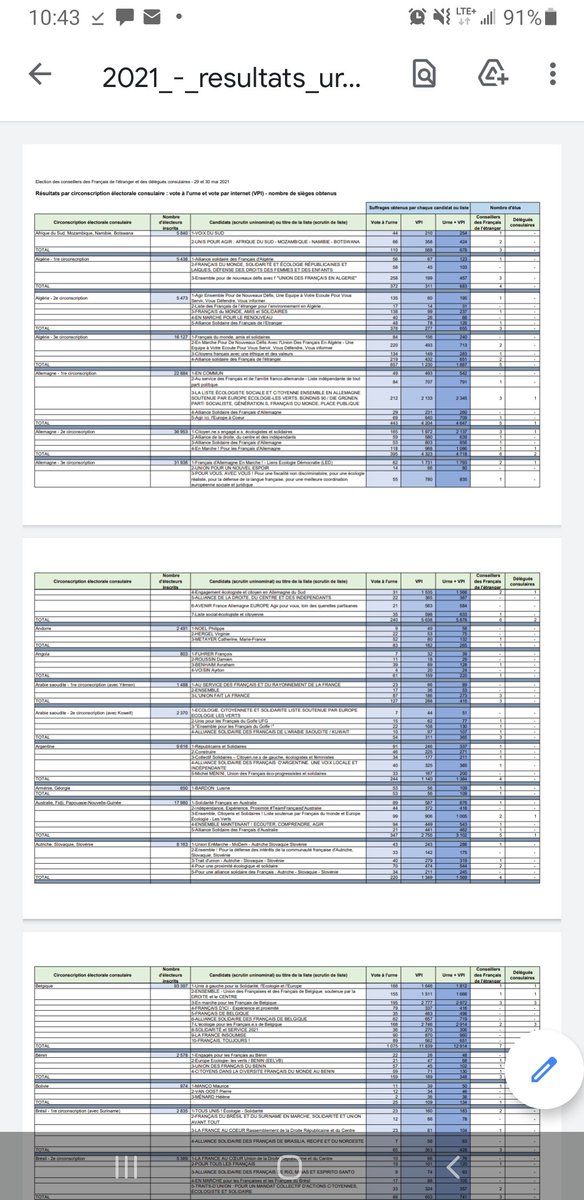
I think I'm still a little dead on the inside from the first pass French numbers that were entirely reported in a JPEG 😱
♥ 1
This is the best list of all we lose if big tech gets regulated. 😍
Quoting a tweet by @orientaljanedoe ↗
♥ 17↺ 4
You're right, I would so miss the calculator in Bing.
♥ 1
I can't keep up with all the fronts.
You mean I'd no longer like to add you to my professional network on LinkedIn with WordArt?
I beg to differ. I think the original list systematically underestimates people. I don't think it's elitist to think that people will figure out where to find a calculator outside their search engine.
Comme je disais, pétainistes, poutinistes...
Quoting a tweet by @Brevesdepresse ↗
7yo: "But I don't get it, what is that 'tie' thing you're talking about?"
♥ 7
It's actually a scientific instrument for predicting human behaviour and outcomes when you create choice architectures that trap people in the social and economic arrangements already in place.
Quoting a tweet by @RDBinns ↗
♥ 16↺ 2
At the very least the maintenance of existing power structures!
This is the reason why I never got into Rails much.
♥ 2
Agreed, there was a decent idea there but I found it fell a bit short. Overall, it feels like a compendium of discarded stories. You can see some Murakami in there, but it's like he gave up on the stories.
Since I'm a tech-meets-policy nerd, I couldn't help but read through the @CMAgovUK notice on the "Privacy Sandbox". Overally, it's a promising step forward building the trust that is needed to reform the Web, but I see a few areas that could be improved. berjon.com/google-cma/
♥ 17↺ 3
Thank you :)
♥ 1
I usually do the same except when it's clearly a massive blast and they have no idea why I'm on the list they're using.
♥ 2
Same, I keep having to explain it over and over again, and no one seems to completely believe that it's true.
♥ 1
Good point, done. Thanks!
♥ 1
Bon, et du coup on peut prendre l'avion?
Whenever I point out that Google just straight up helps itself to other people's work and property, people think I exaggerate. Surely, if it were true, someone would do something about it!
Here's Google using AMP to force overlay ads for its own products atop publisher content.
Quoting a tweet by @DinaSrinivasan ↗
♥ 67↺ 43
There are several interesting ways to look at this.
One is simply the money: do you know how much it would cost if Google paid for this instead of just taking it? It would cover the annual salaries of a lot of reporters.
♥ 4↺ 2
Another is power: is it normal that this can just happen, or is there an urgent need to reform the Web to make sure that this kind of behaviour is ruled out by design and by law?
♥ 5↺ 1
There's also culture: just how entitled do you have to feel to go ahead and ship something like this?
Google friends often tell me "Would it not be great if we ran the tech and you just did the content?"
Well, we can all see *exactly* what looks like — and no, it's not great.
♥ 18↺ 1
"That line of thinking also glosses over an uncomfortable truth: To achieve cheap or even free services requires justifying a range of behavior that often isn’t in the best interests of consumers." Spot on, @GregBensinger.
nytimes.com/2021/06/14/opi…
♥ 15↺ 8
This is a key part of today's predicament: the promise to bring access to the greatest number is used to justify choices that tear the fabric of society. The parallel with how chemical industries destroyed lives and ecosystems to deliver mass consumer goods is strong.
♥ 9↺ 1
That's 100% my line of reasoning. It probably shouldn't be legal to make tech above a certain scale without having read Seeing Like A State.
Totally, but they don't hear that at all, even when it's obvious.
♥ 1
My take on this is that if you're good at making things big but not at doing so without harm, what you're good at is biggering — but you suck at scaling.
Isn't the bug that it can happen in the first place?
♥ 13
Maybe, but the foundational principle of AMP is that publishers are forced to make their content Google properties as well. Is that not the root bug that is triggering this behaviour, here?
♥ 12
Oh, that is excellent news! Can you please point me to the alternative?
♥ 6
Stating that AMP is not a requirement is equivalent to stating that high ranking is not a requirement when you're trying to operate a business in a highly competitive environment. It's unclear to me how that would be a serious statement to made?
Right now we're on AMP and we want out — you seem to believe there's a solution, would you be so kind as to share it?
At this stage, CWV still preferences AMP. Are you saying that this is changing?
♥ 5
Is it not a special definition of "ranking" that doesn't include "appearing at the top"?
♥ 2
AMP used to increase rank (it puts you at the top). Now ranking is done by CWV, but CWV preferences AMP since nothing else can beat preload+prerender. So the switch to CWV actually makes AMP a ranking factor.
♥ 2
So it makes you eligible for the highest rank — correct?
Sorry, but I'm the optimist kind and I always hope that people can reach agreement. You have made two statements which I don't understand and would like to.
If you use X you can be at the top rank, if you don't you can't. In what sense is "X" not a ranking factor?
♥ 2
And second, you appear to be asserting that publishers can achieve identical search performance with or without AMP. I've spent a lot of time and energy trying to make that true — but so far that seems impossible.
So, how does it work? Thank you!
♥ 1
Right, but no one is talking about guarantees, just possibilities.
So, a factor that can make you appear higher than another is what you define as a ranking factor, correct?
I don't think this is about "feelings" so maybe it's more constructive not be dismissive in this way?
Forget about Top Stories, I really want to understand how you define this. Something that participates in deciding your position in the results list is a ranking factor, yes?
It's not that I don't like the responses, it's that I'm trying to solve a real problem I have and your answer is that the problem doesn't exist, and the definitions you use for words are not those that I have in my dictionary. I hope you see how that might be frustrating.
♥ 2
But that sounds like what I said: I said "position" not "presence". So something that contributes to position is a ranking factor, presence is an indexing factor. Right?
But AMP is preloaded and prerendered, which are two speed boosts that nothing other than AMP can (technically) match, and that factor in CWV. So if I make the fastest page possible for given content, AMP will still score higher.
If that's not true then I really want to get why!
♥ 1↺ 1
Yeah, I've had this question for months but every time I ask all I get is either crickets or a generic unrelated stonewalling statement.
AMP has already been so damaging to news media; now it seems that rolling out CWV without removing AMP managed to make it worse. It sucks.
I'm sorry but I don't see our question answered there. Preloading and prerendering give AMP an insuperable advantage that no alternative can beat. So CWV makes AMP a ranking factor irrespective of Top Stories. What are we missing?
♥ 1
I'm aware of SXG, but there are several issues. If it's the only real option, then it's leveraging Search to make us optimise content for Chrome only — not great.
It also involves us making it look to our readers like they're loading content from us when it's from Google. It's not clear to me that that's not a deceptive practice, or at least that it aligns with our readers' ethical expectations.
♥ 1
AMP has that weird fake URL bar that sort of is the ancestor of that issue, but the URL bar is the cache URL. So it's sort of like phishing, but not very convincing :)
♥ 2
That said, overall I would consider that AMP also has the kind of ethics issue we work to avoid. It's one of the reasons we're trying to get off of it (also because it's bad for business)!
♥ 1
"A group of smart people meaning well cannot do much harm, at least not often" is very much part of the misunderstanding indeed!
This is the best news if true. twitter.com/leah_nylen/sta…
♥ 6↺ 2
Yeah, her stuff is great.
♥ 1
As far as I can tell, preloading/prerendering help with at least LCP and CLS, and probably with FID too. It seems like that would be a boost across the board.
It would be fine if that boost could be replicated, but only AMP can get it.
This is some of the best writing in computing :)
♥ 2
I think that's okay, though, if someone makes better tech that people can use, I see no issue (AMP without the forced caching has neat parts to it).
The issue is that the cache gives AMP a leg up that you can't beat — which means we're *more* forced into AMP than pre-CWV!
♥ 2
Structural issues aside, this ad appears to be targeted at logged out users in privacy-friendly browsers. It's revealing to see that Google is funnelling these users off the Web and into its app.
It's like privacy on the Web is working or something!
Whenever I point out that Google just straight up helps itself to other people's work and property, people think I exaggerate. Surely, if it were true, someone would do something about it! Here's Google using AMP to force overlay ads for its own products atop publisher content.♥ 67↺ 43
♥ 10↺ 5
Confirmed: @linamkhan is FTC chair. This is amazing! nytimes.com/2021/06/15/tec…
♥ 25↺ 6
I think there are two (complementary) questions here. One is basically "what's the smallest reasonable change that could make this workable" and the other is "how could we organise the whole user/publisher/search thing so that it's more cooperative and less harmful".
(At least, that's how I parse out your question — let me know if I'm not mapping this right!)
For the first, I think that something like SXG but served from a trustworthy neutral party might just work (à la darobin.github.io/garuda/). Or similar — happy to explore.
For the latter, it's complicated but it's clear that the current "might makes right" governance model for search isn't working out. I've promised a blog post on how to fix and I have a draft — hopefully in not too long.
The changes required are big and hard, but I think they're also necessary. I hope you'll have some thoughts to share as well!
No, I'm 100% thinking about users and publishers.
For users: if they load content from NYT then no party other than NYT or trusted by NYT should be able to observe that load. The Web isn't there yet but we shouldn't build new things that get in the way of that.
♥ 1
For publishers: I find it easiest to work first principles. The two most valuable things we produce are our content (which attracts readers) and knowledge of our audience (which attracts advertisers). With AMP both are snatched from us. SXG doesn't fully help.
♥ 1
So long as another party can observe who our audience is we are directly in anticompetitive waters — which we'd like to get out of in a peaceable manner. That's why I bring a trusted neutral party, it could possibly unlock this.
I don't understand how you can describe guaranteeing higher CWV score which cannot be replicated as not preferencing, but thanks for bringing your usual aggressive style to what was so far a friendly and constructive discussion.
This is such an absurd assertion I don't even know what to tell you. No one is "owed" traffic, and you're the one who sees "enemies". I have an actual technical problem to solve, so if you don't mind trolling someone else that would be kind. Good evening to you.
I came here to say exactly this!
♥ 7
I'll try to remember to ping you. Just to be clear: the problem isn't analytics (though that is indeed problematic in AMP) but rather preventing others from accessing our audience data.
♥ 1
I don't see why you wouldn't be cool enough to hang!
Thanks for the details and transparency. They largely match my expectations from what I know of the goals of SXG. The reason we need a blend of tech and nontech measures is because Google has a history of bait-n-switch.
Note: I'm not at all accusing you of this, just pointing out that it wouldn't be rational to go on trust alone. There's a classic example in berjon.com/google-cma/, to give you a sense.
The technical measures you describe, together with binding commitments, could well be a solution, so there's hope!
♥ 1
Oh, and also I pointed at Garuda because it's the thing that I happen to be working on right now and it's similar. I don't mean to imply that this specific approach is the one.
♥ 1
I think this may be one of the most frustrating things in this space. Folks in (ad)tech have all these opinions on privacy but challenge none of it by engaging with academics or the literature.
♥ 6
The NYT gave me access to a whole bunch of top notch ads professionals who were infinitely generous with their time, answering my questions and filling out my diagrams for literal months. I'm in awe of anyone who researches this without this kind of support.
♥ 1
That's the short term truth, but if you're cynically motivated, being a top privacy expert is getting to be a strong differentiator in advertising!
♥ 2
On it! I wouldn't mind a new bone to pick at some point. darobin.github.io/pup/
♥ 2
It's about privacy, not advertising, Shoshana. Your policy does not apply!
♥ 3
They're pretty much new socks!
♥ 1
Hahaha very good point 😁
♥ 1
This is amazing, congratulations!
Exactly this!
♥ 1
It's so annoying to deal with... It's painfully obvious that they know this is a bad system. Life is short, why would anyone with options choose to go around telling people "no, something that determines a position in a hierarchy is not ranking"?
Il faut bien être optimiste, sinon autant aller élever des chèvres! Je ne suis même pas sûr que c'est entièrement une stratégie, en partie ils ont créé un monstre dont ils ne comprennent pas l'impact...
♥ 2
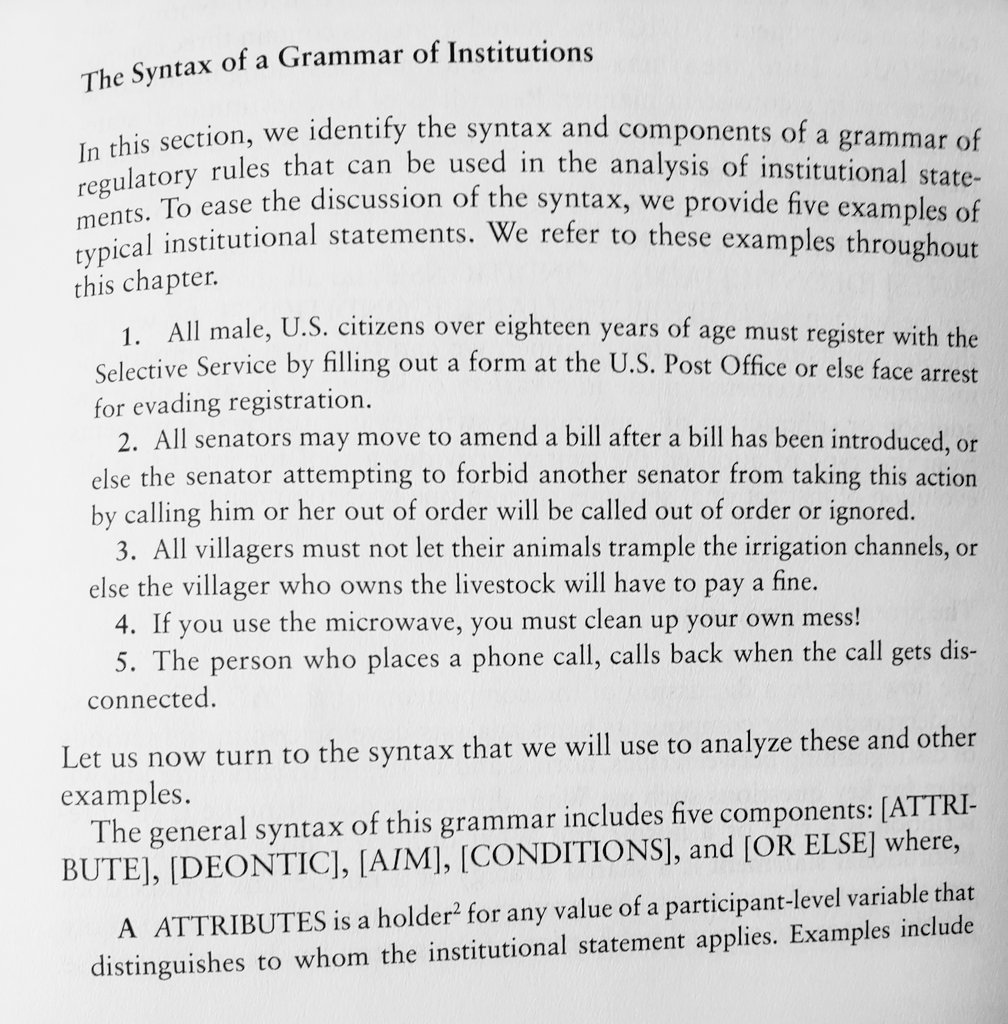
I'm curious: has anyone bridged institutional analysis with standard-writing practices (notably testable assertion methodologies)? I ask because the ADICO framework is so close to w3.org/TR/test-method… from @dontcallmeDOM & @marcosc, down to RFC2119!
♥ 2
Usually no one does because people usually don't know institutional analysis or don't know standards :) But I can keep hoping — maybe someone at @Ostrom_Workshop or some such has been working on this!
Come for the privacy, stay for the superior search experience.
What I like most: you know what's an ad & what's not. You don't get random boxes for some searches but not others.
No need to fix what wasn't broken just to keep you engaged with the site: search ➡️ be on your way.
Quoting a tweet by @DuckDuckGo ↗
♥ 18↺ 9
Thanks :)
Looks like these folks maybe!
Quoting a tweet by @Ostrom_Workshop ↗
The "every website" thing is unfortunate but it's not the extension's fault, it's a limitation on the granularity of permissions. It probably can't get at the downloading part without just having access to the page, which in turn, well, opens all the things.
♥ 1
Ah! I really wish I could go back to working on scholarly software, but do it right this time. There's so much cool stuff to build.
♥ 1
C'est pas toute l'année?
♥ 1
And if Shoshana complains, I'll make the name "ornithorynque" (French for platypus) and make sure it's constantly in adtech news so she has to spell it all the time. MUAHAHAHAHA 🤗
♥ 3
Right — I've seen research about standard orgs but not about standards themselves as institutional. I think there are some very cool conclusions to draw from that!
Nope, but looks cool — thanks!
Tempting…
♥ 1
I don't see them supporting interop in search any time soon, either!
It's very generous to say that "guidance is missing" 😁 Facebook is actively disingenuous with their login SDK for instance.
♥ 3
Because of iOS they were forced to introduce "Limited Login" (where "limited" means the login SDK only does… login). I honestly expect them to try to exfiltrate the information anyway.
♥ 1
I know — they're so bad. They're using the SSO dependency to keep tracking every which way. Pre-GDPR their SSO would give sites info about users (eg. gender and age) even when the sites didn't ask. They should just be barred from operating in this space.
♥ 2
LOL, I mean, has anyone *not*? :-D
Some of us have been thinking about running a "Governing The Web" workshop (get in touch if interested!), but I think Max may have found a better acronym.
Quoting a tweet by @MaxGendler ↗
♥ 35↺ 5
Feel free to email me with ideas if you have any, or watch this space for an announcement!
♥ 1
Every time JavaScript grows a little closer to Perl the world gets a little bit better.
Quoting a tweet by @cassidoo ↗
♥ 22↺ 3
I should get back to science-related coding, it's more relaxing 😁
Great - yes! Details in a bit I hope, email me if you have thoughts!
♥ 1
You too! This is going to be a party.
♥ 2
I'm not sure but I think it's when people let me dance!
♥ 2
The world may not be entirely ready for the truth 😉
♥ 1
For SOME reason I already had you on my list of people to contact. 😁
♥ 1
Details still being hashed out, I wasn't meaning to announce, just to share the acronym. How these usually work is: anyone with a position paper accepted by the programme committee, which is often just anyone with a position paper if there's enough room.
♥ 3
That's for "allowed", I'd also like to make it so that it's not just people who can afford it easily. But I need to find a good location before looking into that.
♥ 2
Email me if you have thoughts, otherwise I'll make a more formal announcement as soon as I have more details figured out!
Few pictures are more deserving of being labelled "Leisure As Liberation".
♥ 2↺ 2
Yup! On-device is really hard to make work. I'd love to hear what you all think of this alternative. I've also been thinking about aggregate reports on FLoC plus PARAKEET bids to make FLoC work.
♥ 4
The part they don't tell you about cicadas is that in which one of your kittens gorges on what looks like a dozen, and then vomits half-digested insect parts all over your house. #BroodX
♥ 3
Les six dernières semaines de ma vie, c'est un peu comme si Michael Bay avait fait un remake musclé de "La saga des limaces" de @Bouletcorp. bouletcorp.com/2008/12/09/la-…
♥ 1
The problem is that you need to move your car once a week, and often not at very convenient times. And if you're new to it, it can be hard to find a new spot when that happens because all the locals are doing the same at the same time. But getaways from the heat are sure nice!
♥ 2
It's still pretty hot in September, and upstate gorgeous! NJ might make sense, I never did that while I was in NYC. The sitting in your car for an hour is true, but it could be any time of the week depending on where.
♥ 2
My rule is I'll give a book 20% of its length or 100 pages, whichever comes first. If I don't know why I'm reading it at that point, then I stop. I won't give it a bad review on here because that seems unfair, but I won't put more time into it.
♥ 2
The DAA is replacing their AdChoices system that doesn't work with a new AdChoices system in which you have to give them your email address to get a pinky promise that you're not being tracked.
digitaladvertisingalliance.org/daa%E2%80%99s-…
♥ 15↺ 9
Oh yeah.
You're right! So innovative. I'm really liking that I can get all this transparency and choice. It's a shame I can't exercise it because relevant ads are just too good to give up!
♥ 3
I know. At the end of the day, I just find it sad that someone would choose to do that for a living.
I like this angle!
Yes, they're expanding the ineffective experience to other forms of tracking. GPC solves this problem efficiently and with minimal overhead. There's no reason to keep this thing going.
As a general rule, the differences in policy positions between @mnot and me exist, but they tend to be very very small 😁
I think that someone should pay us and a few others to work full time on fixing the standards/policy divide and fixing the future of the Internet.
♥ 2
I am not against the idea that a reformed version of these two institutions should produce voluntary-or-else standards that involve the right stakeholders to straddle the standards/policy divide.
Quoting a tweet by @RDBinns ↗
♥ 9↺ 3
Sorry, the former!
♥ 2
"Innovation" is the word people use when giving an actual example would make it clear to anyone that there's nothing much new, interesting, or complicated to what you're building.
Quoting a tweet by @dmarti ↗
♥ 35↺ 14
Indeed, no one should, but evolution is something that you can point to and explain the value of. "We can't innovate if we have to compete in a fair fight" isn't the sign of that.
♥ 1
Yeah, and when a company needs the market to decide less, I have doubts about its innovations 😁
♥ 2
I agree that we need something better than just hitting the big fish, but getting the big fish under control would make it a lot easier to build a good governance system without having to handle damage control from their impact at the same time.
♥ 1
We need more than incrementalism, but we also need more than laws. If we got a few years' breathing room, we could get this show back on its feet more easily.
♥ 1
There is no story yet because all we have are pieces. When the pieces connect, the story should come all at once. But if we don't figure out how to build this right, we'll just get the same problems with different people ten years from now.
♥ 1
If I'm the only one to know valuable information, does its price not go down if others know it too? Then clearly it must be rivalrous :)
♥ 2
Yup! The more time I spend staring at issues of information valuation, the less most of the usual economic distinctions make sense...
♥ 2
I'm psyched to see this land, we need a much better understanding of how digital society works, and we need it very fast.
Quoting a tweet by @jonathanmayer ↗
♥ 6↺ 3
Has anyone written about "nudge drift"? Essentially, some bureaucracy sets up a relatively uncontroversial choice architecture to optimise a variable "for people's good". But over time it could be optimised more, so they keep shifting the architecture until, well, it's a shove.
♥ 10
Ah, that book is *literally* sitting at the top of my pile :)
♥ 1
Good Sir — have you heard about Google AMP? 😂
In a broader sense, I'm thinking about this from first principles. Bureaucracies/hierarchies are bad at getting (useful) information from the outside world and strong at optimising a single variable far beyond usefulness.
♥ 1
So, in a world of nudging, where a technocratic class decides choice architectures for everyone, I would predict that they will move to nudge too far. I'm looking for detailed examples and discussion. I'm told bookshop.org/books/re-engin… is a good source!
♥ 2
Thank you! This sounds exactly like what I have in mind — DMing you right away.
♥ 1
Actually — I can't DM you because you don't follow me, but my DMs are open!
♥ 1
After months of pandemic, a little staring back sounds pretty nice, actually!
♥ 2
Exactly! And it's all runaway until all of society has been industrialised.
"Everyone" being everyone who has to use the technology system in question?
Consensus by exhaustion might factor in — that's a good question. One thing I'm looking at are dynamics of "crowding out". There is evidence that when decision are made for them, people cooperate less.
There's a bunch of literature on this, but the core experiment is that you have a few control groups playing variants on the Prisoners Dilemma, and one group doing the same with an "enforcer" who provides strong motivation for people to cooperate rather than defect.
Predictably, the enforcer group does better because they cooperate more (but more or less forced). So they can see and internalise that cooperation works better. But then if you *remove* the enforcer, that group will cooperate a lot less.
It looks from experiments like being made to be good "crowds out" intrinsic motivations to be good, and those get durably depleted/damaged.
This feels like a problem next door to consensus fatigue?
♥ 1
This is extremely timely. Just last week I started drafting a workshop to get Internet governance and policy people in the same room to address, well, pretty much exactly this. I'll have more details soonish, but happy to coordinate. This is indeed urgently needed.
♥ 7↺ 1
The irony of this tweet, to people who have actually read the paper it is about, is so beautiful I'm almost tearing up.
Quoting a tweet by @NateSilver538 ↗
♥ 4↺ 2
EXACTLY. But everyone thinks they've figured it out and *this time* it's different, right? It's hard to tell the difference between big tech and cybernetic communism a lot of the time 😀
♥ 2↺ 1
Wait - what did you waste that first six months on? Congrats 😁
♥ 7
It was meant as a joke 😉
♥ 2
How the fuck did data trusts go from a good idea to being another way to cheat people out of their data this fast?
♥ 1
It's a general rule of standards that magic numbers will always create problems.
♥ 2
Sure, but I'm not considering who is being looked at, only who is being affected.
For French/English I've given up on changing layouts, I always use the English keyboard and have just memorised the shortcuts to produce accents. On the Mac it's overall OK, on Windows there used to be an "international" layout that wasn't wonderful but I got used to it.
♥ 1
That feeling when you barely escape with your life from a terrifying predator.
♥ 9↺ 1
Better be more careful NEXT TIME.
No, I think that's the expected behaviour :)
♥ 4
Is it time for a "crisis discipline" to understand how technology is impacting our social dynamics at scale, and to guide our action? Yes.
berjon.com/stewardship/
♥ 70↺ 28
Thist post was inspired by this excellent PNAS article from @jbakcoleman and many other good people, which you should head over and read at: pnas.org/content/118/27…
♥ 7↺ 1
There's also a great summary thread (though it's growing to be longer than the article) from @CT_Bergstrom.
Quoting a tweet by @CT_Bergstrom ↗
♥ 7↺ 1
Yes! This is Mochi, he's the dude. I don't know the deer's name yet.
♥ 1
Thank you!
I get the vibe he's pretty cool with it.
♥ 1
I made a blog last night, sharing again for the time zones!
Is it time for a "crisis discipline" to understand how technology is impacting our social dynamics at scale, and to guide our action? Yes. berjon.com/stewardship/♥ 70↺ 28
♥ 1
I'm not talking specifically about "is NYT reader" there? The signals we're seeing are more specific than that. Without getting into details, Wirecutter is a pretty decent example of something that might give you a sense that someone is shopping for something.
♥ 4
But, more importantly, isn't this something we should know rather than estimate, given the scale of the intervention?
♥ 2
Haha, merci! Par contre pour la traduction, je ne pense pas, je trouve ça extrêmement dur, encore plus pour me traduire moi-même.
You seem to be operating from an arbitrarily narrow definition of journalism. Wirecutter is 100% journalism, I don't even understand where that argument comes from!
♥ 2
You seem to be rat-holing into a very specific tree in response to a blog post that's specifically about the forest. But yes, and this extends well beyond journalism: capturing value from diverse sources to finance uniform systems.
♥ 2
Sorry, I'd meant to continue this thought but was interrupted by all the fun in WebApps and then forgot.
Trying to formulate this in a neutral way because it sounds invidious but I'm sincerely curious (and understand if you can't answer):
If information from our audience isn't that valuable, why insist so constantly on collecting it and being granted the rights to reuse it? We've asked things like: removing controller terms from Pixel, stop tracking from login SDK, stop using in-app browser — always "no".
♥ 8
If that data isn't valuable, it would be better from the perspective of legal risk, reputational risk, and user data protection to not collect it at all, no?
♥ 6
Thanks a lot Carl, these are very kind words.
♥ 2
Agreed, I notably appreciate how he challenges simplistic assumptions about what drives polarisation. But I think the case being made here is: we need more of that!
♥ 3
I know — but this only happened after Apple pushed an App Store change that would have blocked FB login for any app that didn't get ATT consent. And I've seen no news of an Android version?
♥ 1
Thanks — these are interesting reasons. Regarding free riders, my expectation from a free rider situation is that it mostly concerns a common-resource pool. In this context, the expectation would be that the parties have a say in governance.
♥ 1
I won't comment on collecting "just in case" — data collection without purpose is pretty much a textbook GDPR issue so I wouldn't want anyone to comment on that :-)
♥ 2
I don't know about your specific case, but there's a significant majority of the users of both those systems who have a say in their governance! That's usually the case for public infrastructure and shared spaces.
Well, TfL is operated (I'm fuzzy on details, but one way or another) by the City of London, which is a form of democratic entity. In general, some variant of the people who live there have a say in how that's run. Small, but real, and with collective effects.
♥ 1
Right, there are known issues with who is eligible to vote (same for me here), but the principle remains.
Are you saying that problems from individual free riders are significant but individual power over the matching institutions is not?
If you have "extremely limited" influence, then your free riding isn't going to cause problems. If free riding can become a problem at scale, then so can governance (not sure why the scare quotes).
There is a whole range of issues from lack of governance, that in the TfL case cover at least safety, price, service to poorer areas, pollution (inc. noise), long-term maintenance, debt… Failure at any of these could easily cause catastrophic collapse. And it's "just" transport.
More generally, I don't think there's an example of a centrally-planned infrastructure system of significant scale carried out under an authoritarian approach that didn't create massive externalities and collapse (cf Seeing Like A State). Is there one you're thinking of?
Il est bien gras!
I think that by the time you see one of these, it's too late!
♥ 1
It's great! The blend of scholarship and storytelling works really well.