January 2022
407 tweets
Ed...
♥ 2
I'm always a bit embarrassed that when I make clickable buttons it's called engineering too.
♥ 2
Seconding that. The "AF" ones are good too (Punk AF, Hazy AF...)
♥ 1
The year barely started and fortune third-party cookies are now a thing.
Quoting a tweet by @devjpow ↗
♥ 26↺ 2
I'm sure, it seemed unlikely that only now would someone think of that as advertising inventory 😁
Now I want to pitch it to the growth team.
That's what I log on for!
Bitcoin ffs, I wouldn't eat the cookie that came in!
It's time to start a thread for my 2022 reading log. I hope you enjoy it and find some books to your liking!
♥ 26↺ 1
Read the whole thread: 72 tweets, continued until 23 Dec 2022 →

Skipping past the fact that MD makes more money for the platform (which isn't everyone's motivation), I think it feels similar and is assumed normal. But yeah, it'd be worth some digging.
I forgot to mention that this book also made me discover the existence of roller derby. More scholarship should include case studies of roller derby.
"Governing Knowledge Commons" by @BrettFrischmann, @profmadison, and @KJStrandburg. An adaptation of the Institutional Analysis and Development framework for knowledge commons, with a remarkably varied batch of case studies.♥ 16↺ 6
♥ 9↺ 1
I got the GKC privacy and GKC markets books for Christmas, so I'm looking forward to reading those and more!
♥ 1
This is a great book, but I wouldn't necessarily begin there for mechanisms, institutions, incentives, agency. It assumes background knowledge.
This is one paper worth reading on MD as techniques of control: journals.sagepub.com/doi/10.1177/20…
If you're not familiar with commons, this is a simple and clear intro that gives a sense of how much work the idea can do:
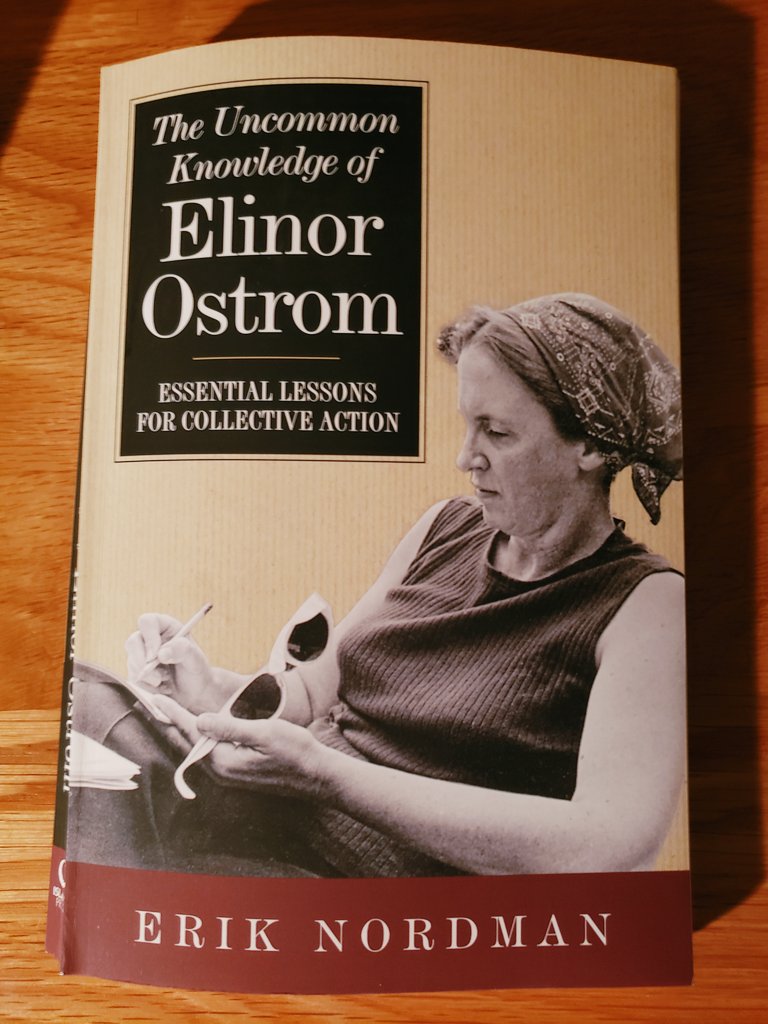
"The Uncommon Knowledge of Elinor Ostrom: Essential Lessons for Collective Action", by @ErikNordman. A very clear and accessible blend of introduction to the commons and of a light intellectual biography of Elinor Ostrom. A great way to discover this topic and its breadth.♥ 16↺ 8
And then this one has a lot about how to think about nudges, that are a technique of control next door to mechanism design:
"Re-Engineering Humanity", by @BrettFrischmann and @EvanSelinger. It's impossible to summarise this book, covering so many issues, explorations, and ideas about techno-social engineering and humanity. It felt like a cheat code forward on a number of problems I'm interested in.♥ 23↺ 5
And then there's a lot more! But that's probably a good start.
♥ 1
Like others, I'm curious to hear more. I don't have a college degree and I need a lot of access to scholarship, for work and mental balance.
♥ 1
Baby carrots are even worse, they're not baby-stage carrots!
♥ 2
Yes, though it depends on what. Happy to share some thoughts.
♥ 2
This morning I was late to my first meeting because I couldn't remember how to get onto Meet.
♥ 6
Oh, I did that one last summer!
It's been on my list for a long time! I'll move it up the priority list. I guess a first implication would be to put an end to sharecropping!
Joining is the easy part :)
♥ 6
I've stopped joining because then they just sit there and I never get around to it. That's one more reason why I miss mailing lists as the heart of builder communities. Unified interface, always there, and sometimes you *could* catch up.
♥ 3↺ 1
That depends leftovers of what?
♥ 1
I've hated pretty much every DCU movie so far (and in fact skipped some of the recent ones), so my hopes are pretty low. But the trailer looks like they're trying something different that could be interesting so I'm willing to give it a shot.
♥ 1
I would definitely stick to 3-4 days, though I don't have a reference to back that up.
♥ 1
Yeah, I hope I won't anger your mom but I'm pretty sure that there real risk of food poisoning there!
If you're looking for an amazing privacy lawyer in the US who:
• Cares about actual privacy & people
• Shines on multiple laws, not just IAPP cheat sheets
• Understands adtech and publishing
• Also speaks French
Then DM me! Best I've worked with.
♥ 20↺ 5
The term of art is "ducking" or "ducking up." We resolved this at a meeting that involved smart people and beer a few months ago, so I think it's binding.
♥ 4
We didn't document the decision, though, so I don't think that you can duck it up.
♥ 1
An added bonus is that the iOS autocorrect is already primed for it.
♥ 1
I duck up all day long.
I would have gone with "fuck with them" (or "screw with them"). There's no indication that the goal is to make them angry, as "piss them off" would imply. It's to make life unpleasant for them.
Quoting a tweet by @rdcParisAFP ↗
♥ 4↺ 1
"Mon fisc a des pouvoirs" 😂❤️
♥ 2
They should just hire me, I have some thoughts ;)
♥ 3
Interoperable Private Attribution (IPA), a proposal for privacy-preserving attribution from @taubeneck, @btsavage (Facebook), Martin Thomson (Mozilla)
This looks promising! The move from birds to beers is bold.
docs.google.com/document/d/1Kp…
♥ 24
There's also a shorter, simple intro in a deck: docs.google.com/presentation/d…
♥ 8
I hope it's compatible with my API to Learn about Events.
♥ 2
web2: mind leadership to code
web3: contract throw pillow entropies
Quoting a tweet by @jaffathecake ↗
♥ 5↺ 1
web2: cookies
web3: bœuf bourguignon
♥ 5
I can't wait.
Hey @TwitterSupport, can it be a Twitter Blue feature to never ever be exposed to Spaces? Oh, and Topic Follows too.
Thanks!
♥ 7
Lol, it's like Avast all over again.
2007 is asking to get its tweet back.
♥ 7
I'm not sure that's a problem with physics so much as with getting older 😁
Obligatory reference: conversationalist.org/2020/03/05/the…
♥ 4↺ 1
Were weeks always this wrong or is that a 2022 thing?
♥ 3
LOL I actually meant to type "long" and couldn't make sense of your reply.
So long. So long it's wrong.
♥ 5
Now I'm hungry.
♥ 1
Building technology without institutional imagination is like imagining the future with half your brain.
Quoting a tweet by @evgenymorozov ↗
♥ 8↺ 2
Yahoo Pipes is exactly why this went wrong. We had an ecosystem of open, interoperable services that were supposed to be brought together with "mashups" but there was never any business model for this arrangement.
Shockingly, that didn't pan out! 🧵
Quoting a tweet by @evgenymorozov ↗
♥ 16↺ 9
So instead the companies that didn't have qualms monetising data and building closed, opaque systems took over. That's how data became "the business model of the Internet." And with that come capture, surveillance, loss of agency.
♥ 3
Wanting to put include money as a fundamental primitive on the Internet is likely the only way we'll get that open, interoperable world to work, and to replace the surveillance megalodons. But cryptocurrency isn't necessarily the best way to do that.
♥ 3↺ 1
We need a monetary system designed to build access for the greatest number, not for plutocracy.
That's why I think there's possibly greater promise in @Interledger than in the web3 stuff.
♥ 3↺ 2
I'm in the process of reading through the ILP protocol suite, and so far it seems better than micropayments the way they are often presented (as just person -> publisher). It's more like an internet for money, and I think there's definitely something to use there.
Whoa, this is amazing! I look forward to seeing what you do there.
♥ 1
It's *very* exciting :)
♥ 1
Oh wonderful, thank you!
♥ 1
Same. I don't think I ever used the former in 25+ years of doing it!
♥ 1
I totally don't have a list of memos that I want to get to *just* for Q1 and then a rest-of-year list, I have no idea what you're talking about.
Also my blog is basically a collection of memos to the world.
♥ 1
Well maybe, but I'll still be *timely* dust in the wind thankyouverymuch.
♥ 1
I mean, if you still remember writing the article when peer review finishes it's considered pretty good.
♥ 1
Ha, "first time in 2020" says it all!
♥ 1
We talk about gradient descent so much because it's really hard to find a decent gradient.
♥ 1
Oh, I didn't know! Looking forward to it. 😁
I don't know that it's about high-profile so much as high-power. The threat from one company with pervasive monitoring is much, much worse than the threat from a bunch of smaller companies each with this or that aspect.
♥ 6
One way to think about it is to look at what is being captured:
• Browsing history
• Location
• Who you're emailing
• Purchase receipts
• Search history
Think health. Individually, these can be bad. Together, they say almost everything.
♥ 4
Yes, it's worrying that companies we've never heard of are listening. But, pace @baekdal, any company that is in a position to put together that overall picture is a much bigger problem.
♥ 3
I would add: one thing that is rarely covered and that matches neither of your categories is who is *using* that data. Publishers get all the flak for the trackers in ads, but the brands and agencies that put it there in the first place walk free.
♥ 9
I am *definitely* not claiming innocence, but there is a huge difference between the scripts that a publisher puts on a page and a script that an agency puts in an ad that goes through an exchange and gets injected into a page. Both at the technical and control levels.
♥ 1
To be clear (as I've said many other times), this should not detract from publishers' many (and altogether too often ignored) responsibilities. But I think people should know what their favourite brands deliberately do with their data — it might change some minds.
♥ 1
I don't even think that there's a browser extension that does this well. They'll say "small publisher included horrible DMP!" when in fact small publisher included ad exchange that included ad for an ethical coffee brand that included a DMP. Show it next to the slot!
♥ 5
I would definitely include this: pnas.org/content/118/27…
Some additional notes on potential consequences in berjon.com/stewardship/.
It's like that in a lot of rich text editors. Part of me absolutely hates it on principle but I use it every day. 😁
♥ 1
I came here to ask this!
Yup. I hope we'll have feedback to share at some point soon.
♥ 1
Dead with no cheese.
♥ 1
Whoa. Jumping to conclusions much?
♥ 1
Maybe try this source?
The US has a strategic cheese reserve. That's, like, that's the tweet, folks.
Quoting a tweet by @dcreemer ↗
♥ 21↺ 4
Thanks Ido, I'm honoured!
♥ 2
That makes sense!
Amazing, thank you 🤗
Just spent ten minutes putting on layers to go run in -10C weather and then forgot to put on my shoes before stepping out if you want to know how the year is going.
♥ 25
Wow. Things are not like that up here!
I had heard about this, but I've been getting groceries a lot over the past month (with family visiting), from a bunch of places, and I haven't seen anything like this around Princeton at all.
Garden State, I guess we just grow our own stuff ;)
♥ 1
Clearly the judge is in the pocket of the strategic cheese reserve.
♥ 1
The CDC's new covid guidelines now reduce quarantine duration to spending some time in the thinking chair.
♥ 12
Not that they're not trying.
♥ 3
I think that depends a lot on the specific point. It's full of problems but there are salvageable bits.
♥ 2
And the (polycentric) independence of cyberspace isn't a bad idea, though we have to build institutional capacity for it rather than leave it all to privatised infrastructure!
I think it's hard to tell because of how much bullshit there is. If you are talented and in adtech, the venues for it to manifest are few! When people get away with total crap, doing things right isn't a growth strategy.
♥ 3
Zotero. It has paper cuts but overall it works well.
♥ 3
Has anyone had any luck getting @NotionHQ to ever fix a bug? Their customer team is super cheery and very talkative but then six months later the bug hasn't moved.
Tip: If you get a bug where recent pages can't be linked, adding/removing the target page from faves fixes that.
♥ 1
Indeed! I met some when I worked in scholarly publishing and they're really wonderful people. The world would be better if more academic infrastructure were like that, warts and all.
♥ 1
I can't seem to find a high res version — it's gorgeous!
♥ 1
As always, there's a lot of agitation around this case. The allegations certainly ring true, but at the end of the day the problem we (as opposed to the courts) need to fix isn't whether they're true but the fact that they can be made at all.🧵
wsj.com/articles/googl…
♥ 11
If advertising operated as an actual computerised market, there would be no room for such allegations either way: we'd be able to just verify what's going on, and that would be the end of the conversation.
Instead, we're funnelling 100s of billions through an opaque juggernaut.
♥ 5
Superficially, the system smells of market: bids, prices, inventory, margins… But the way in which prices are set or sellers and buyers are connected are not market-like. They are designed as a mechanism that lacks healthy knowable information rules. journals.sagepub.com/doi/10.1177/20…
♥ 5
It ain't over till it's over, Rigo.
I wish TV sci-fi were in a place where smarter, grittier shows like The Expanse or Altered Carbon kept going the way endlessly reheated Star Trek/Star Wars do.
♥ 12
A tachyonic subspace hole is threatening a whole civilisation! Quick, let's have a meeting!
♥ 4
Apparently it's just that it's too expensive to make for the eyeballs they're getting. Novella collection coming out still!
Totally, I feel I barely heard about it and then it was gone. And it could have gone so many great places.
I managed about an episode and a half before I couldn't take it anymore.
No Steph, that's for advertiser privacy, we all know that!
♥ 8
If I had enough time, I'd do an ethnographic study of wilful misunderstanding of privacy. When you forget how destructive it is for a minute, it's fascinating to watch Google from that angle.
♥ 5↺ 1
I think that is what I find the most grating. This ideology that problems of any real importance ever have a single optimal solution that experts can reach through respectful deliberation. It's a lie that too many in tech believe, and a lie that has killed millions.
It's not whether it always works, it's the premise that that's how problems get solved. It doesn't mean people can't enjoy the show! But it's high modernist AF.
If only it were just the threading that was so bad! There's a whole Hell's Kitchen season to make about how bad the Gmail UI is. It's an email client designed as an app to chat at people.
♥ 2
I wonder if there might be more in the series. I don't want it to dilute, but I don't quite want to stop inhabiting that world, either.
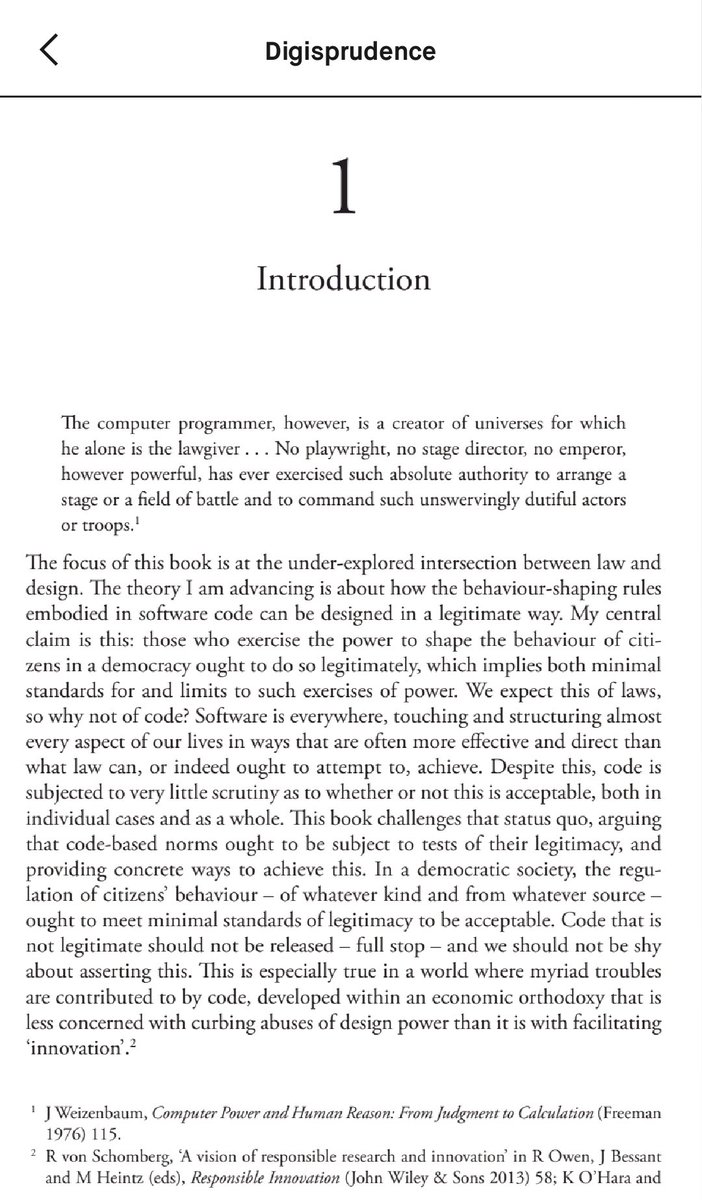
Excellent news! "Digisprudence", from @laurencediver, is available open access! edinburghuniversitypress.com/book-digisprud…
♥ 16↺ 2
The experience of ordering a free ebook from EUP is pretty terrible, but I'm glad the book could be made available free anyway.
♥ 1
It certainly looks fascinating.
♥ 1
It did all kinds of bugs for me but not that one!
I think that, because the purpose and impact are different from stock exchanges, we can use different approaches. But in terms of how information is used and accountability, for sure!
Couldn't get past the first episode...
♥ 1
Lots of clichés, weak dialog, predictable plot, cheap effects?
♥ 1
From what I heard, the people who like the books say that it doesn't get good before book 7 or some such, so if they stuck too closely to those...
♥ 1
I mean, if you compare it with the UI for Gmail or Drive, it's actually pretty stellar!
♥ 3
What with all this metaverse excitement I'm looking forward to finally putting my hard-earned VRML chops to work!
♥ 11↺ 1
Why is it called a "long weekend" when it's shorter than the work week?
♥ 10↺ 1
It was a joke :)
♥ 2
In fairness, no one I ever met went to the effort of putting their name to a catchy tune, so I'm not sure what else they expect.
Oof! I'm still annoyed that they switched using colour for the title to the author on the book spines midway, a series of these could make up for that!
It's pretty impressive, explaining cryptography is really hard!
♥ 1
Same. I've found that math works like languages and I can become fluent enough when using it immersively. But most of how it's taught involves dumping a grammar book on your lap and some discussion of how various etymologies produced the spelling of a few important words.
♥ 2
Or at the very least realistic expectations.
Switched back to paper a few years ago and haven't regretted it once. I see many advantages, but mostly it's how beautiful they are and how those shapes and colours in the unread pile call to me 😁
♥ 1
This one might win the "weird" requirement!
♥ 1
I'll try it next time, thanks!
I don't understand this argument at all. Is the idea that if a platform uses your data they can't also keep it from being shared? The simple solution here is just… they don't get to use your data?
The idea that a single organisation of information is possible (or desirable) is inherently fascistic, so presumably this would extend to any potential unity of science?
Quoting a tweet by @bayesianboy ↗
♥ 2↺ 1
Ha, I like that.
Is anyone selling seats?
♥ 5
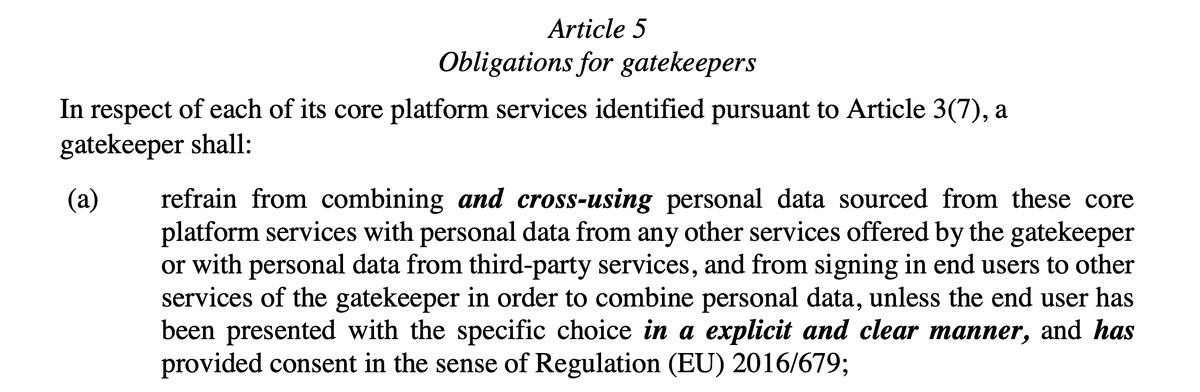
I've seen advocates move to substantive prohibitions, but not much *against* opt-in. Unless we're extremely careful with consent, it tends to suck up all the energy and undermine the entire effect. See the NYS privacy bill, or worse the DMA!
♥ 5
I'm aware of your good work, and we've filed very similar comments on the review of the Australian privacy law. My point is that it still feels very much like a minority view.
♥ 1
(Normally this is the point at which some German guy should drive by to say that consent is better than kittens and that I don't understand the ePrivacy Directive.)
♥ 2
Came here to say that! They haven't been in touch in a long time, they've just run out of the low-hanging out of touch things.
♥ 1
This whole notion that you can't just pick a random sentence out of context but have to read the whole thing is wild.
♥ 4
"I hope you like pain!"
"J'ai le démon..."
"Hurt vampires say 'ail'."
I mean it just writes itself.
♥ 2↺ 1
Some things can't be fixed, not even with the clearest thinking, but FWIW I thought it was well worth saying!
♥ 1
That's a job for @w3cmemes .
♥ 4
Forget the hat, how are the pants staying on???
FWIW I agree with @blakereid here. I've worked directly with @JustinBrookman and I've read @ariezrawaldman's work. You're both great and you both want the same thing! This became heated much faster than I believe is warranted.
"The world got lucky with Omicron. It’s unimaginable what would have happened if that highly contagious variant had caused disease as severe as Delta has. We may not be so lucky the next time."
nytimes.com/2022/01/20/opi…
↺ 3
Okay, here's the plan:
The second all of Big Tech is inside the metaverse, we lock the door and blow up the access tunnel! The dawn of a brighter future.
Quoting a tweet by @alexeheath ↗
♥ 26↺ 6
I also disagree that we can't be in the space of completely remaking the system. In fact, in the specific area of online data and advertising, from the side of what tech standards can regulate (quite a fair bit), that's exactly the space we're in. And we could use some scholars!
♥ 4
We're looking at turning every site into a silo that can't share data, and then see how to maintain some important economic functions like attribution. A good recent example is IPA: docs.google.com/presentation/d…
♥ 4↺ 1
You can't learn about individuals, but you can learn a few things about populations that click on specific ads. What principles do we govern this with? I don't know, and I don't have a great starting point. People reinventing the system from scratch could help here :)
Similar questions with systems like Garuda that could be used to replace opaque, private mechanisms with ones that are collectively governed. Can we make them trustworthy? Prosocial? Viable?
Either way, there's both room and potential for big changes.
darobin.github.io/garuda/
That's not what they are?
♥ 3
Oooh — shiny!
There are literally hundreds of things in my house that are the way they are because someone else decided what's safe and what isn't — because they *do* know better — and then left some differentiators that I can understand for me to pick from.
The entire consent movement in privacy is the delusion that what works for research on human subjects would work exactly as well for the regulation of potentially harmful household chemicals. All it does is help the worst in industry and harm those already the most at risk.
I'm sorry Rigo but I have literally no idea what you're talking about. You can't "change the defaults" (whatever that means) on a million things that we use collectively as a society, and we draw plenty of good from that. Like, literally all infrastructure.
I have no idea how your libertarian hyperindividualistic vision in which people can consent to losing all freedom tomorrow in exchange for something shiny right now is somehow supposed to be better.
How to make it look like you're regulating something without actually regulating anything.
Quoting a tweet by @daphnehk ↗
♥ 4↺ 3
Yeah. It's proof for the future that we knew what to do.
Delighted to be speaking about ads, privacy, competition, governance at the Responsible Data Science and AI Speaker Series (@iSchoolUI) Friday 28 at 9am Central. Join us to talk about it!
jdiesnerlab.ischool.illinois.edu/responsible_ds…
♥ 11↺ 5
And at some point the principal just snapped and started only writing emails in bold.
♥ 1
Could someone let the Apple folks who work on Keynote know that some of us actually listen to music while building our presentations? They can let go of the "play" key — it's cute but useless. Thanks!
♥ 2
Seriously, it's looking like $200 well spent to me right now!
♥ 1
Hahaha yeah, I think the emphasis is on "inspired" 😁 They're super comfortable.
That's the sound they make when I cartwheel.
You can tip me right here on twitter dot com, sweetie.
♥ 2
Without voting rights they're going to be spending a lot of quality time focused on how to ever possibly get elected.
♥ 1
Speak for yourself 😁
♥ 2
I've had cats for most of my life, but one thing that I've never quite managed to convey to our fluffy feline friends is that the nice white rug is not, in fact, the best place to viciously eviscerate a rodent.
♥ 4
1xx for first year course isn't universal but it exists outside the US and it's less obvious, so I'd say understandable.
I'll admit I learnt about Perl's "State of the Onion" first, so I was initially a little surprised that the US President did it too 😁
♥ 3
I think that's right, it matched the shift to more powerful frontend and (with it) the shift from Java to JS that eventually turned JS frontend dev into J2EE with nicer graphics.
♥ 4
Green Chartreuse could work in there.
I don't think that journalism could do that *alone*, but we can't do it without journalism.
♥ 1
Being a Luddite means wanting people to have more power over those who control technology than the other way around.
Not picking on Jules here, but if you're not a Luddite today you're definitely not tech savvy.
Quoting a tweet by @JulesPolonetsky ↗
♥ 26↺ 7
A lot of effort has gone into explaining to the world how tech works. That's nice, but what we *really* need is to explain to tech people how the world works.
I knew that many in tech struggle with understanding infrastructure, but the reactions to @tobie are worse.
Quoting a tweet by @tobie ↗
♥ 34↺ 14
Infrastructure can empower you (if it's neutral) or manage you (if it's "smart"). Whoever controls infrastructure has inordinate amounts of power.
Deciding who provides it and what they're supposed to do matters a fucking lot.
♥ 6
It's disheartening to see so many folks thinking infrastructure is "crumbling bridges." That's true in countries with failed governance, but even there infrastructure is also electricity to run your computer, roads that you get delivery from, water you can drink without dying,
♥ 4
sewage, a place that is mandated to put up with your kids and teach them all that stuff you don't know, and rules enforced enough that your stronger neighbour, who isn't a nerd, can't just murder you and take your stuff.
♥ 3
So yes: open source is infrastructure, as are standards, browsers, ad systems, algorithmic media like search and social, communication protocols...
♥ 7
... and yes we should manage them like infrastructure matters, which is to say not just by hoping that personal responsibility and tech corporations will do it right as if something inspired them other than the manifest destiny of bigger bonuses!
♥ 7
Not yet, but it looks like it should be on my list!
Underrated.
♥ 1
Oh, thank you, I was all like "dare I find out what a Smuing Dolphin is" fucking font.
♥ 2
You can probably mute "⬜"!
♥ 2
I don't know what he has in mind, that is literally the first page! I personally wouldn't look to a permit system, but I'm curious about how others approach legitimacy for code.
I reserve judgement on who of Google or Paxton should be trusted the least, but as I've said elsewhere the simple fact that the allegations can be made is on its own an indictment of Google's system.
♥ 7↺ 1
Maybe, we'll see! But I'm not expecting this route to change anything. The playbook predates Google by decades: just delay legal action as much as you can, eventually some will hit but you can use the intervening time and profits to shift to another extortion method.
♥ 2
A great historical precedent for Google is Dupont. Use the money from highly toxic practices to hire tons of top engineers, by the time the law catches up to you, you're dominating other spaces from those ill-gotten gains.
♥ 2
Anyway, the way I see it is that it's on us to use this moment to build another way to run tech, with ads being a huge part to get right. But people are going to have to reckon with what creates market power and how to limit it.
♥ 4
That's always the fear with multisided markets. I think there are ways to do this that could draw buy side interest.
♥ 3
♥ 5
I haven't had a private office, but I've had small offices with one or two others. Let me tell you, it's a million times better than open space.
♥ 1
I'm pretty sure that's the case, as I said in the other thread the allegations certainly match experience. But point is primarily that the allegations shouldn't be possible in the first place. You just can't run key democratic infrastructure as an opaque ungoverned mechanism.
♥ 5
I'd like to see Apple invest more in the Web just as much as the next Web nerd, but it sincerely saddens and worries me to see so many Chrome folks dunking on it like they have some moral high ground to stand on.
Are you really *that* blind to what you're enabling?
♥ 56↺ 10
I mean, the point at which you have to resort to tribalism to justify your choices could be a red flag?
♥ 7
Wait till you see Showcase...
I know. And we can't count on them making the mistake Microsoft did.
We can't count on Chrome people having an ethics epiphany and we can't hope that iOS will hold forever. Mozilla is locked into a business model where they sell users to Google. It's pretty bleak.
♥ 1
There *is* a way out, but it's daunting.
And AMP is only viable despite users hating it because browsers empower Google Search.
I'm not ready to share publicly yet. Writing it up, happy to discuss soon. Regulation is a component that would help, regulators need to see an alternative that can work!
♥ 1
Google is defunding the entire ad-based ecosystem and forcing people to develop their sites twice, just to be in search results. The web needs to be financially viable more than it needs another Blinkenlights API.
♥ 8
What's more, Chrome continues to hold privacy back, to use Sync to capture everyone's data and the audiences of competitors, to integrate with their SSO... It's a key part of Google's play for supremacy. We're better off with fewer features than with a Google NOBO Web.
♥ 3
Agreed - that's why we need to focus on the biggest threats to the web. Apple is always concerning, but Google is a much bigger risk.
Oh, I'm not saying that Apple is better. I'm just saying that it takes a rather depressing level of self-deception to work for Google and think you're somehow working for the Web's good more than Apple is. The reality distortion field is just as powerful for both.
♥ 4
Chrome gets better rep with developers because they treat the Web like an SDK. With the effort they're putting into owning it as their own, it makes sense. It's just like adding nice APIs to Android.
♥ 2
At the end of the day, both companies are trying to intermediate everything. They treat any information or interaction that doesn't go through them as a bug and will stop at nothing to fix that. They just have different ways to get there.
♥ 4
I'm biased towards Web folks, so I used to think that Chrome people would understand that and look for ways to avoid it.
The moral smugness in their Apple dunking puts paid to that.
♥ 2
The backing down from AMP has been overplayed a lot. Chrome Sync is driven to by a series of dark patterns, it's not statistically optional, which is what matters. The ability to obtain info on people and competitors behaviour across the whole Web affords dominance.
♥ 1
More briefly, owning the Web holds it back a lot more than the lack of a few features.
♥ 1
I was working on installing web apps natively on Symbian. I don't need the brochure. There are more important things than the app ecosystem.
You're preaching to the choir. As I've said over and over in this thread, I never said "Apple=good", only that Chrome folks acting like they don't also work for a super-rich company that's harming the Web is a bizarre and depressing look.
♥ 1
I don't know why you all feel like you must pick a side there. Both Apple and Google are serious problems for the future of the Web, just in different ways.
I think we can do better than pick which brand of feudal overlords is least problematic for our narrow interests?
♥ 1
Thanks Fabrice :)
Now let's go fix this mess!
♥ 2
That used to be true, but I'd encourage you to update your take. Just like Microsoft used to be about putting a computer in every home (great goal!) but later added "running Microsoft™ software" Google wanted a vibrant Web (great!) but now "on Google™ infrastructure."
♥ 1
You're just looking at one side of it, though. Sites can't choose what browsers their users use. The fact that Chrome has so many users is a significant problem for the health of the Web.
And note that by your reasoning, iOS users have the option to use Android!
Yes… that is why I was pointing out the flaw in your choice logic!
Where again we can see the power of defaults (and the carpet bombing of Google promoting Chrome if you don't use it on their properties). This leads to more extensions, which in turn etc.
Okay — clearly we're talking past each other or you have no interest in an honest discussion. As I said, I don't understand your urge to pick a side when the point is both are problems.
Have a nice day!
Oh, yeah. I don't care about personal offence. If it were down to that, I'd go worry about something else.
OK, now I have even less of an idea what you could possibly be talking about. Again, have a good day!
This is the best description of why the general effort to get rid of third-party cookies must be supported, no matter how many other problems there are with browser vendors!
You can use this moment to push *them* to be privacy-friendly, which helps us all.
Quoting a tweet by @Chronotope ↗
♥ 31↺ 11
Or, you know, you can sue to prevent the removal of lead pipes and die a slow, painful death!
♥ 3↺ 1
Being classically beautiful depends a lot on the kind of sculptor who got to chisel your jaw.
♥ 1
I have a reMarkable 1 that I'm quite happy with. I hear the 2 is really great.
♥ 5
In France they switched from le Covid to la Covid mid-pandemic, I guess it's a topic that invites linguistic chaos 😁
♥ 2
Something that I would like to know less clearly is that the fact that there is no statistical DK effect does not in the least eliminate the existence of DK individuals.
♥ 2
Ah, I'm not familiar with that because early adopters get it free. But it's only for some features, right?
♥ 1
Earlier today, Google announced "Topics" as their next iteration on FLoC to provide cookieless interests-based targeting on the Web.
This is a thread of notes — in no particular order.
Technical Explainer: github.com/jkarlin/topics
Blog post: blog.google/products/chrom…
♥ 70↺ 23
Under the current proposal they can't choose topics at all, the topics are chosen for them. There seems to be interest in exploring alternatives, though.
♥ 1
The whole "Privacy Sandbox" is about how everyone except Google should get better at privacy, so I don't think anyone harbours any idea that they plan to improve themselves. They generally think they're doing great! :)
♥ 4
Right — this only works in a world in which there is serious siloing.
♥ 1
The "Privacy Sandbox" project is about improving privacy for everyone except Google. So this is expected.
♥ 5↺ 1
Wait — I'm not sure that your issue works. For a site A with embeds {B…Z}, I don't think that they can get more than the 15 topics listed in the doc (in case of attack). Whatever Prebid got when in A.com is also whatever any later embed can get.
Sure — I'm assuming that one any given page almost everyone will have all the topics. But they'll be the same set of topics.
See my note on header bidding though — it's… concerning.
♥ 1
I think maybe we need a whiteboard. I have doubts about the overall scheme, but I think the restriction does something?
♥ 2
Oh yeah. You don't even need to include the full Google universe to find irony: these restrictions are enforced by Chrome, which also captures the entire cleartext browsing activity of ~3bn users through Sync, for Google to use. So there's that.
♥ 1
WOMO — Wishing for Options to Miss Out.
♥ 2
Oof, that sucks. I'm talking about a different Sync (Chrome Sync specifically), but it is similarly designed with user-hostile defaults and dark pattern to drive people to give Google data they don't mean to.
♥ 2
Sadly, I think it's more complicated than that, Roger! Sharing data broadly (as done now) does seem to harm competition (see berjon.com/competition-pr…), so a Privacy Sandbox "done right" would actually help — which means we something like it, and need to engage.
♥ 4
But Google are only doing the parts that benefit them, while regulators stick to stern tut-tutting (sometimes even wagging a finger).
It's fixable and we could use some of the good ideas from the Sandbox, but lining the ducks up is hard.
♥ 1
And we're also dealing with a small but vocal rearguard that wants to preserve the status quo even though, well, [points all around]. Google couldn't have hoped for better allies just when we need a united vision the most.
♥ 1
They have, though so far with sadly little to show for it.
That would be neat — are you thinking of a `topics` flag on `script` and `iframe` that would serve as an equivalent to calling the method and include topics as a header? (And presumably some flag on the fetch API too.)
It's the primary thing that I find unsolvable remote!
♥ 2
Ewww :)
Back when we were in office, we tested a Google Jamboard, which is meant for this. But the thing emitted so much heat, the room became unusable for anything other than a sauna!
♥ 2
I'm sympathetic with where @seanmcarroll is coming from with this, but I think it's the wrong framing.
We have a way to coordinate and solve large-scale, systemic, wickedly complex problems: it's called "society."
Quoting a tweet by @seanmcarroll ↗
♥ 1↺ 2
It regularly happens that a given society's complexity, costs, and problems cease to be functional — at which point it collapses. This is common, not Mad Max dramatic, and adaptive: a fast simplification of what it tackles.
♥ 2↺ 1
Are we headed for collapse? I don't know, but we've *massively* increased the complexity of what we do and how we coordinate without corresponding improvements in governance. And boy does it show! berjon.com/stewardship/
♥ 2↺ 1
I'm not picking on Sean here, but "we're not optimised for this" is both common and defeatist. I believe that this is hard yet fixable — but to fix it we have to even know where the solution space is!
♥ 1↺ 1
My assumption is that for HB not to be harmed, this has to be a one-request thing and triggered as early as possible. So I'm not sure that anything other than a flag on the element would work? Or maybe I'm missing something?
Hmmm, we have a decent tablet at home now, with a stylus. I should try some of these out!
♥ 1
In general, the metaphysics of holes is an exercise in linguistic confusion :)
I don't think I ever went from finding something weird to loving it, after I moved here.
♥ 2
Thank you! Always happy to help.
♥ 1
My spouse has a love of rugs and boundless optimism 😁 I'm against rugs on principle.
I oppose any object that willingly harbours dust mites.
Mad respect for the school admins trying against all hope to maintain the anonymity of the kid who tested positive in a third grade class of 17 students.
♥ 12↺ 1
Exactly 🤣
I mean, only one kid is out, the kids figured it out before we were even notified 😁
♥ 3
This is the correct take. It's all an ideology of scientific management. It can't be wrong because it's rational state of the art, it's a neutral reflection of reality and preferences, etc.
♥ 1
The implementation focus has been on sharing (eg. TCF). There's a serious gap between the text and what is happening. (And ePD makes it worse by bringing in cookies.)
♥ 1
Well, if nothing else it's the only Star Wars movie since they rebooted that hasn't sucked, so it needs encouragement!
♥ 1
[OH] "I too support sweeping intellectual rigour under the rug."
♥ 6
♥ 1
I think you're tripping yourself over with "public." The implication (at least that many hear) behind "public" is "state-managed." For the most part, I don't think many people want that. What you're really looking for is "commons." It's technical but IMHO worth introducing.
You might be able to piggyback off the vague understanding that coding folks have of the creative commons and keep them there long enough to get your point across before someone says "but crumbling bridges!!!"
• Source Code Commons — It Takes A Village Not To Poison the Well
• Security In Numbers — Open Source is Infrastructure, Commons Keeps it Safe
• I Hate Maintaining Infrastructure — With Open Source We Can Hate Maintaining Infrastructure, But Together
You mean that EthnoStateNow.us won't get the "Genocide" topic that might have rightfully excluded it from bids? You're right, but I don't think that interests targeting is the right mechanism to deal with this. I def don't want an ML model making that call!
♥ 1
Privacy measures that create advertising issues are defensible when there are no alternatives. When alternatives exist — if credible and endorsed by the Web community — that becomes a tougher position from a regulatory standpoint. We'll see.
That's one of the reasons I am wondering if we can't figure out a way to have topics managed by federations of first parties. Groups of first parties could share a space in which topics learnt from one can be used on another — but not elsewhere. And rules would apply.
♥ 1
Right now all enforcement is on intermediaries, who have the right but little legitimacy in doing it. With federations, monitoring and enforcement moves to the group, which being a group of people-facing companies is more accountable.
Of course, EthnoState.us and VaxxAreMurder.com can still make a federation of their own, but now we can question intermediaries that accept to serve that entire federation at once, instead of whack-a-mole style.
♥ 1
Anyway — I don't know what the best mechanism for this would be, but I think both the issues with Topics and part of brand safety would be better served by more local decision structures.
♥ 1
That's why I think that we need a document capturing the endgame here. If the endgame is basically "like today with no 3P cookies" then we need HB (and @KarlinJosh has suggested that this could be fixed). But if the endgame is a stricter, more opinionated system, then no HBs.
It's hard to assess at the individual spec level without knowing how they fit together, eventually. We're discussing deck furniture but we don't know where the ship is headed :) So far, the Sandbox has been architecturally amorphous and no one has filled the void. PATCG?
I want to open an issue but I'm not sure where the issue goes :-D
I've been meaning to look through the various mechanisms proposed for FPS to see if one could be reusable. I'm not interested in most of the FPS use cases, but I can think of useful things to do with the idea of sets of origins (though we need different sets for diff uses)!
♥ 2
♥ 1
I'm still not over the books series and the TV show ending, let alone at the same time. What are we supposed to do, Erik?
♥ 2
The book's finale was certainly great; season 6 felt rushed though, no?
In a different vibe (less grit, less painfully real, but really smart) I quite liked the Teixcalaan series but it's only two books and I don't know if there'll be a third.
♥ 1
Same! And 7-9 :)
I read the first two Culture books and I liked it, but not quite so viscerally. I think I'll eventually get through it all but not as urgently.
Oh my, I get wanting to defend one's position but that blog post is something!
♥ 1
"Deception is essential to Google's business model" is a hell of a quote to win with 😁
♥ 2↺ 1
Exactly. I'm looking for ways to build layers between just one site and the whole Web. I don't know what a good mechanism would be to get browsers to understand such groupings. I'll file an issue in the morning!
♥ 3
That's probably the only intellectually honest reaction.
Kale though.
♥ 1
Would you say that it upped the ex ante in bad writing?
♥ 1
The issue is up: github.com/jkarlin/topics…
♥ 1
I wrote up more details (but not technical yet) of what I think would be a better structure to jointly manage interest groups as proposed in the Topics API. Very early steps, thoughts welcome!
Oh, yeah, and I also added a bird acronym because seriously.
github.com/jkarlin/topics…
♥ 6↺ 1
Thanks!
Creating sensitive info topics would only become a problem if we allow leagues to create their own taxonomies (not just models). I don't want to solve that before there's reason to, but I can think of ways. One way is to require that taxonomies be in a registry.
♥ 1
The assumption here would be that there could be open taxonomies, but that there won't be *that* many overall, and so adding a bureaucratic review step is viable. I think that's fair.
♥ 1
I don't think the league incentivises large 1Ps — the best set up would actually be a mix of large and small, or even a whole bunch of small with strong topic signals.
♥ 1
You mean you think it'll benefit the larger players because they'll be able to join a league more easily? I don't know — a lot of that would depend on how joining would work, which could be partly league-dependent. But not necessarily, big orgs are slow!
♥ 1
I'm sorry, I'm not sure I follow which issue you're referring to?
Hey, look who got cited by @RDBinns like a proper grown up scholar and all! arxiv.org/pdf/2201.10831…
♥ 8
Thanks — but I'm really sorry but I don't understand the "challenge of bias towards the most popular topics that will significantly reduce the proposal’s utility." I'm not aware of this issue, is the idea that more popular topics (in CPMs?) reduce the utilise of Topics?
What I have in mind with that bullet is that if league of publishers {A,B,C} together produce a more reliable topic X (it converts better), bidders can use that information to price accordingly. (And also, bidders can refuse leagues that accept eg. disinfo.)
♥ 1
That's exactly my thinking: you could imagine high-signal small pubs covering very vertical areas (eg. trades or hobbies) banding together to get very high-quality interests.
This isn't trivial to pull off, but we definitely need ways of creating better shared structure.
♥ 1
Aha! Yes, I hadn't thought of that. That's a very good point. And yes, indeed, by splitting up the calculation and the sources, the odds are pretty good that we can make the topics more variable and more interesting.
I'll add this to the issue.
♥ 1
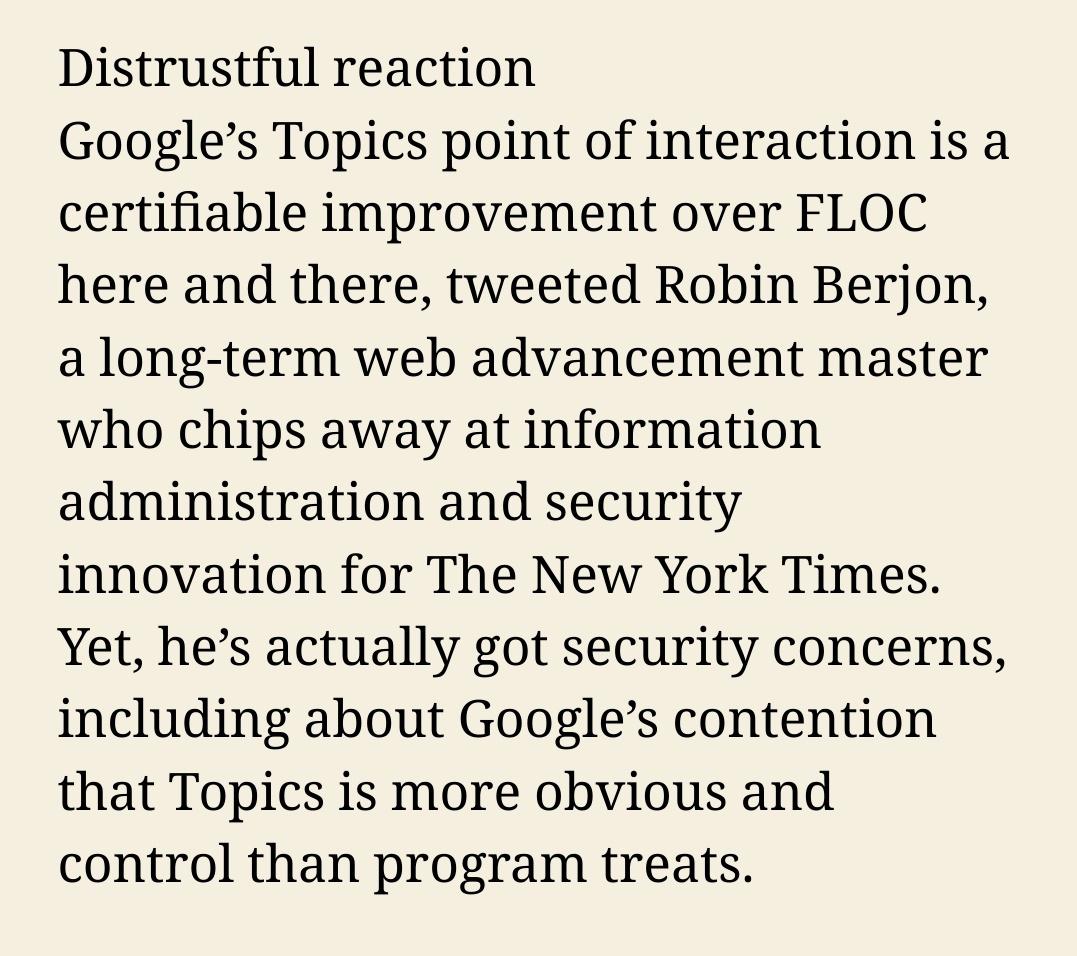
There are plenty of content farms out there that steal money from legit publishers by plagiarising content with automated tricks. Here, a beautiful example from @stshank's article on Topics 🤣
♥ 9↺ 1
I am the Long-term Web Advancement Master!
I chip away at information administration and security innovation!
♥ 9
And Google should *really* stop contending that Topics is more obvious and control than program treats!
♥ 2
Some fake ass site took a CNET article and ran it probably through some round trip translation. The usual grift!
♥ 8
I know, we get them all the time. It just won't stop.
I do! It's the best tiara.
You just have to chip away at it!
♥ 1
The day @stshank starts writing like that I'll be worried!
♥ 3
You don't do Foucault Fridays, @jilliancyork? The biopolitics of the browser make for stiff drinking!
♥ 1
Queer eye, Foucault, tom-aye-to, tom-ah-to…
♥ 1
There's a lot I agree with there in terms of medical discrimination, but if I ever were to get a transplant after the xeno ones are perfected, I think I'll prefer a pig's organ specifically engineered to work over a random human's who just happened to die tragically young.
♥ 1
In truth, I find sentences that don't use this construct easier to reason about.
♥ 1
This has annoyed me for decades.
♥ 2
Important piece of history: we didn't end up with today's broken digital landscape because we didn't know or didn't understand. We knew — but made the decision to trust tech to self-regulate and be trustworthy.
Read this thread for context, and for hope!
Quoting a tweet by @AlanInDC ↗
♥ 24↺ 6
I haven't read the plan yet, but it couldn't have been produced by a better team. I look forward to going through it: advocacy.consumerreports.org/wp-content/upl…
♥ 2
Did someone say party? 🍹🥂!
♥ 4
Please tell me this means you're coming to the US for a party here in April?
♥ 3
AMAZING! Please let me know when/where!
♥ 3
Holy fuck. Why don't you have a "TO SORT" folder on your desktop (itself recursively containing others just like it, never sorted) like normal humans have since homo erectus first turned sapiens?
♥ 12
Wow, double win then!
♥ 3
Ah, I always hesitate to mix the new crap with the old crap so I nest them. Mind you, I never minimise windows (because why?) so I haven't seen my desktop in months. Who knows what's there these days.
♥ 2
Some apps dump stuff there by default. I used to also use it to put whatever files I was temporarily working with but didn't need to sort. Now I use another place for that so I can sort it by reverse mod date.
♥ 3
*ominous, suspicious silence*
♥ 2
This map doesn't even include goose fat!
♥ 2
This is the correct analysis, but it's not just Apple.
You can recognise a company whose strategy is to forcefully insert itself between people and other companies from the fact that it pushes its own fork of HTML: Apple News Format, FBIA, AMP.
Quoting a tweet by @1Br0wn ↗
♥ 32↺ 10
I don't know how well this is known outside of tech, but using tools without understanding them is common to the point of having joke status, eg. when people talk about pasting from StackOverflow. It used to be harmless, like with jquery and PHP, but now...
Dibs!
♥ 3
And separating client from service also means that you don't have to contend with UI built by people who think you can replace designers with machine learning and A/B testing. What have become hallmarks of crap design - music, TV, search, social - would improve immediately.
Quoting a tweet by @mmasnick ↗
♥ 10↺ 5
She doesn't seem to mind the bath so much!
♥ 2
Looks nice!
C'est un peu facile de blâmer la presse. Google utilise tous ses atouts pour pousser son système identitaire: OS, navigateur, AMP, mail... Du coup, moins de friction sur le second bouton, plus d'abonnés. Et tout le monde doit vivre.
Quoting a tweet by @gchampeau ↗
♥ 6
Est-ce que c'est un problème pour l'indépendance de la presse et la démocratie? Absolument. Mais la solution n'est pas de pointer du doigt.
♥ 2
A company that advertises its transparency-and-control approach to privacy while using machine learning is being deceptive. It's that simple.
Quoting a tweet by @hackylawyER ↗
♥ 12↺ 5
I don't think that it can help when people are facing just the one service, but it can be good for comparison situations. So a choice dialog to pick your default search engine, browser, etc. should clearly label a few salient privacy properties so you can choose wisely.
♥ 1
"Disruption" has acquired a well-deserved bad reputation, but if there's one field that could use a serious kick in arse it's traditional scholarly publishing. It is puzzling that someone could consider disrupting that in any way problematic.
Quoting a tweet by @CT_Bergstrom ↗
♥ 21↺ 4
No one in tech believes in institutions, or even knows what they do, what they're for. I think it's fixable, that we can build up massive institutional capacity on the web. It's tricky to make the first time happen.
♥ 5↺ 1
What we have isn't even a market, you need... institutions for that! We built a Hobbesian reality and lo! does it indeed lead to brutishness and misery.
Yeah, but who creates tech curriculums for schools?
♥ 2
"Formally" might be doing too much work there. IETF, ISOC, W3C all predate ICANN, as do others, some defunct. We have institutions, they're just ridiculously underpowered and don't cover some key areas at all.
♥ 1
"How informative is the concept of biological information?" This made my lunch break.
3quarksdaily.com/3quarksdaily/2…
♥ 2
In the metaverse, they have talking elephants. Without legs. It's weird, and a little on the nose, but there's a setting to opt out of it.
♥ 7
Say what you will, I like our metaverse strategy better.
♥ 2
I would go a bit further: the illusion that quality things could magically stay online without a sustainable support structure is a key reason we've built a dystopia. If we want more Wordles - and we should! - then we must build a Web in which Wordles are viable.
Quoting a tweet by @_alastair ↗
♥ 30↺ 5